
Looking for the best rugged smartwatch for construction work, hiking, or just everyday abuse? “Rugged smartwatch” gets used pretty loosely in this category — plenty of watches get called rugged because they’re chunky and come in black. The differences between models matter more than the marketing copy suggests. This guide breaks down what the durability specs actually mean, compares REXQU’s rugged, fitness & outdoor lineup model by model, and points you to the best rugged smartwatch for your specific use case.
On this page
What “rugged” actually means: decoding the ratings
Before comparing models, it’s worth understanding the two rating systems you’ll see on every rugged watch’s spec sheet, because they’re not interchangeable.
IP ratings (like IP68) measure resistance to solids and liquids together, following the international IP Code standard. The first digit covers dust and particle resistance (6 is the top score — fully dust-tight), and the second covers water (8 typically means resistant to continuous submersion beyond 1 meter). A watch rated IP68 is protected against both the fine dust of a job site and being splashed, rained on, or briefly submerged.
ATM ratings (like 3ATM or 5ATM) measure water resistance only, based on pressure testing, and don’t say anything about dust or particle resistance. 3ATM typically covers rain, splashes, and hand-washing, but not swimming. 5ATM extends to shallow swimming. A watch rated only in ATM without an IP dust rating may be fine around water but hasn’t necessarily been tested against dust and grit the way an IP-rated watch has.
Why this matters practically: if you’re working somewhere genuinely dusty — framing, drywall, outdoor trades — an IP68-rated watch is the safer bet over one rated only in ATM, even if both claim to be “water resistant.”

The three ways a rugged watch actually fails
Ratings tell you what a watch survived in a lab. They don’t tell you what actually breaks in the field. Across this category, failures cluster into three places — and only one of them is the part most people shop for.
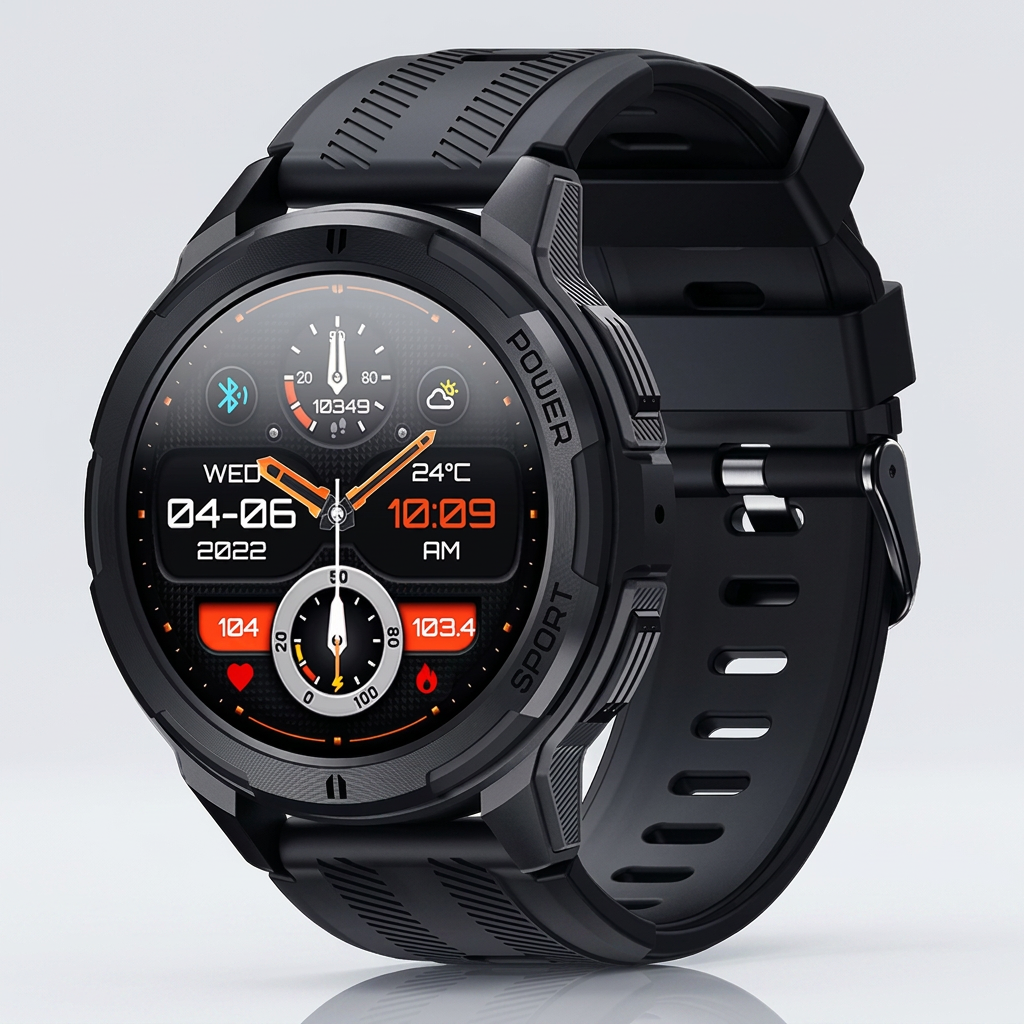
1. The front glass. Impact and abrasion are different problems. A watch can shrug off a drop and still end up covered in fine scratches from brushing past brick, scaffolding or a door frame — and scratches matter more than they sound, because they scatter sunlight and wreck outdoor readability long before they affect the touchscreen. This is the case for a hardened front like the TrailGuard’s Gorilla Glass, and the case for a recessed or raised bezel: the EnduroMax’s reinforced side armour and the zinc-alloy bezels on the TerraPulse and FlareTrail exist to keep the glass off whatever you just knocked it against.
2. The seals. Water almost never gets in through the case back. It gets in around the buttons, the charging contacts and the speaker port — the places that have to move or stay open. Gaskets are consumables: they compress, collect grit and slowly stop sealing. That is why an IP68 rating is a statement about a new watch, not a permanent property of it, and why rinsing salt, sweat and dust off the button area is the single most useful thing you can do to extend the life of any rugged smartwatch.
3. The strap and lugs. This is the unglamorous one, and it is where a large share of real-world failures happen. The strap takes every twist the case doesn’t, and the lug bars are the thinnest load-bearing part of the whole product. A watch with a proprietary, non-replaceable strap has a hard lifespan limit no durability rating captures. Before you buy the best rugged smartwatch on paper, check whether you can replace the band on it.
Best Rugged Smartwatch Buyer Checklist
Before comparing models, use this short checklist to avoid buying on the word “rugged” alone:
- Dust exposure: choose an IP-rated model if you work around construction dust, sand, grit or fine particles.
- Water exposure: match the rating to what you actually do; rain and handwashing are different from swimming.
- Impact protection: look for a reinforced case, raised bezel or protected glass rather than assuming an IP rating covers drops.
- Outdoor readability: brightness in nits matters more than resolution when you are using the watch in direct sun.
- Battery headroom: buy enough runtime for your longest workday or hike with GPS, heart-rate monitoring and notifications active.
- Navigation: if you need compass, altitude, route-back or GPS, compare the REXQU GPS smartwatch buying guide before choosing.
For more specific use cases, see the guides to the best smartwatch for construction workers, drop-resistant smartwatches, and smartwatches for cold-weather hiking.
Comparing REXQU’s Best Rugged Smartwatch Models
| Model | Price | Durability | Battery | Display | Standout feature |
|---|---|---|---|---|---|
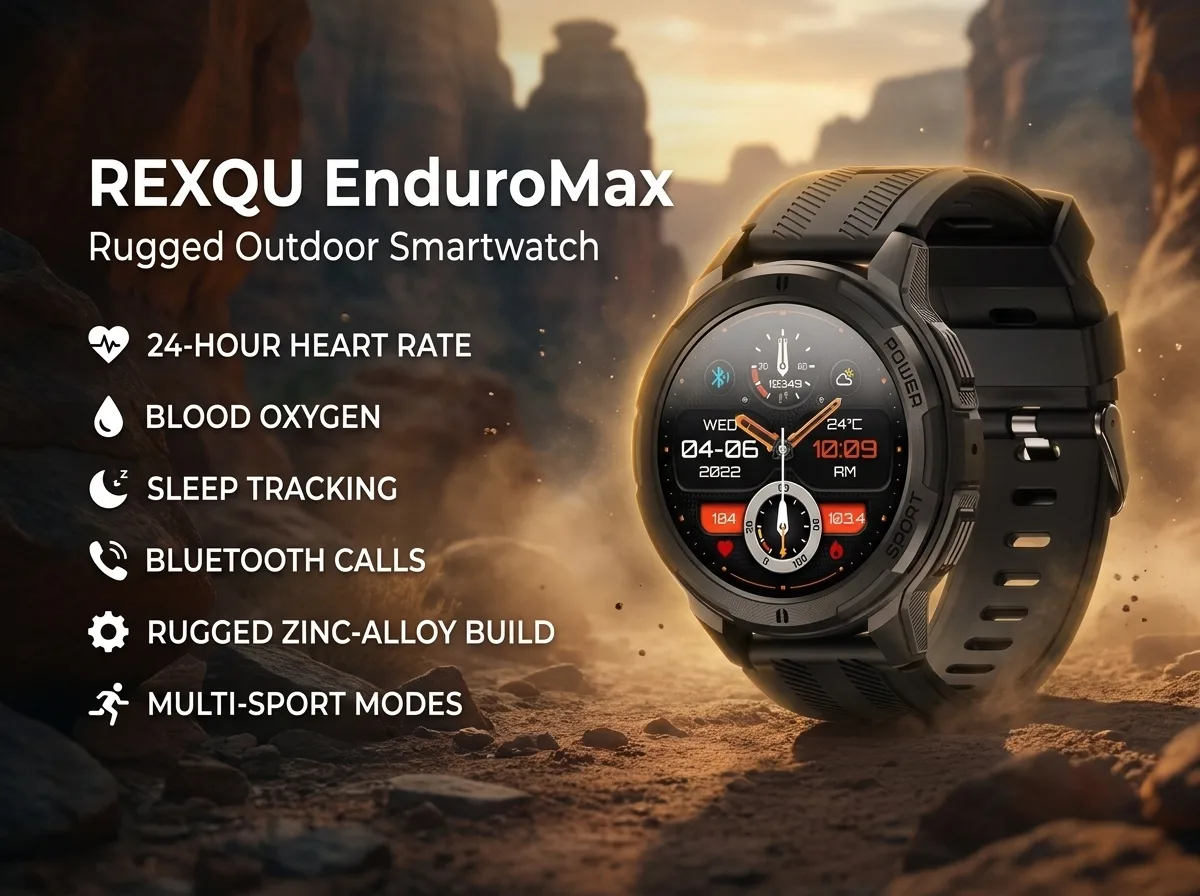
| EnduroMax | $149.97 | IP68, reinforced side armor | Up to 15 days | 1.43″ AMOLED, 650 nits | Best all-round durability + brightest screen |
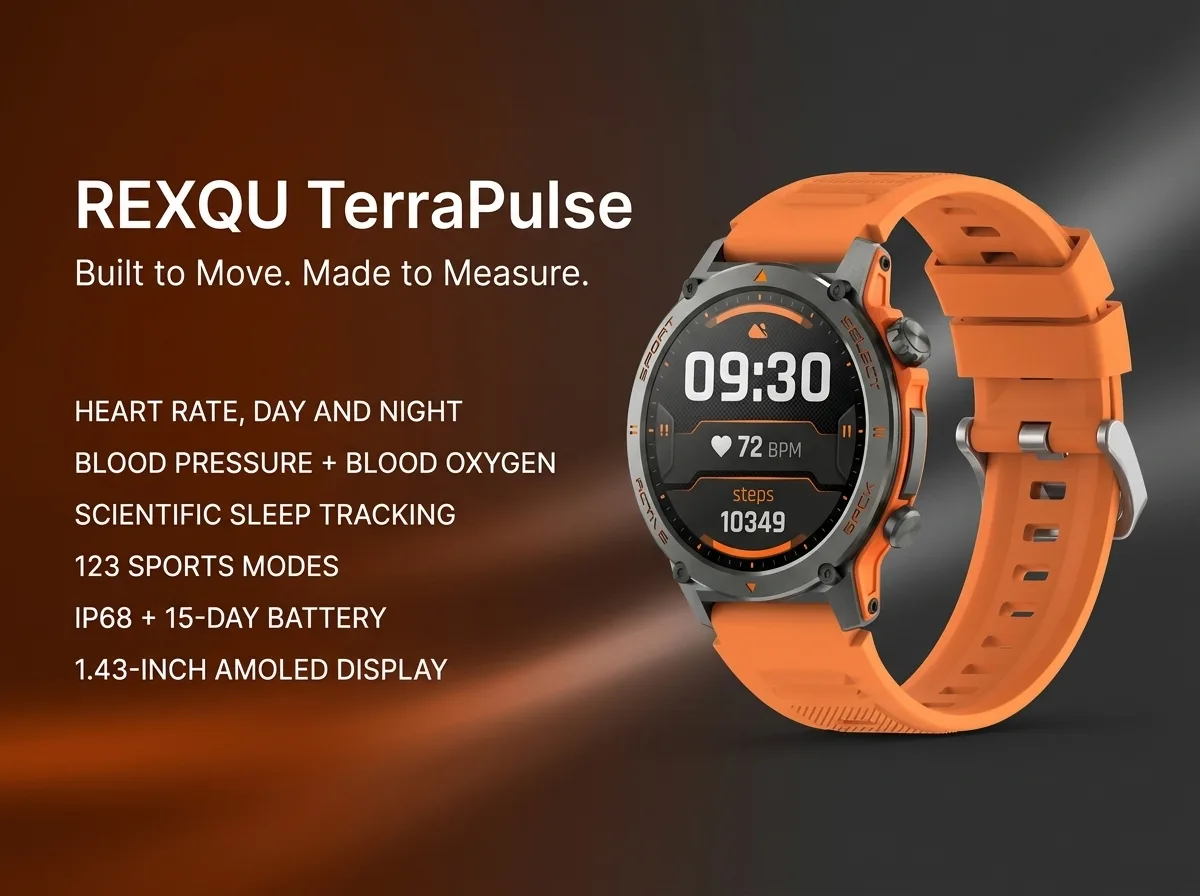
| TerraPulse | $149.97 | IP68, zinc-alloy bezel | Up to 15 days | 1.43″ AMOLED, 466×466 | Longest money-back guarantee (90 days) |
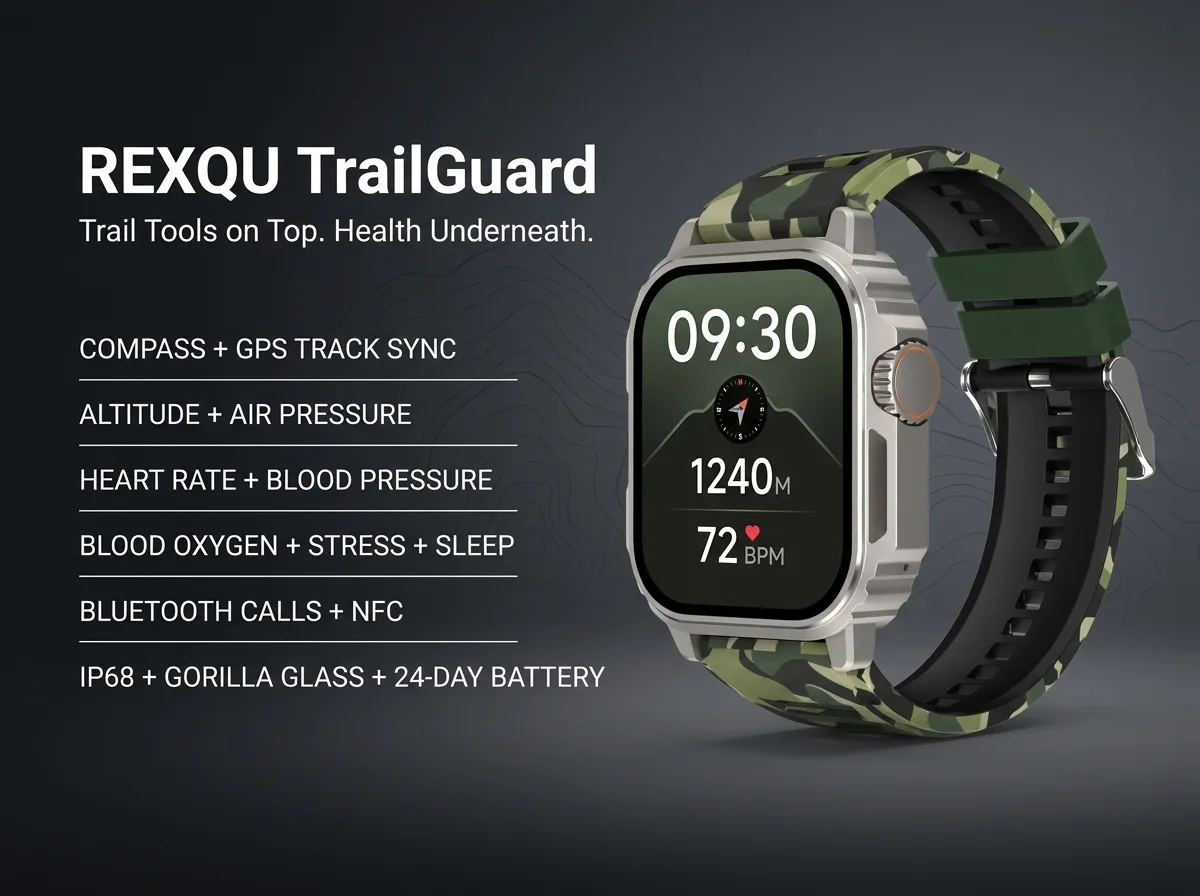
| TrailGuard | $149.97 | IP68, Gorilla Glass | 7–10 days | 1.96″ Gorilla Glass | Compass, altitude, GPS track sync |
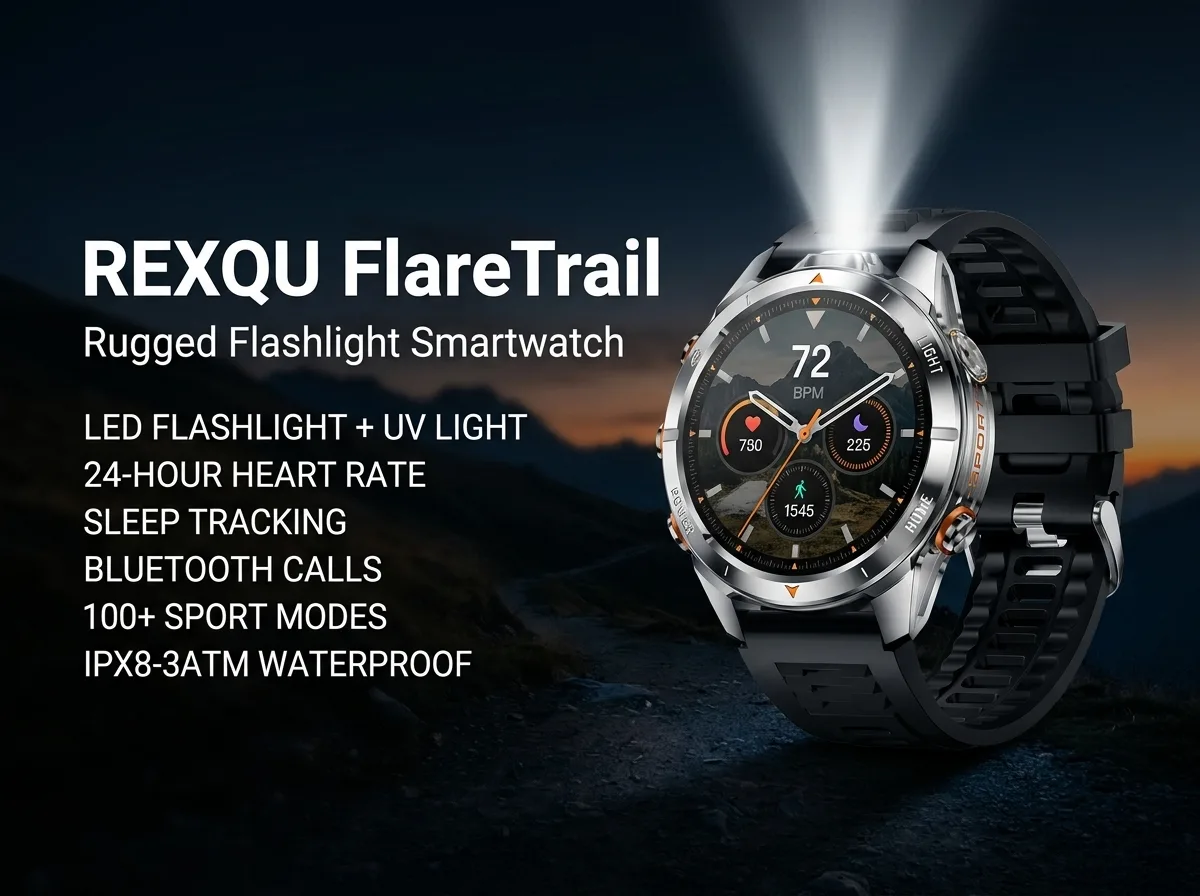
| FlareTrail | $139.97 | IPX8/3ATM, zinc-alloy | 7–15 days | Not specified | Built-in LED flashlight + UV light |
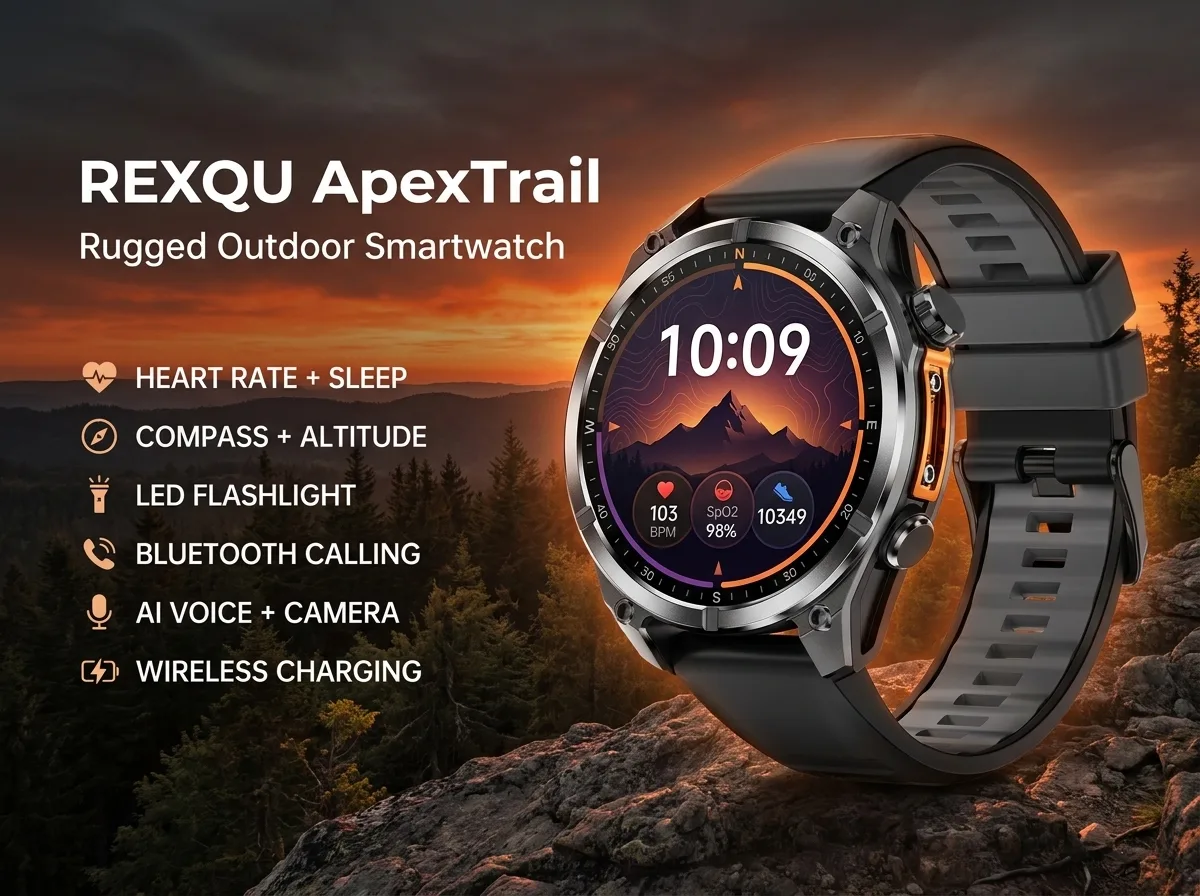
| ApexTrail | $149.97 | 3ATM only (no IP rating) | Not specified (wireless charge, ~4hr) | 1.43″ AMOLED, 466×466 | Compass, altitude, LED flashlight, wireless charging |
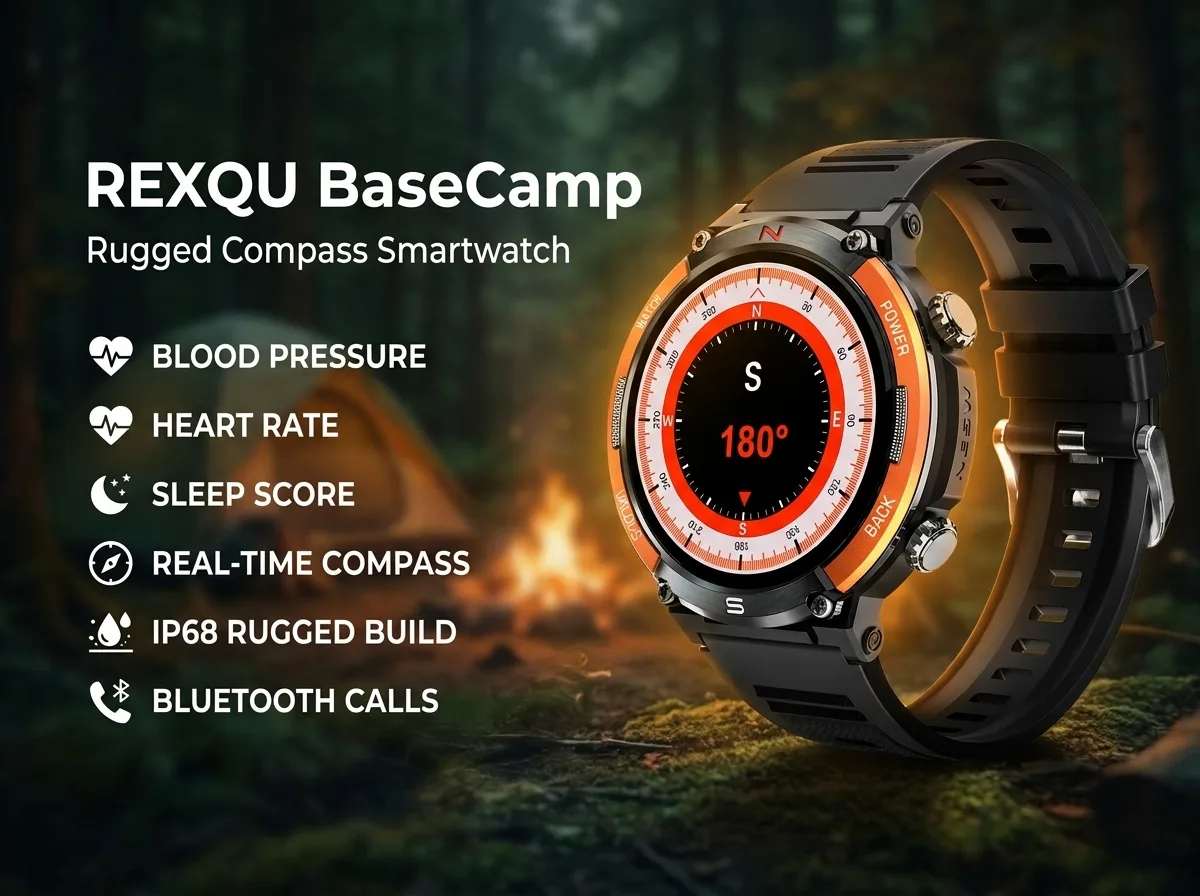
| BaseCamp | $119.97 | IP68, 50mm tough frame | Not specified | 1.52″, 360×360 | Lowest price with a built-in compass |
The watches recommended in this guide
Every model compared above, with a link straight to its full specs and price.
(Specs pulled from REXQU’s own product pages; “not specified” means the manufacturer hasn’t published that figure rather than it being zero.)
Which one fits your situation
Here’s how to match REXQU’s lineup to what you actually need, so you land on the best rugged smartwatch for your situation rather than just the priciest one on the shelf.
If you want the single most durable, longest-lasting all-rounder: the EnduroMax is the strongest general pick. IP68 durability with reinforced side armor (built to take knocks, not just water), 15-day battery life, and the brightest display in the lineup at 650 nits — the combination that matters most for daily wear on a job site or trail, day after day, without babying it.
If you need real navigation, not just a rugged case: the TrailGuard is the only model here with GPS track syncing on top of its compass and altitude/air-pressure sensing. Worth the tradeoff of shorter battery life (7–10 days vs. 15) if you’re actually navigating unfamiliar terrain, surveying a large site, or working somewhere without reliable landmarks.
If you’re working after dark or in unlit spaces: the FlareTrail is the only model with a dedicated built-in flashlight (plus a UV light), which is a genuinely different use case from the others — checking a breaker panel, working a night shift, or just walking to your truck in the dark without pulling out your phone.
If you want navigation features and don’t mind wireless charging over IP68-level toughness: the ApexTrail covers compass, altitude, and a flashlight in one watch, with the convenience of wireless charging — but it’s worth clocking that it’s rated 3ATM only, without the IP68 dust/water combination rating the others carry. Fine for rain and sweat; not the pick if you’re regularly in heavy dust or grit.
If budget is the deciding factor: the BaseCamp is REXQU’s least expensive rugged model at $119.97, and still includes a real-time compass and IP68 durability — it just skips the AMOLED display and extra navigation sensors the pricier models carry.
If you want the longest return window to test it out: the TerraPulse matches the EnduroMax on durability, battery, and display quality, but carries a 90-day money-back guarantee versus the standard 30 days on most of the lineup — worth knowing if you want more time to actually field-test it before committing.

What the spec sheet won’t tell you
Four things decide whether a rugged watch is pleasant to live with, and none of them are the headline numbers.
Brightness beats resolution outdoors. At arm’s length, the difference between 360×360 and 466×466 is close to invisible. The difference between a dim panel and a bright one at midday is the difference between reading your watch and shading it with your other hand. That is why the EnduroMax’s 650 nits is a more useful number than any pixel count in the comparison above, and why a screen spec without a nit figure is telling you the less important half.
Wet and gloved fingers don’t work touchscreens. Capacitive touch needs skin and dislikes water. If your hands are wet, muddy or in work gloves for most of the day, the number of physical buttons on a watch matters more than the size of its display — a watch you have to take a glove off to use is one you will stop using.
“Up to” battery figures are best-case. Every quoted battery life in this category assumes the screen is off most of the time, GPS is idle and always-on display is disabled. Turn on continuous heart-rate tracking and an always-on screen and a 15-day watch becomes a 4–6 day watch. Read the “up to 15 days” on the EnduroMax and TerraPulse as a ceiling, not an average — and treat the models above with no published figure at all as unknowns rather than as poor performers.
Cold drains batteries faster than the spec allows for. Lithium cells lose usable capacity as temperature drops, so winter runtime is meaningfully shorter than summer runtime on the same watch with the same settings. If you work outdoors year-round, buy more battery headroom than your average day needs.
Frequently asked questions
Do I need an IP68 rating, or is ATM enough?
If your use case is mostly rain, sweat, and general outdoor exposure, an ATM-only rating (like the ApexTrail’s 3ATM) will hold up fine. If you’re regularly around dust, dirt, or fine particulates — construction, landscaping, warehouse work — an IP68 rating is the more complete protection, since it’s tested against both dust ingress and water, not water alone.
Does a bigger battery number always mean a better watch?
Not necessarily — it’s a real tradeoff against features. The TrailGuard’s shorter 7–10 day battery life comes with GPS syncing and a bigger display; the EnduroMax and TerraPulse stretch to 15 days partly by not carrying that GPS hardware. Decide based on whether you actually need the navigation features enough to charge more often.
Are the health tracking features on these watches medical-grade?
No — heart rate, blood pressure awareness, and blood oxygen readings across this lineup are wellness features intended to give you a general sense of your body’s status, not diagnostic tools. If you have a specific health concern, talk to a healthcare provider rather than relying on watch readings.
Do any of these require a subscription?
No. Every model in REXQU’s rugged lineup works through a free companion app (RDFit, Da Fit, or FitCloud Pro depending on the model) with no ongoing membership fee to see your own data.
Can I shower or swim with a rugged smartwatch?
Showering is the harder test, not the easier one. Hot water softens gaskets and shower gel and shampoo degrade them, so a watch rated for shallow swimming can still leak in a daily shower over time. As a rule: 3ATM models like the ApexTrail should stay dry beyond rain and handwashing; 5ATM is the realistic floor for swimming; and no rugged smartwatch at this price should go anywhere near hot tubs, steam rooms or saunas, where heat and pressure work on the seals at the same time.
Will it survive a drop onto concrete?
Usually, and the ones that don’t tend to fail at the glass rather than the electronics. Height matters less than what the watch lands on — a corner impact onto a hard edge concentrates the force into one point and is far more damaging than a flat face-down landing from the same height. This is exactly what a raised bezel or side armour is for, and it is the reason a watch with no impact protection but an excellent IP rating can still crack on its first real drop.
Do I need a MIL-STD-810 claim?
Treat it as a soft signal rather than a guarantee. MIL-STD-810 is a catalogue of test methods published by the US Department of Defense, not a certification with an independent auditor. A manufacturer chooses which methods to run and declares the result itself. It tells you a maker took durability seriously enough to test for it; it does not tell you the watch passed any particular test, or which tests were run.
How long do the water-resistance seals actually last?
There is no fixed figure, because it depends almost entirely on exposure. Grit in the button seals, UV, heat cycling and soap all shorten it. The practical answer: treat water resistance as something that degrades from the day you buy the watch, rinse the case and buttons with fresh water after sweat, salt or dust, and don’t assume a two-year-old watch seals the way it did new.
Is a bigger screen worse for durability?
A larger front face gives you more area to strike and less bezel to protect it, so all else equal, yes. But all else is rarely equal — the TrailGuard runs the largest display here at 1.96 inches and pairs it with Gorilla Glass specifically to offset that. The size of the screen matters less than what is in front of it and how far the bezel stands proud of it.
Bottom line
There isn’t one best rugged smartwatch for everyone — there’s a best rugged smartwatch for what you’re actually doing. For general job-site or trail durability, the EnduroMax is the strongest all-around pick in REXQU’s rugged lineup. For real navigation, it’s the TrailGuard. For working in the dark, the FlareTrail‘s built-in flashlight is the differentiator no other model here matches. Match the feature that matters most to your actual use case, not just the price tag or the word “rugged” on the box.
This article is informational and reflects product specifications published by REXQU; it is not medical advice. Consult a healthcare provider for concerns about heart health or other medical conditions.