

Looking for a screenless fitness tracker stress tracking feature that actually means something, rather than just a number that moves around for no clear reason? The REXQU PulseBand reads your stress level from heart rate variability (HRV) — the tiny, beat-to-beat changes in your heart rhythm that shift measurably when your nervous system is under load — and turns that raw signal into a simple daily score you can check without ever looking at a screen.
How Screenless Fitness Tracker Stress Tracking Works
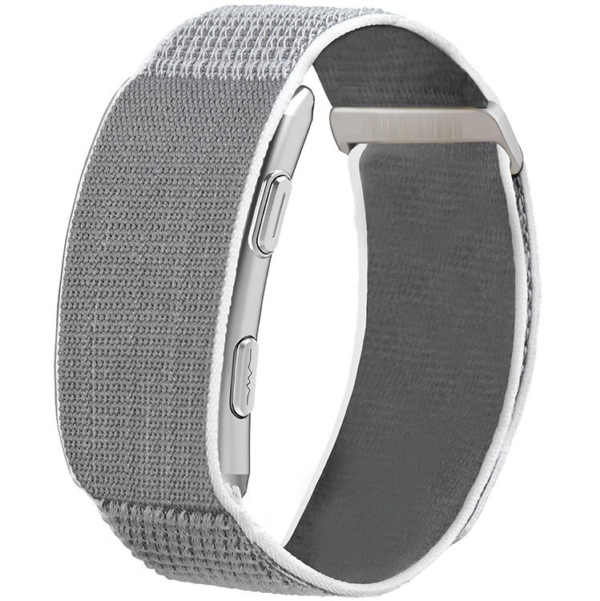
Screenless fitness tracker stress tracking on the PulseBand runs quietly in the background all day. The band’s optical sensor samples your heart rate continuously, and the onboard algorithm calculates HRV from those readings at regular intervals. A lower, steadier HRV generally signals higher physiological stress, while more beat-to-beat variation usually points to a calmer, more recovered state. Because the PulseBand has no display, all of this happens on your wrist without any prompting — you check the score later in the REXQU companion app rather than glancing down at a screen every few minutes.
What a High Stress Reading Actually Shows You
A spike in your stress score is not a diagnosis. It’s a pattern worth noticing: maybe your reading climbs every afternoon around a specific meeting, or stays elevated for a few days after a short night of sleep. The PulseBand also tracks sleep, body temperature, and 24/7 heart rate alongside stress, so you can look at a few data points together instead of reacting to one number in isolation.
Using It Through a Normal Workday
When people ask about screenless fitness tracker stress tracking specifically, it’s usually because they want to cut down on how often they check a screen during the day. Because the band disappears under a sleeve, it fits naturally into a workday the way a smartwatch sometimes doesn’t. You check your stress trend in the app at lunch or in the evening, not every few minutes — the data collects itself, and you only look at it when you choose to.
How It Compares to REXQU’s Other Screenless Bands
The PulseBand is REXQU’s screenless model built specifically around wellness tracking — alongside ECG, blood pressure, blood oxygen, body composition, and medication reminders. The GuardBand, by contrast, is built more around safety, with GPS location sharing and SOS calling layered on top of similar vital-sign tracking. If stress and recovery data are your main reason for buying, the PulseBand is the more direct fit of the two.
Getting a More Accurate Stress Reading
A few habits improve how reliable the data is. Wear the band snug enough that it doesn’t shift around during the day — a loose fit lets light leak under the sensor and can skew HRV readings. Keep the band on through normal activity rather than taking it off between workouts, since the daily stress score is built from continuous data, not a single spot check. And if a reading looks unusually high right after exercise, that’s expected: HRV naturally dips during and shortly after exertion before recovering, so the app’s trend line over several days is more useful than any single hour.
FAQ
Is the stress score a medical measurement? No — it’s a wellness estimate based on HRV, not a clinical diagnostic tool. If you have ongoing concerns about stress, anxiety, or your cardiovascular health, talk to a doctor rather than relying on wearable data alone.
Do I need the app open to track it? No. The PulseBand logs continuously on its own; you only open the REXQU app when you want to check the trend.
How long does the battery last with stress tracking running? REXQU rates the PulseBand at 7–10 days per charge with normal use, which includes continuous HRV sampling.
If daily stress trends are the specific feature you’re shopping for, the REXQU PulseBand is the clearest screenless fitness tracker stress tracking option in REXQU’s current lineup. Browse the full range on the screenless fitness trackers page, or see the full buying guide for a side-by-side look at every model. For more on how heart rate variability is used as a stress indicator, see Wikipedia’s overview of heart rate variability.