
Every watch on the shelf says it has GPS. Almost none of them explain what that actually means — and the gap between connected GPS, built-in GPS and multi-satellite positioning can materially change how useful a watch is away from your phone. This guide covers what to look for in a GPS smartwatch, what affects accuracy, what GPS does to battery life, and which navigation features matter for the terrain you actually use.
On this page
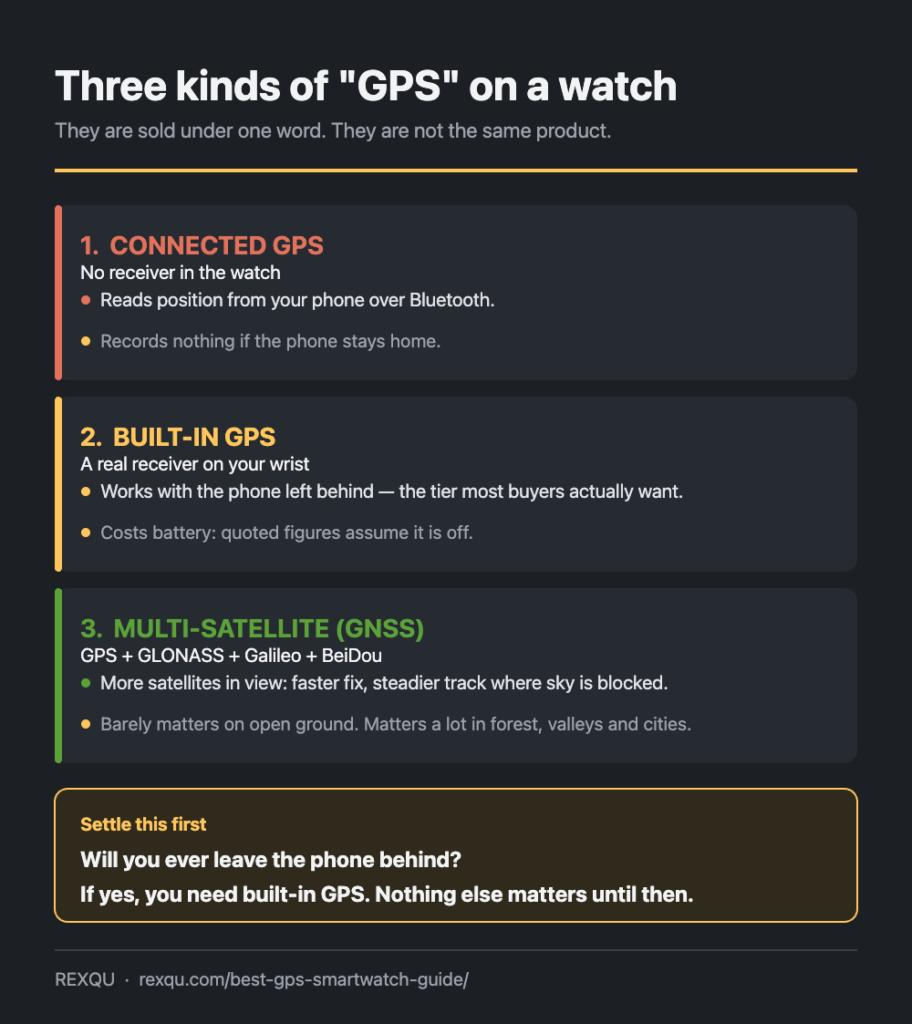
The three kinds of “GPS” sold on watches
This is the single most useful distinction in the category, and the one most product pages blur.
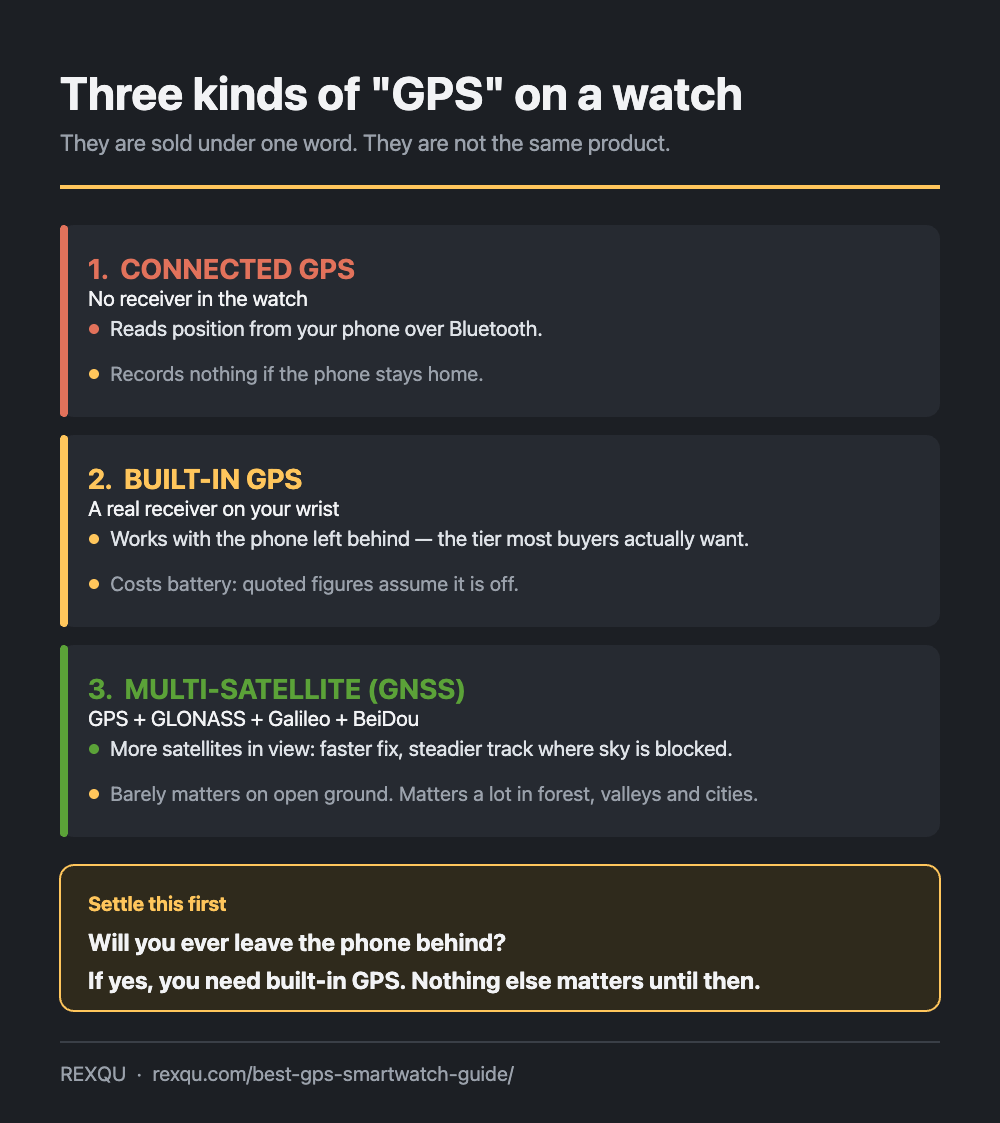
1. Connected GPS. The watch has no receiver of its own. It reads position from your phone over Bluetooth. Cheap to build, no battery cost to the watch — and completely dependent on carrying your phone. If the phone stays home, the watch records nothing.
2. Built-in GPS. There is a real receiver in the watch. It works with the phone left behind, which is the entire point for running, hiking and anything where you would rather not carry a slab of glass. This is the tier most buyers actually want when they search for a GPS smartwatch.
3. Multi-satellite (GNSS). A built-in receiver that also reads GLONASS, Galileo and BeiDou alongside the American GPS constellation — the four systems the US government’s official GPS information service lists as the global GNSS constellations. More satellites in view means a faster fix and a steadier track where the sky is partly blocked — dense forest, deep valleys, or streets between tall buildings. In wide-open country the difference is small; in a city or under canopy it is the difference between a clean line and a track that wanders through buildings.
The order matters when you shop: connected GPS is not a cheaper version of built-in GPS, it is a different product. Check which one you are being sold before you compare anything else.
How accurate is a GPS smartwatch, really?
Under open sky, consumer GPS lands within a few metres — close enough that a run traced on a map looks right. That figure degrades fast under conditions you will meet constantly.
Tree cover scatters the signal, so forest tracks wander. Tall buildings bounce it, producing the classic city artefact where your route appears to cut through a block. Deep valleys and canyon walls simply hide half the sky. And every receiver needs a cold start — the first fix of the day, standing still outdoors, can take a minute or two. Starting your watch and immediately setting off is the most common reason a first kilometre reads short.
Two habits fix most complaints: give the watch thirty seconds outside before you move, and judge accuracy on total distance over a known route rather than on the shape of the line.
What GPS does to battery life
GPS is the most expensive thing a watch does, and quoted battery figures assume it is switched off. A model rated “up to 15 days” is telling you what it manages as a watch, not as a tracker. Turn on continuous positioning and that same watch is measured in hours, not days.
This is why battery headroom matters more on a navigation watch than on any other kind. If you hike for eight hours on a Saturday, you want a watch whose everyday figure is measured in weeks so that a long day with GPS running still leaves you charged on Sunday. Where a figure is not published — and several of the models below do not publish one — treat it as unknown rather than assuming the best.
Compass, altimeter, barometer — what each one adds
These three get bundled together in marketing and do very different jobs.
A magnetic compass tells you which way you are facing while standing still. GPS alone cannot do this — it infers direction from movement, so a GPS-only watch has no idea where you are pointed until you walk a few paces. For anyone reading a paper map at a junction, this is the sensor that matters.
An altimeter gives elevation, which turns a flat distance into a real measure of effort. Most consumer altimeters derive height from barometric pressure rather than from GPS, because pressure-based readings are steadier over short climbs.
A barometer measures air pressure directly. Beyond feeding the altimeter, a falling reading over an afternoon is a genuine weather warning — the oldest and still one of the more useful signals you can wear on a hill.
Route-back (sometimes called breadcrumb or track-back) records where you have walked and points you along the same line in reverse. It is not full offline mapping and should not be mistaken for it, but for retracing a trail in failing light it is the single most reassuring feature on this list.
GPS Smartwatch Buying Checklist
Before you compare brands or prices, work through these five questions:
- Will you leave your phone behind? If yes, rule out connected-GPS watches and choose built-in GPS.
- Where do you use it? Dense forest, deep valleys and city streets increase the value of multi-satellite GNSS.
- Do you need navigation or only route recording? A compass, altimeter, barometer and route-back feature matter more for hiking than they do for a 5K run.
- How long is your longest tracked day? GPS-active runtime matters more than a headline standby figure.
- How rough is the environment? If dust, rain and knocks are part of the day, cross-check the rugged smartwatch buying guide as well.
If multi-constellation positioning is your main concern, read the multi-satellite GPS smartwatch guide. If elevation data matters, compare the REXQU altimeter watches. For long hikes, the hiking smartwatch battery-life comparison explains the charging trade-offs.
Comparing REXQU’s navigation models
Four models from the GPS & hiking smartwatches range, compared on the sensors that matter for navigation. Where a figure is not published on the product page it is marked “Not specified” rather than guessed.
| Model | Price | Multi-satellite | Compass | Altimeter | Barometer | Route-back | Water/dust | Battery |
|---|---|---|---|---|---|---|---|---|
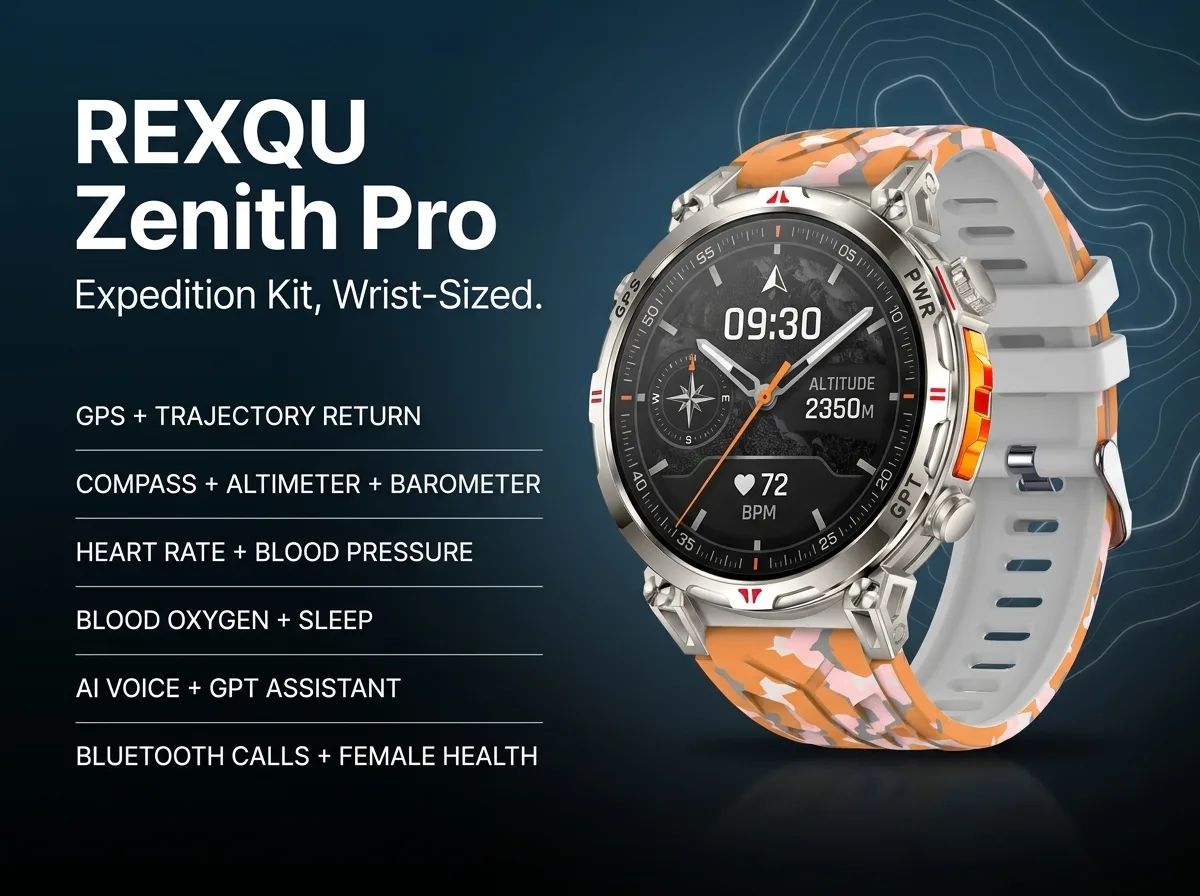
| Zenith Pro | $159.97 | Yes | Yes | Yes | Yes | Yes | Not specified | Not specified |
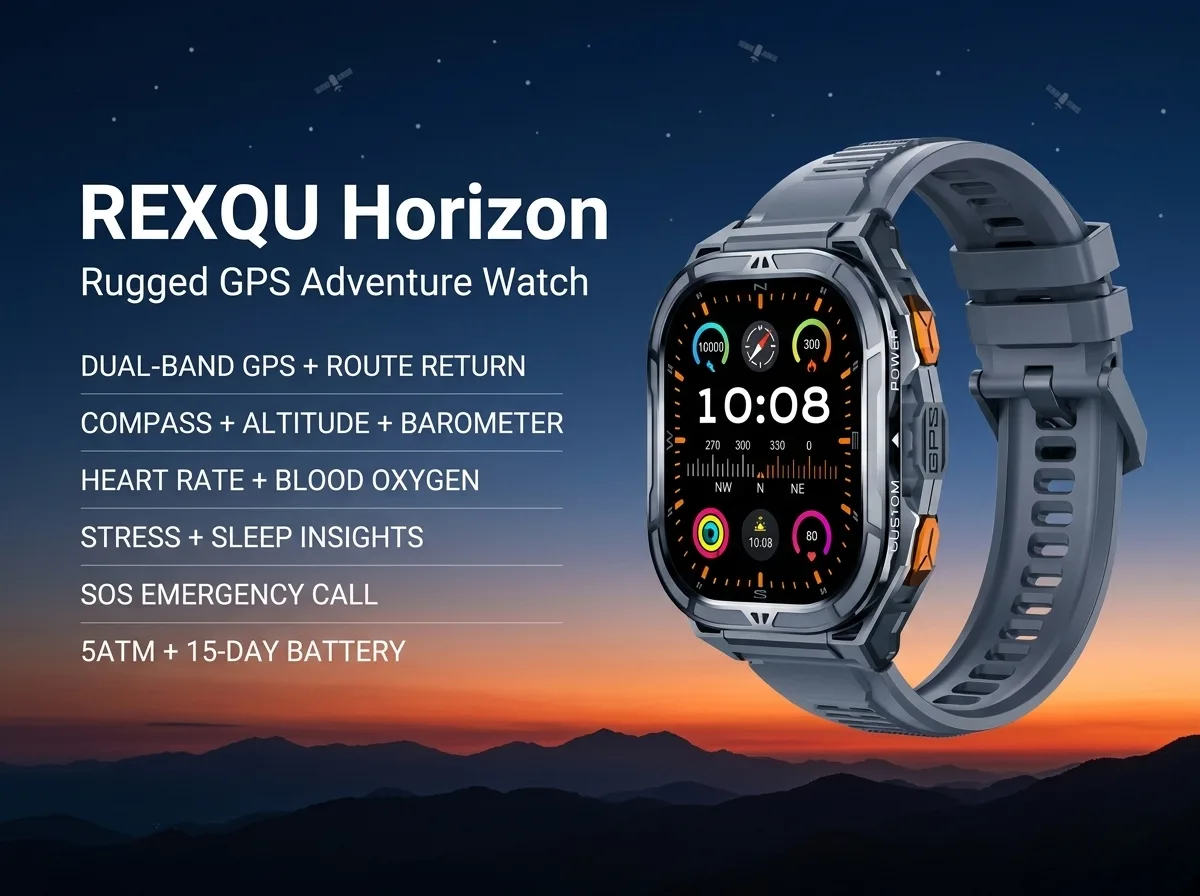
| Horizon | $159.97 | — | Yes | Yes | Yes | Yes | 5ATM | Up to 15 days |
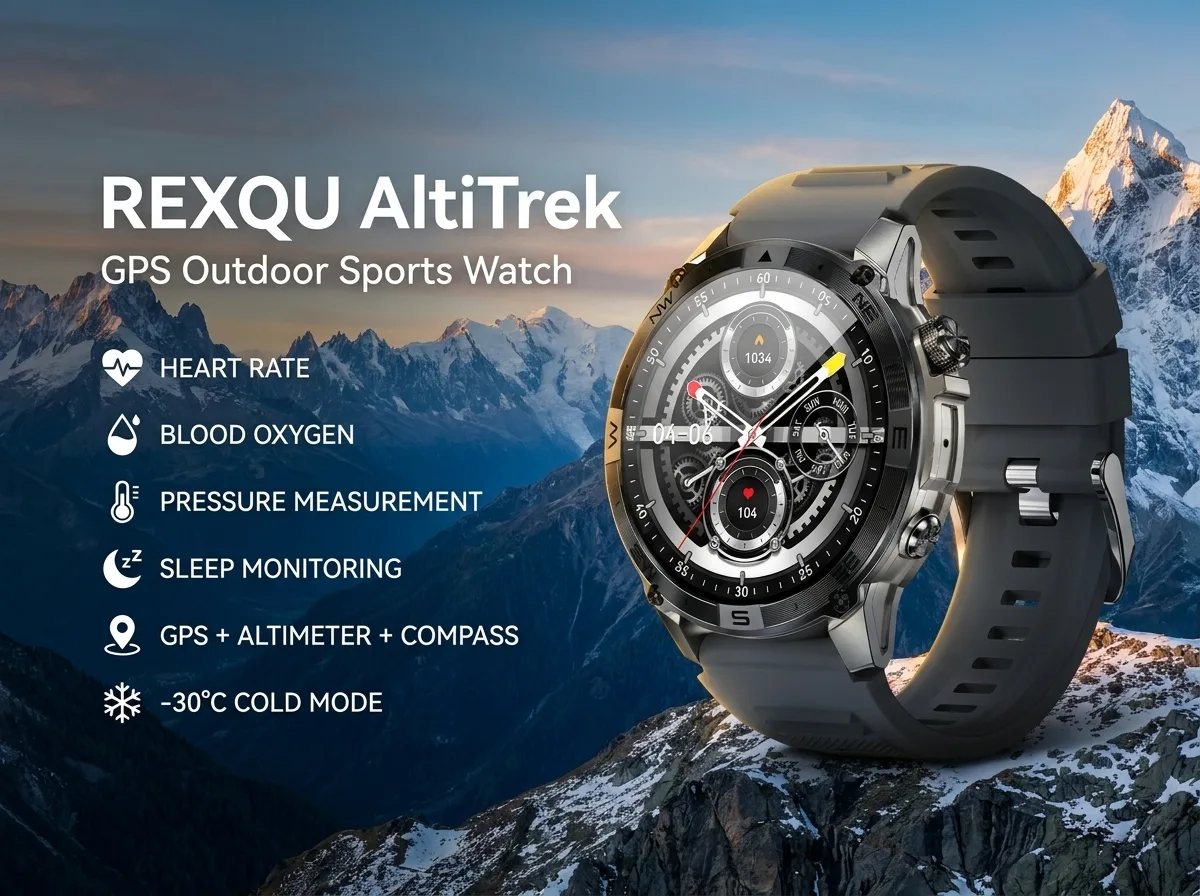
| AltiTrek | $149.97 | — | Yes | Yes | Yes | Yes | IP68 | Not specified |
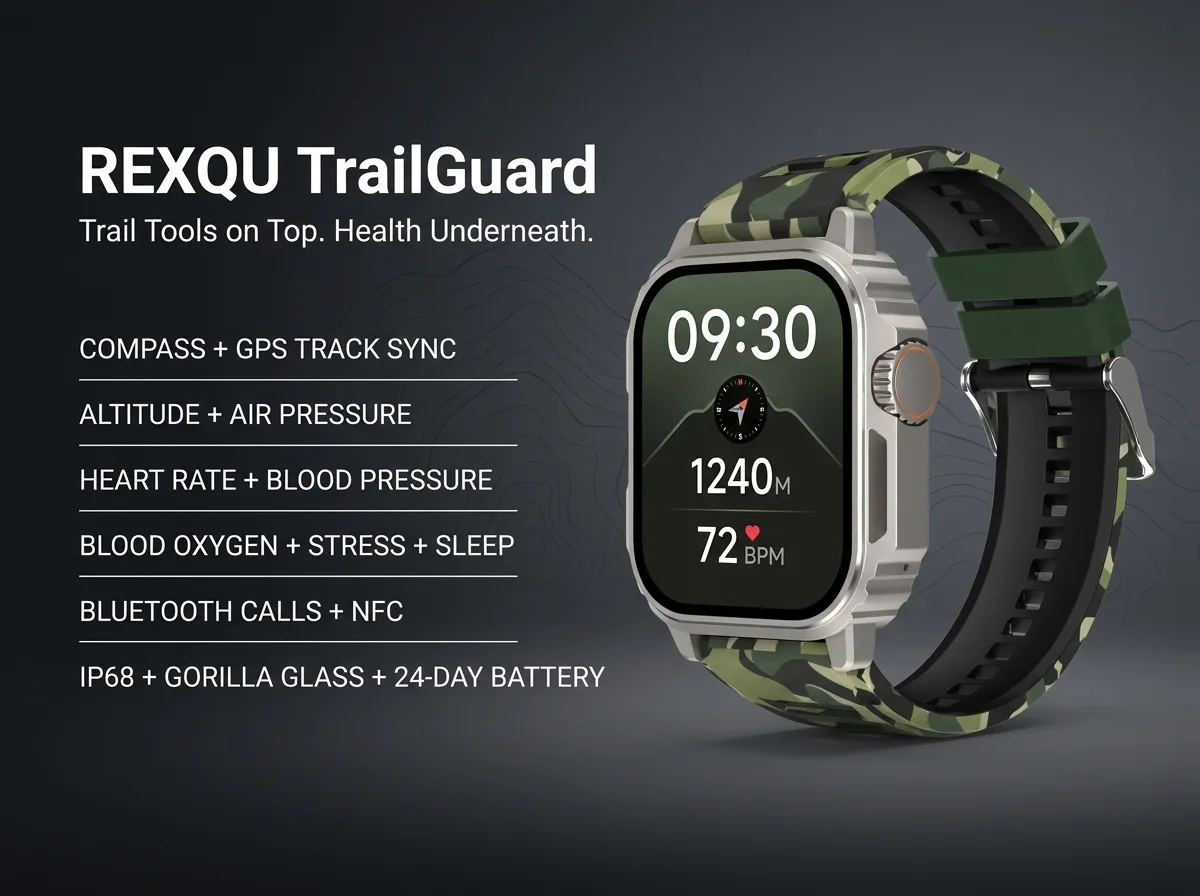
| TrailGuard | $149.97 | — | Yes | Yes | — | Yes | IP68 | 7–10 days |
Read that table by what you are actually doing. Zenith Pro is the only one here reading more than one satellite constellation, so it is the pick for forest and city navigation where the sky is broken up. Horizon is the one to buy if long unplugged stretches matter — it is the only model in this group publishing a multi-week figure, and 5ATM covers swimming as well as rain. AltiTrek carries the full sensor set behind an IP68 seal, which is the better rating where dust and grit are the problem rather than water. TrailGuard is the crossover: it appears in the rugged smartwatch guide too, and suits anyone who needs a navigation watch that also survives a work week.
One honest gap: none of these publish a GPS-active battery figure, so none of them will tell you how long they last with positioning running continuously. If an eight-hour tracked day is your requirement, buy the model with the most everyday headroom and test it on a route you know before you rely on it.
The watches recommended in this guide
Every model compared above, with a link straight to its full specs and price.
GPS smartwatch FAQs
Does a GPS smartwatch work without a phone?
Only if it has a built-in receiver. That is the whole distinction in the first section of this page: a watch with connected GPS borrows position from your phone and records nothing without it, while a watch with its own receiver works with the phone left at home. All four models compared above have built-in GPS.
Does it need a data plan or a subscription?
No. Satellite positioning is free and one-way — your watch listens, it does not transmit to the satellites, and there is nothing to subscribe to. A data connection is only needed for things layered on top, such as sending an alert to someone or syncing a route to an app.
Why does my distance differ from my friend’s watch on the same run?
Different receivers, different sampling rates and different smoothing. Two watches on the same wrist will disagree slightly; two people on the same route will disagree a little more. Differences of one to two percent are normal and are not a fault.
Is multi-satellite worth paying for?
It depends entirely on where you go. On open moorland or a running track, barely — a single-constellation receiver has clear sky and does fine. Under dense canopy, in a steep valley, or between city buildings, extra constellations mean more satellites in view and a noticeably steadier track. Buy it for the terrain you actually use, not for the spec sheet.
Can I navigate a route I have not walked before?
Not on these. Route-back retraces a line you have already recorded; it is not offline mapping, and no watch at this price offers full turn-by-turn on unfamiliar trails. Treat it as a way home, not as a map — and carry a real one where it matters.
Why is my first reading of the day slow or wrong?
Cold start. The receiver has to find satellites from scratch, which takes up to a couple of minutes standing still outdoors. Waiting for a solid fix before you set off removes most first-kilometre complaints.
Bottom line
Decide the tier first: if you will ever leave the phone behind, confirm that the watch has the positioning capability your use case requires. After that, compare terrain, navigation sensors, water resistance and battery headroom. Broken sky — forest, city and valleys — makes multi-satellite capability more valuable; long days away from a charger make battery headroom more important; and rough environments put more weight on the case and protection rating. Compare the current REXQU GPS & hiking watches →