
When you compare health smartwatch sport modes, a headline such as “100+ modes” can sound more important than it really is. The useful question is not how many activities appear in the menu—it is whether the watch includes the activities you actually do and records them in a way that makes your weekly trends easier to understand.
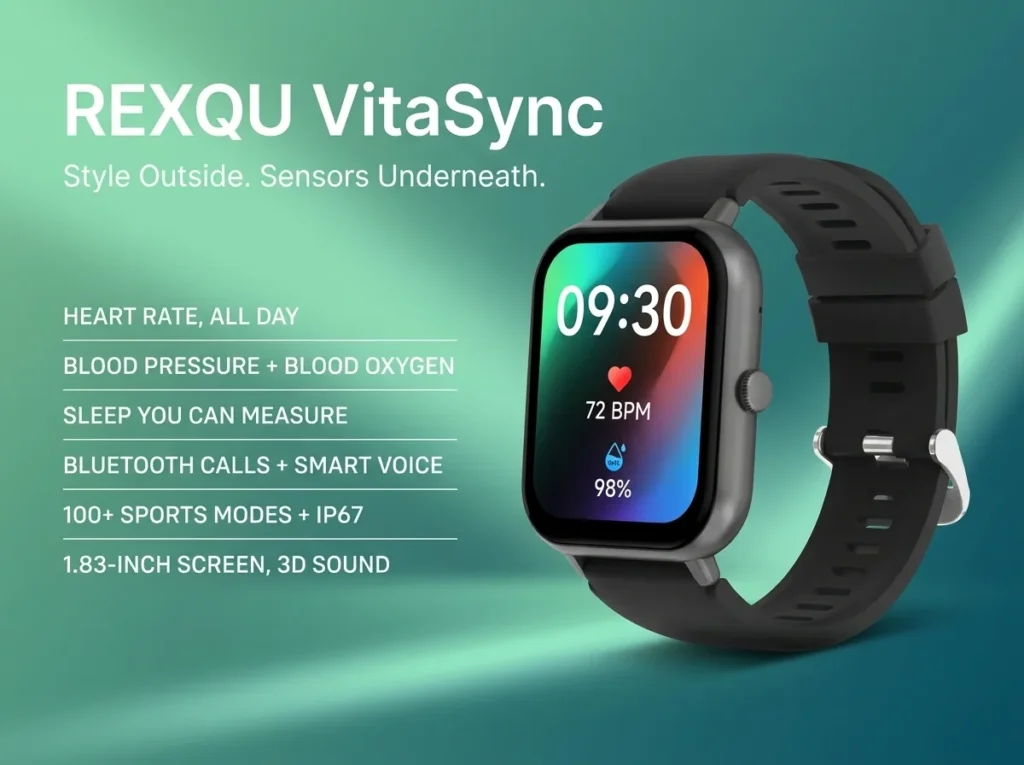
The REXQU VitaSync is one example of a daily health monitoring watch with 100+ sport modes. It combines that activity library with heart-rate, blood-oxygen, sleep and everyday smartwatch features. The sport modes add context to an exercise session; they do not automatically make heart-rate, calorie or health readings more accurate simply because the list is longer.
View VitaSync specs and current price →
What Do Health Smartwatch Sport Modes Actually Do?
A sport mode tells the watch what kind of session you are starting so it can label the workout correctly and prioritize relevant activity data such as duration, heart rate, steps, pace or estimated calories. The exact data shown varies by activity and device.
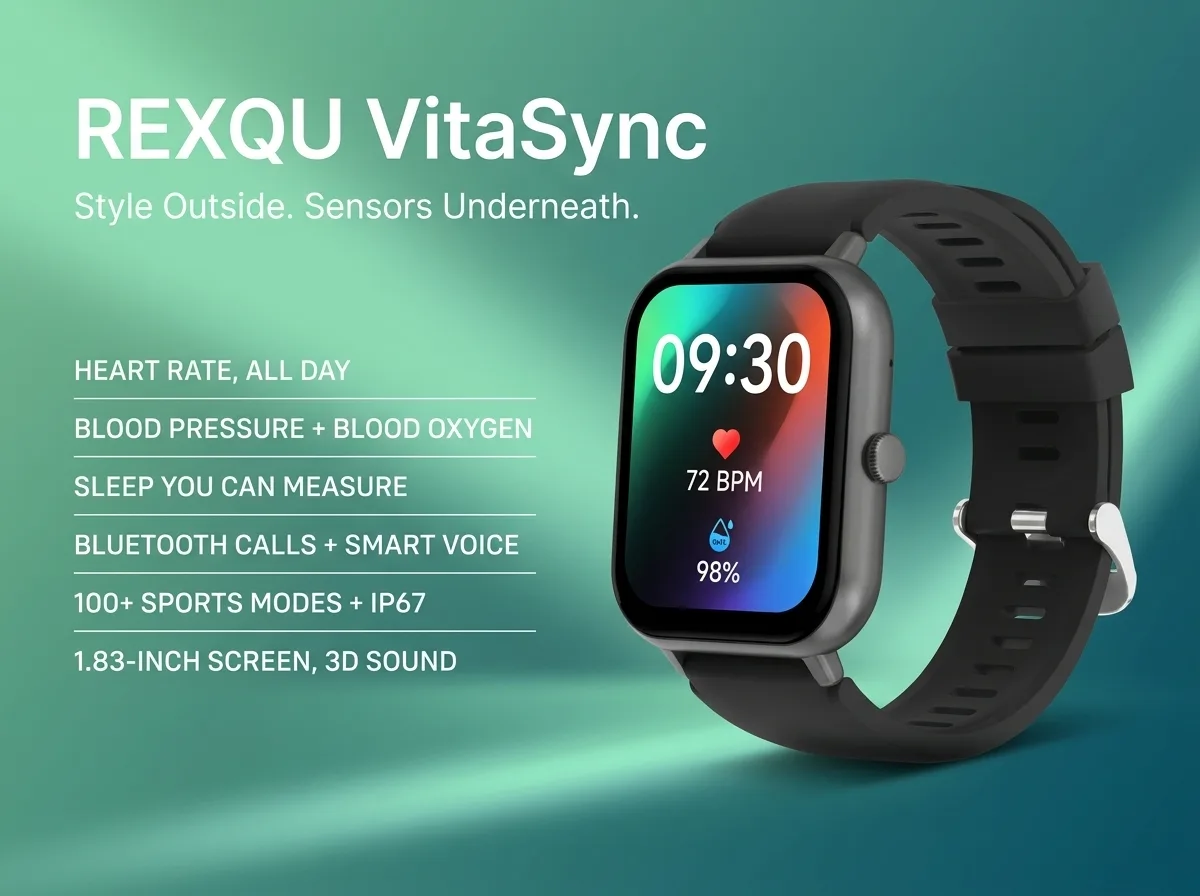
REXQU currently lists VitaSync with a 1.83-inch display, blood-oxygen and heart-rate tracking, Bluetooth calling and more than 100 sport modes. That makes it a useful crossover model for someone who wants daily wellness tracking and a broad exercise library in the same watch.
It is important not to overread the label. Choosing “cycling” instead of “walking” can organize the session more appropriately, but a sport profile does not turn a consumer smartwatch into laboratory equipment. Calorie estimates and wrist-based sensor readings remain estimates.
Do You Really Need 100+ Sport Modes?
Probably not every one of them. A large library is most useful because it increases the chance that your regular activities are represented, especially if your routine changes through the week.
| Your routine | What matters most |
|---|---|
| Mostly walking | A reliable walking mode, heart-rate trends and comfortable all-day wear |
| Running + gym | Separate run, strength and indoor-training profiles |
| Cycling + walking | Dedicated cycling and walking modes with clear session history |
| Mixed classes | A broader library for yoga, dance, HIIT and studio workouts |
| Outdoor adventure | GPS, altitude or rugged features may matter more than mode count |
If you only walk, 100 modes will not automatically improve your results. If you rotate among running, strength training, cycling and classes, the larger library becomes more useful because your app history is easier to organize by activity.
For buyers whose priority is route tracking rather than a huge mode list, the REXQU GPS Smartwatches category may be a better place to start.
How Sport-Mode Data Fits the Bigger Health Picture
The real advantage of combining sport modes with daily health tracking is context. Your workout history can sit alongside heart-rate, sleep and other wellness trends so you can look for patterns over time rather than treating each metric as an isolated score.
For example, you might compare how your resting heart rate or sleep changes during a week with more training. That does not prove one caused the other, but it can make your own routine easier to understand. The CDC physical-activity guidance for adults provides a useful independent benchmark for weekly aerobic and strength activity.
REXQU smartwatches are consumer wellness devices. Sport, calorie and health readings should be used for personal tracking rather than medical diagnosis.
How to Choose a Health Smartwatch for Exercise
- List your three to five regular activities. Confirm those modes before being impressed by the total count.
- Decide whether you need GPS. A large sport library and built-in satellite tracking are separate features.
- Check water-use guidance. A swimming profile does not by itself mean the watch is approved for swimming.
- Compare battery life in normal use. Frequent workouts, screen time and GPS can shorten runtime.
- Look at the health features you will actually use. Heart rate, sleep and SpO₂ may matter more day to day than dozens of rarely used profiles.
- Choose a watch you will wear consistently. Comfort and fit matter for both activity tracking and optical sensor contact.
Who Benefits Most From a Large Sport-Mode Library?
A 100+ mode library makes the most sense for people whose exercise changes from day to day: someone who walks, cycles, does strength work, attends classes and occasionally tries something new. A casual walker may get just as much value from a simpler watch if its core tracking, battery and comfort are better suited to that routine.
If you want to compare VitaSync against health-first models with different strengths, use the Best Daily Health Monitoring Watch buying guide. If exercise features are secondary and you mainly want blood-pressure wellness trends, ECG or senior-friendly controls, the broader Health Smartwatches category is the better comparison page.
Frequently Asked Questions About Health Smartwatch Sport Modes
Do more sport modes mean more accurate tracking?
No. Mode count tells you how many activities the software can label. Accuracy still depends on the sensors, fit, movement, algorithms and the particular metric being estimated.
Do I have to manually select the sport mode?
For many activities, manually choosing the matching mode before you start gives the clearest session label and history. Some watches may also recognize selected activities automatically, but support varies by model and software version.
Do sport modes affect battery life?
Active workout tracking generally uses more power than passive background monitoring, especially when a session also uses GPS, a bright display or frequent sensor sampling. Actual battery life depends on how often and how long you train.
Does a swimming mode mean the watch is waterproof?
No. Always check the product’s water-resistance rating and the manufacturer’s specific swimming guidance. A software activity mode and a water-use rating are separate things.
Which REXQU watch should I consider for 100+ sport modes and daily health tracking?
REXQU VitaSync is currently positioned with 100+ sport modes alongside heart-rate, blood-oxygen and everyday smartwatch features. Check the static product page for the latest specifications.
The Bottom Line
A daily health monitoring watch with 100+ sport modes is valuable when the activity library matches the way you actually exercise. For most buyers, the best decision is not “the biggest number”; it is the right mix of sport profiles, health tracking, comfort, battery and display.