
If you want an everyday smartwatch sport modes feature deep enough to actually log different workouts, not just count steps, REXQU’s style-first lineup is uneven about it — and one model stands out for a specific, published reason.
Everyday Smartwatch Sport Modes: Which REXQU Model Has the Most
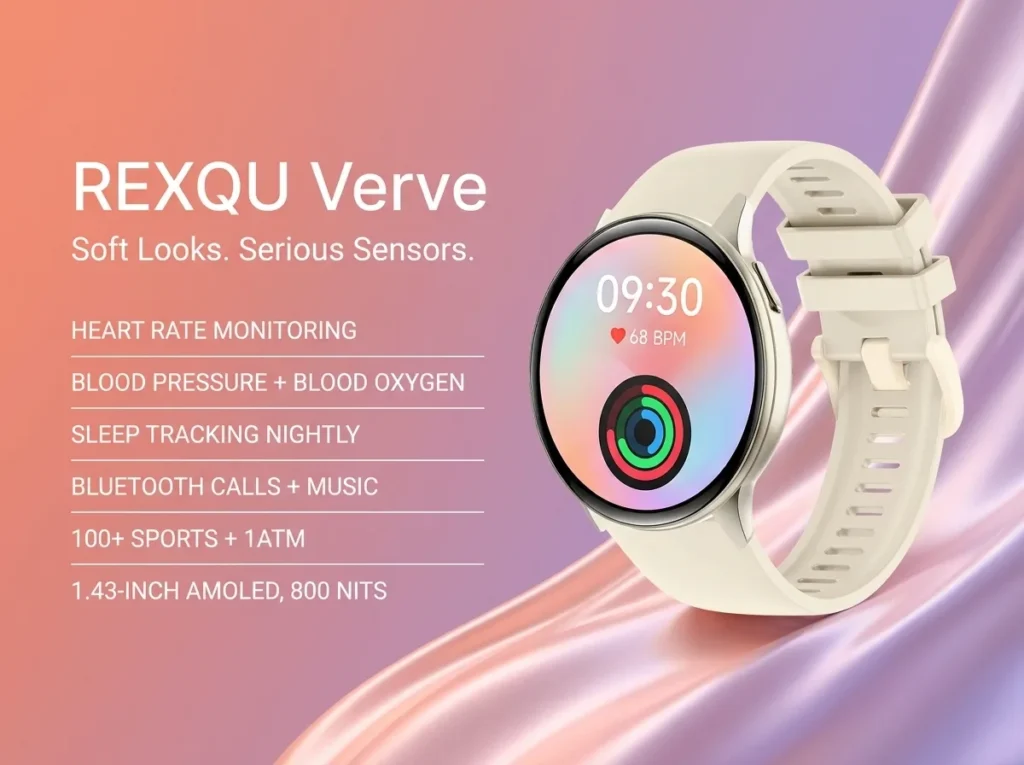
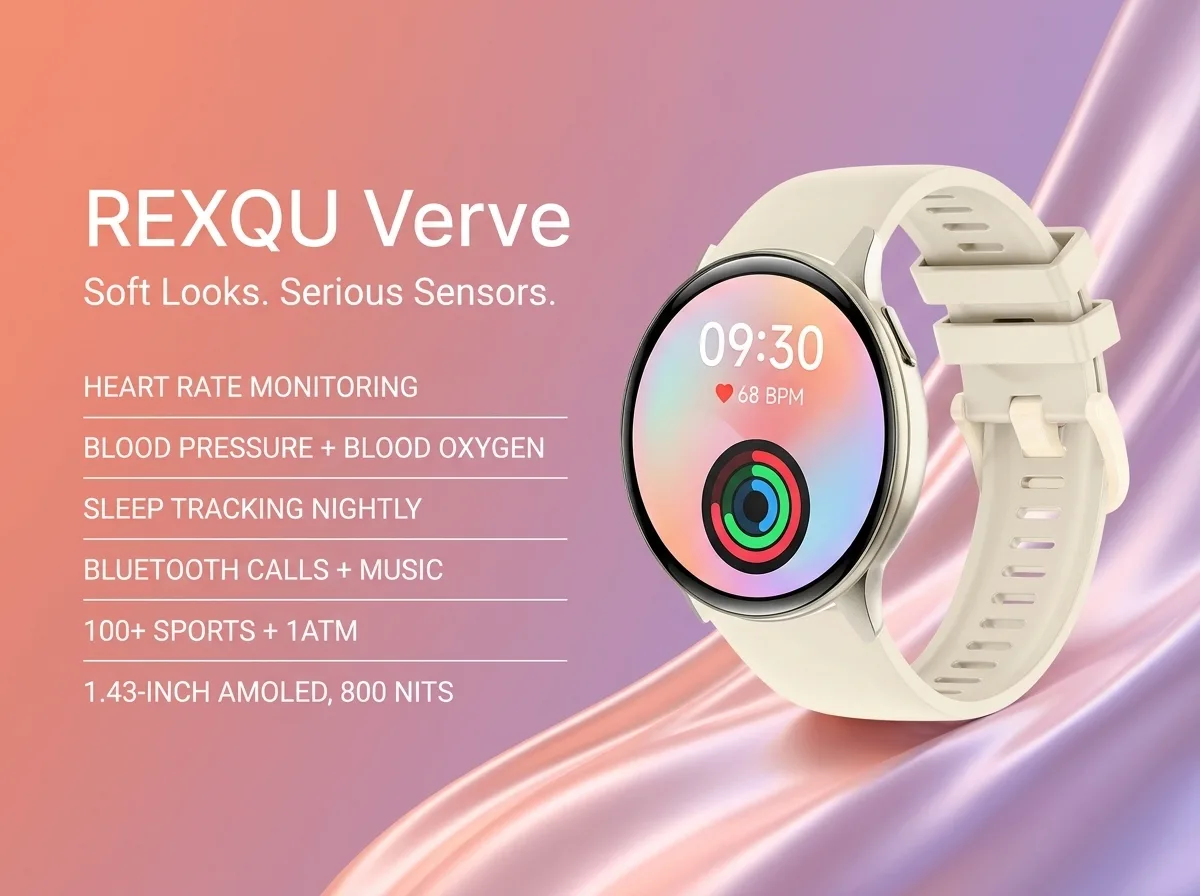
The REXQU Verve ($129.97) is the one REXQU explicitly spells out a number for: 100+ sport modes running on what REXQU calls a precise sports algorithm, alongside heart rate, blood pressure, blood oxygen, and sleep monitoring. It’s a round, fashion-forward design with a 1.43-inch AMOLED display at 800 nits, one-touch Bluetooth calling and music control, and 1ATM water resistance with magnetic charging in under 2.5 hours.
How Verve’s Sport Mode Count Compares to Meridian and Luxora
The REXQU Meridian ($139.97) and REXQU Luxora ($129.97) both track daily activity, heart rate, blood pressure, and blood oxygen, but neither one’s product listing publishes a specific sport-mode count the way Verve’s does. Meridian leans into a bigger 1.75-inch AMOLED display (466×466 resolution) and NFC payment support, while Luxora adds breathing training for stress management on a 1.72-inch screen. Both are IP68 water resistant with longer standby — Meridian runs 5-10 days of battery, Luxora stretches to 10-15 days of standby.
That’s a real design tradeoff, not an oversight. Meridian and Luxora are built around all-day health tracking and a specific look — a square NFC-ready case on Meridian, a square luxury case with breathing exercises on Luxora — rather than workout variety. If everyday smartwatch sport modes selection is the deciding factor for you specifically, Verve is the model REXQU built and marketed around that strength.
| Model | Price | Sport Modes | Display | Water Resistance |
|---|---|---|---|---|
| REXQU Verve | $129.97 | 100+ (published), precise sports algorithm | 1.43″ AMOLED, 800 nits | 1ATM |
| REXQU Meridian | $139.97 | Activity tracking, no published mode count | 1.75″ AMOLED (466×466) | IP68 |
| REXQU Luxora | $129.97 | Activity tracking, no published mode count | 1.72″ | IP68 |
Matching Sport Modes to Activity Intensity
Having 100+ sport modes only helps if you’re actually picking the mode that matches what you’re doing — a brisk walk and a run both register as “exercise,” but the heart-rate zones and calorie math behind each mode are different. The CDC’s guide to measuring physical activity intensity is a useful independent reference for telling moderate from vigorous activity, which is the same distinction a sport-mode watch is trying to estimate from your heart rate and motion data.
Who Actually Needs 100+ Sport Modes
If you rotate through a few different activities — cycling one day, swimming or weight training another — Verve’s broader mode selection means each session gets tracked with settings built for it instead of a generic “exercise” catch-all. If your routine is mostly daily steps, sleep, and the occasional walk, Meridian’s bigger screen or Luxora’s breathing training will likely matter more day to day than how many named sport modes a watch has sitting in its menu.
Everyday Smartwatch Sport Modes: Quick Questions
Do I need to manually start a sport mode, or does it track automatically? On all three REXQU models, you select the activity from the watch face before starting — none of them auto-detect which of the 100+ (or unlisted) modes you’re doing, so picking the right one before you start still matters for accurate calorie and heart-rate-zone data.
Does a higher sport-mode count mean better GPS tracking? Not necessarily. Sport mode count reflects how many named activity profiles are built in, not whether a watch has standalone GPS — none of Verve, Meridian, or Luxora are marketed with onboard GPS, so distance tracking for outdoor routes relies on your paired phone.
Compare current pricing and colors on the REXQU everyday style smartwatch category page, or see the full 8-model comparison guide if you’re still weighing style against features beyond everyday smartwatch sport modes alone.