
Want an everyday style smartwatch that doesn’t look like a gadget strapped to your wrist? REXQU’s Spectrum and Equilibrium were both designed around that exact brief — real watch styling on the outside, a full health-tracking sensor stack on the inside.
The tradeoff shoppers usually run into is that “fitness tracker” and “watch you’d actually wear to dinner” tend to be two different products. These two models are REXQU’s answer to that gap.
REXQU Spectrum: Chronograph Looks, Real Tracking
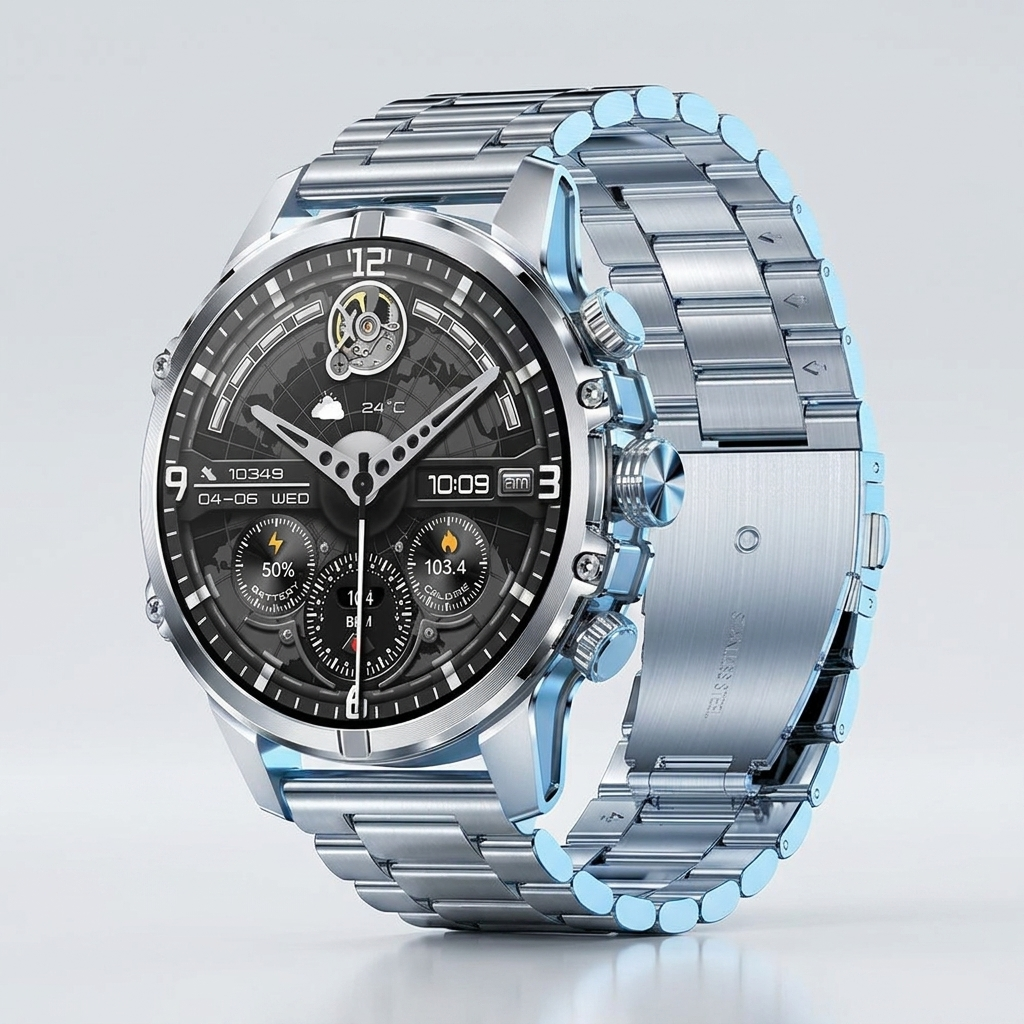
The REXQU Spectrum takes its cues from a classic chronograph — available in a steel-case option — while running a 1.75″ AMOLED display underneath at just 12mm thick. It reads heart rate in real time, blood pressure with a one-click check plus 24-hour background tracking, and blood oxygen through a green-light sensor, with hundreds of watch faces to match whatever you’re wearing. It’s priced at $129.97.
REXQU Equilibrium: Barely-There Everyday Style
The REXQU Equilibrium pushes further toward “you’d never guess it’s a smartwatch” — a metal case published at 7.5mm thick and 45 grams, wrapped around a curved 1.96″ AMOLED display. Underneath that slim profile it tracks heart rate continuously, offers on-demand SpO₂ and blood-pressure wellness readings, stages sleep into deep/light/REM, and supports Bluetooth calling through a built-in speaker and mic, at $129.97.
Spectrum vs. Equilibrium at a Glance
| Feature | REXQU Spectrum | REXQU Equilibrium |
|---|---|---|
| Design | Chronograph styling, steel option | Ultra-slim metal case |
| Case thickness | 12mm | 7.5mm |
| Weight | Standard | 45g |
| Display | 1.75″ AMOLED | Curved 1.96″ AMOLED |
| Heart rate | Real-time optical tracking | 24/7 continuous tracking |
| Blood pressure & SpO₂ | Included as wellness features | Included as wellness features |
| Sleep staging | Basic | Deep/light/REM |
| Bluetooth calls | Not included | Included |
| Price | $129.97 | $129.97 |
Is an Everyday Style Smartwatch Right for You?
If you like the idea of a traditional watch face — chronograph styling, physical-looking pushers and a steel-bracelet option — the Spectrum leans further into classic watch design while still offering heart-rate, blood-pressure and blood-oxygen wellness features. It also includes a built-in flashlight according to the current product page. If your priority is forgetting you’re wearing a device at all, the Equilibrium‘s 7.5mm case and 45-gram weight are the stronger fit, with Bluetooth calling and detailed sleep staging as important extras.
Both share the same underlying philosophy: an everyday style smartwatch shouldn’t require choosing between looking sharp and actually tracking your health. Neither model needs a subscription to unlock its trend history — everything shows up in the free companion app, and both are priced identically at $129.97, so the decision really comes down to which design and feature set fits your routine.
A Few Common Questions
Will it look out of place at work or a nice dinner? That’s exactly the gap these two models are built to close — the Spectrum’s chronograph face and the Equilibrium’s slim metal case are both designed to read as a normal watch first, health tracker second.
How many color and band options are there? The Spectrum comes in 4 colorways, including a steel-bracelet option for a dressier look, while the Equilibrium offers 6 — including black and silver-steel bracelet finishes — so there’s room to match either watch to how you actually dress day to day.
Why the Display Technology Matters
Both watches use AMOLED panels rather than basic LCD screens, which is part of why they can pull off a genuinely premium look — deeper blacks, sharper contrast, and colors that hold up next to a real dress watch rather than looking washed out. If you’re curious how that display technology actually works under the hood, Wikipedia’s entry on AMOLED covers the basics.
Bottom Line: Spectrum or Equilibrium?
Choose the Spectrum if traditional chronograph styling and a steel-bracelet option matter most. Choose the Equilibrium if slimness, low weight, Bluetooth calls and deeper sleep staging are the priorities. Both are everyday-style watches first, with wellness tracking built underneath.