
A daily health monitoring smartwatch is designed to do more than count steps. The useful models quietly build a picture of your everyday wellness by tracking metrics such as heart rate, blood oxygen (SpO₂), sleep and—in selected watches—blood-pressure trends, ECG, temperature and stress. The value is not one dramatic number; it is the pattern that develops when you wear the watch consistently.
If you are still deciding which REXQU model fits your routine, start with this explainer to understand the measurements, then use our Best Daily Health Monitoring Watch buying guide to compare current models and prices.
What Does a Daily Health Monitoring Smartwatch Track?
The exact sensor set varies by model, but a well-rounded daily health monitoring smartwatch usually combines several of the following measurements in one companion app:
- Heart rate: optical sensors estimate pulse throughout the day and can show resting-heart-rate trends over time.
- Blood oxygen (SpO₂): light-based sensing estimates oxygen saturation for wellness awareness and trend checking.
- Sleep: movement and heart-rate signals are used to estimate sleep duration and stages.
- Blood-pressure trends: selected cuffless watches estimate systolic and diastolic pressure using wrist-based optical data and algorithms.
- ECG: selected models use electrical contact points to record a short single-lead rhythm trace when you deliberately start a reading.
- Skin or body-temperature trends: available on some health-focused models.
- Stress or recovery indicators: often derived from heart-rate variability and related sensor data.
The advantage of combining these measurements is context. For example, a change in resting heart rate is easier to interpret when you can also see whether you slept poorly, exercised unusually hard or had a different SpO₂ pattern that day.
Daily Heart-Rate Monitoring: The Foundation Metric
Heart rate is the most established everyday metric on a health smartwatch because optical PPG sensors can collect frequent pulse estimates with very little effort from the wearer. Instead of checking your pulse manually, the watch creates a trend line across resting periods, activity and sleep.
The American Heart Association’s heart-rate guidance explains how resting pulse varies with activity, fitness and other factors. For smartwatch users, the important idea is to learn your own normal pattern rather than obsess over an isolated reading.
What makes heart-rate trends useful?
- Compare your resting heart rate from week to week.
- Look for changes after exercise, poor sleep or stressful periods.
- Use the same watch and a similar wearing position for better consistency.
- If you repeatedly see an unexpected change or have symptoms, discuss it with a healthcare professional rather than diagnosing yourself from the watch.
Blood Oxygen Monitoring on a Daily Health Smartwatch
SpO₂ sensors estimate how much oxygen your blood is carrying by shining light into the skin and analyzing the returning signal. A smartwatch makes this convenient because the sensor is already on your wrist, but wrist readings can be affected by fit, movement, circulation, skin temperature and other factors.
The FDA notes that pulse-oximetry readings have limitations and should be considered together with symptoms and other information. For a deeper explanation—including skin-tone considerations and measurement limitations—read REXQU’s evidence-based Blood Oxygen (SpO₂) Accuracy Health Guide and our supporting article on daily health monitoring watch blood oxygen.
Sleep Tracking: What the Watch Can Show Overnight
A daily health monitoring smartwatch can also turn nighttime wear into useful context. Consumer watches commonly estimate total sleep time and periods of lighter or deeper sleep using motion plus heart-rate signals. These estimates are useful for comparing your own nights, although they should not be treated as a clinical sleep study.
If sleep is your main reason for buying, see Daily Health Monitoring Watch Sleep Tracking Explained. The strongest use case is consistency: wear the same device for several weeks and look for patterns between sleep duration, resting heart rate, daytime energy and activity.
Blood Pressure: Useful Trend, Different Standard
Some REXQU health watches also estimate blood pressure from the wrist. Cuffless blood-pressure technology is convenient, but it is fundamentally different from a validated upper-arm cuff. The American Heart Association’s 2025 scientific statement says cuffless devices show promise while emphasizing that accuracy and clinical utility remain uncertain for diagnosis or treatment decisions.
That makes the best use of a smartwatch BP feature straightforward: use it for wellness trends and awareness, and use an appropriate validated cuff when a medical decision depends on the number. REXQU’s Understanding Your Blood Pressure Numbers Health Guide explains the measurement categories and best practices, while Blood Pressure Smartwatch Accuracy: What to Know focuses specifically on wrist-wearable limitations.
ECG: A Deliberate Reading Rather Than Background Tracking
ECG is different from heart-rate tracking because you normally start the recording yourself. On an ECG-equipped watch you sit still, touch the electrode and allow the device to capture a short single-lead electrical trace. That can be useful information to save and discuss with a clinician, but it is not the same as a clinical 12-lead ECG.
If ECG is important to you, the REXQU ECG smartwatch collection and AFib and smartwatch ECG Health Guide go deeper into that technology.
Automatic Monitoring vs On-Demand Checks
Not every health feature runs continuously. This is one of the most important distinctions to check before buying:
| Monitoring style | Best for | Typical examples |
|---|---|---|
| Background/automatic | Building a trend without remembering to start each reading | Heart rate, sleep, selected BP features |
| On-demand | Taking a deliberate reading while seated and still | ECG, SpO₂ spot checks, multi-vital checks |
| Hybrid | Passive trends plus a more detailed reading whenever you want one | Health-focused smartwatches combining background tracking with manual ECG or multi-vital scans |
For a dedicated comparison of these approaches, see Automatic Health Monitoring Watch: BioVision vs VitaCore.
REXQU Daily Health Monitoring Smartwatch Examples
Three models illustrate the different ways a daily health monitoring smartwatch can be configured:
REXQU VitaCore — multi-vital snapshot
VitaCore combines a large 2.04-inch AMOLED display with a 30-second multi-vital check covering heart rate, blood-pressure wellness trends, blood oxygen, temperature and stress. It suits buyers who want several readings presented together rather than opening separate menus.
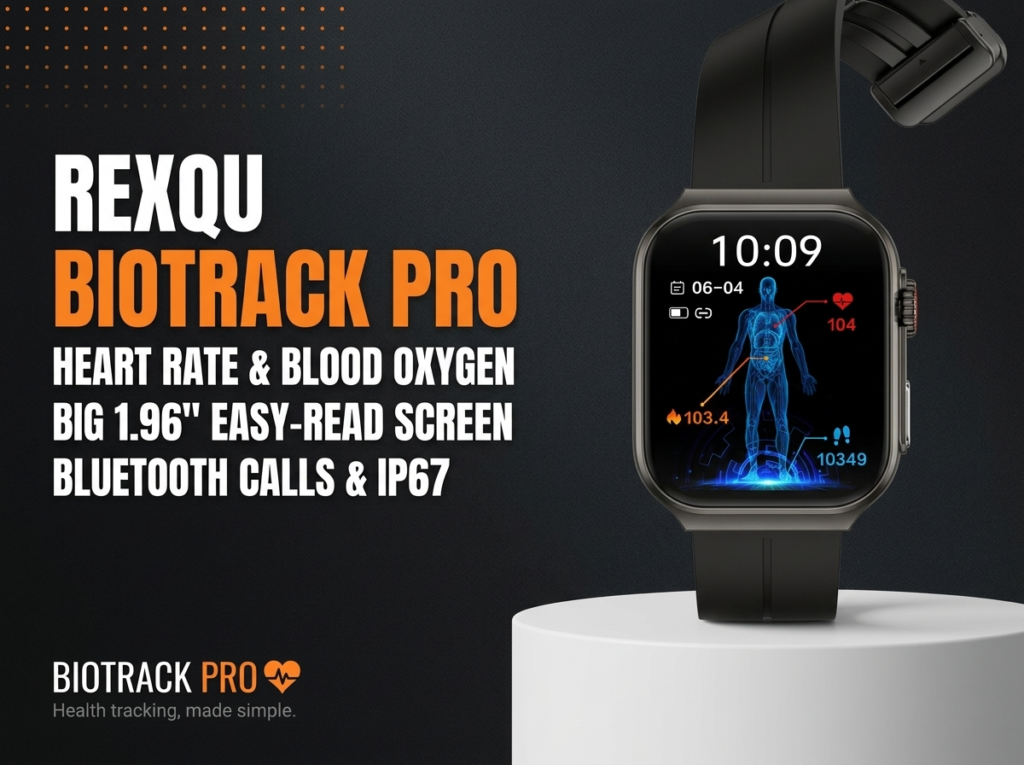
REXQU BioTrack Pro — simple everyday use
BioTrack Pro emphasizes readability and ease of wear with a large curved display and simple clasp. It is a practical option for first-time smartwatch users or anyone who values straightforward daily monitoring over a long list of advanced modes.
REXQU HealthLink — adds ECG and temperature
HealthLink is worth considering if you want daily heart-rate, SpO₂ and sleep information but also want an on-demand ECG and temperature trend in the same watch.
How to Get Better Daily Health Monitoring Data
- Wear the watch consistently. Trends are much more useful when gaps are kept to a minimum.
- Keep the sensor snug against the skin. A loose band allows light and movement to interfere with optical readings.
- Take manual readings while still. For ECG, blood pressure or SpO₂ spot checks, sit down and avoid talking or moving until the measurement finishes.
- Compare trends, not isolated numbers. Weekly patterns are normally more informative than reacting to one reading.
- Use the right tool for medical decisions. A wellness watch can add context, but validated medical equipment and professional advice remain appropriate when diagnosis or treatment is involved.
How Often Should You Review the App?
You do not need to stare at health metrics all day. A practical routine is to check the dashboard briefly each morning or evening, then review the previous seven days once a week. That gives enough context to see whether your sleep, resting heart rate, activity or other wellness measurements are moving in a consistent direction.
For buyers who want the comparison rather than the technology lesson, go directly to the daily health monitoring watch buying guide or browse the full REXQU Health Smartwatches collection.
Frequently Asked Questions
Is a daily health monitoring smartwatch a medical device?
REXQU smartwatches are consumer wellness devices. Their readings are intended for personal awareness and trend tracking rather than medical diagnosis or treatment decisions.
Which health metric is most useful to track every day?
There is no single best metric for everyone. Heart rate and sleep are useful broad indicators, while SpO₂, blood-pressure trends or ECG may matter more to people with specific interests. The best metric is one you understand, measure consistently and interpret in the right context.
Do I need a subscription?
REXQU’s current health-monitoring models use companion apps without a required recurring subscription for the core tracking features described on their product pages.
Can I show smartwatch data to my doctor?
Yes. Trend history can provide useful context for a conversation, especially if you can identify dates or times when a reading looked unusual. It should supplement—not replace—appropriate clinical measurements.
The Bottom Line
A good daily health monitoring smartwatch should make wellness tracking easier, not more complicated. Use it to build a consistent picture of heart rate, sleep, blood oxygen and other supported measurements, then interpret those trends with the limitations of consumer wearables in mind. If you are ready to choose a model, compare the current recommendations in our Best Daily Health Monitoring Watch guide or browse all REXQU Health Smartwatches.
This article is for general information and wellness education. REXQU smartwatches are not intended to diagnose, treat, cure or prevent disease.