
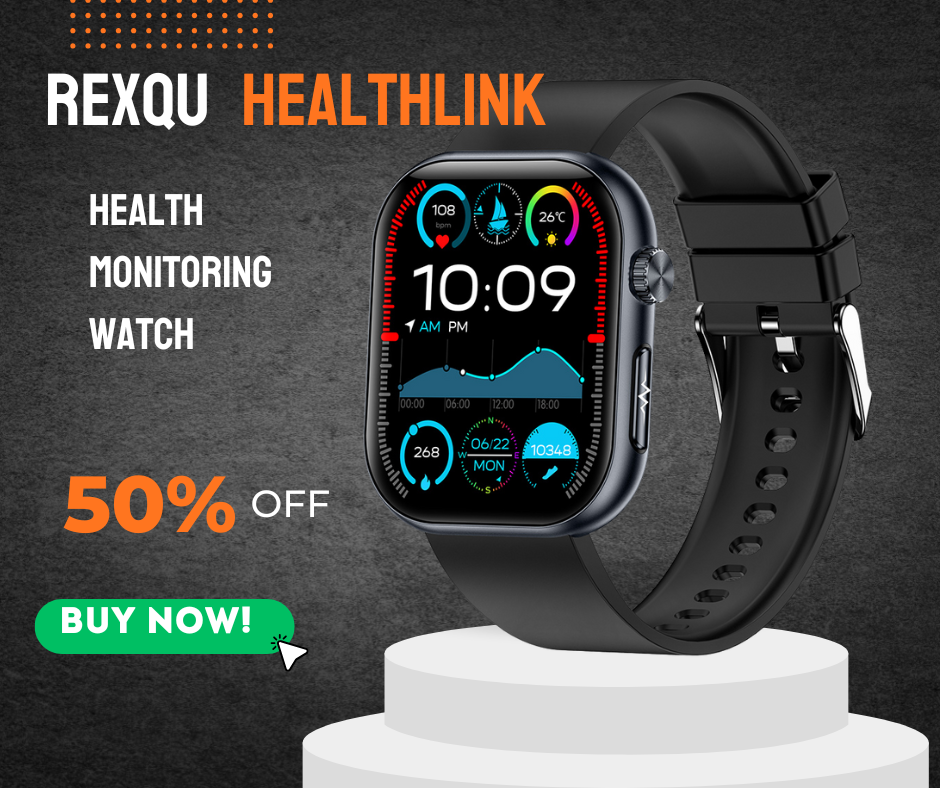
If you are comparing a daily health monitoring watch with blood oxygen tracking, the most useful question is not simply whether the watch displays an SpO₂ number. It is how consistently the watch measures, what can affect the reading, how the result fits alongside heart rate and sleep data, and whether the device is being used for everyday wellness tracking or for a medical decision.
A blood oxygen smartwatch can make SpO₂ easier to check because the sensor is already on your wrist. REXQU models such as O2Max, HealthLink, VitaSync and VitaCore combine blood-oxygen wellness readings with other daily metrics, giving you a broader view of your trends rather than a single isolated number.
What Does Blood Oxygen (SpO₂) Mean on a Smartwatch?
SpO₂ is an estimate of the percentage of haemoglobin in your blood that is carrying oxygen. Clinical pulse oximeters commonly estimate oxygen saturation using light, and many consumer wearables use a related optical principle at the wrist.
On a smartwatch, the reading is usually produced by LEDs and optical sensors on the underside of the case. The watch shines light into the skin and analyses changes in the reflected signal. Software then estimates oxygen saturation from that optical information.
The advantage of a smartwatch is convenience. Instead of finding a separate device every time you want to look at a wellness metric, you can review SpO₂ alongside heart rate, activity, stress and sleep information in the same app. That makes a daily health monitoring watch blood oxygen feature most useful when you are looking for patterns over time.
How a Blood Oxygen Smartwatch Measures SpO₂
Most wrist wearables use photoplethysmography, usually shortened to PPG. PPG is an optical sensing method that detects changes in blood volume close to the skin. Different wavelengths of light are absorbed differently depending on how oxygenated the blood is, allowing the device’s algorithm to estimate SpO₂.
This is an impressive amount of sensing technology in a small watch, but wrist measurements have practical challenges. Your arm moves more than a fingertip resting inside a clinical monitor, and the watch must maintain good optical contact through normal daily wear.
Why Wrist Position and Sensor Contact Matter
A loose watch can allow outside light to reach the sensor, while a watch that slides around during measurement may introduce motion artefacts. Cold skin and reduced peripheral circulation can also weaken the optical signal. For that reason, one unusual smartwatch reading should be interpreted in context rather than treated as a definitive health conclusion.
How Accurate Is Smartwatch Blood Oxygen Monitoring?
The answer depends on the device, the user and the conditions under which the reading is taken. Consumer smartwatch blood-oxygen features can be useful for wellness awareness, but they should not automatically be treated as equivalent to a medically validated pulse oximeter.
The U.S. Food and Drug Administration notes that pulse oximetry itself has limitations and that factors including poor circulation, skin pigmentation, skin temperature and movement can affect accuracy. The FDA also distinguishes general-wellness products from devices evaluated for clinical decision-making. You can read the agency’s consumer explanation in its Pulse Oximeter Basics.
Research has also examined differences associated with skin pigmentation. A systematic review and meta-analysis published in BMC Medicine found evidence that pulse oximetry may overestimate oxygen saturation in people with higher levels of skin pigmentation, while also noting uncertainty and variation across studies. The research is available through PubMed.
For a smartwatch user, the practical lesson is straightforward: repeatable conditions and trends are more informative than obsessing over one isolated number.
7 Factors That Can Affect a Blood Oxygen Smartwatch Reading
- Movement: taking a reading while walking, talking with your hands or exercising can interfere with the optical signal.
- Loose fit: if the watch moves on the wrist, sensor contact becomes less consistent.
- Cold skin: lower skin temperature can reduce peripheral blood flow and make optical measurement more difficult.
- Wrist position: keeping the arm relaxed and supported generally produces a cleaner signal than holding it in the air.
- Skin pigmentation: published research has identified accuracy differences that manufacturers and regulators continue to study.
- Tattoos, hair or barriers over the sensor: anything that changes how light enters and returns from the skin may influence optical sensing.
- Device algorithm and sensor design: two watches can use broadly similar optical principles yet process the signal differently.
How to Get a More Consistent SpO₂ Reading From Your Watch
If your goal is to compare readings from day to day, consistency matters. Use the same basic measurement routine whenever possible:
- Sit quietly for a few minutes before taking an on-demand reading.
- Wear the watch snugly enough that the sensor stays in contact with the skin without being uncomfortably tight.
- Position the watch slightly above the wrist bone rather than directly on it.
- Rest your forearm on a table or your lap.
- Keep still until the measurement is complete.
- If a result looks unusual, repeat the measurement under the same calm conditions rather than immediately drawing a conclusion.
- Look at the pattern alongside other wellness information such as heart rate, sleep and how you actually feel.
If sleep is part of the reason you are choosing an all-day wearable, REXQU’s guide to daily health monitoring watch sleep tracking explains what wrist wearables can record overnight and how to interpret those trends.
Best REXQU Blood Oxygen Smartwatches for Daily Monitoring
Different REXQU watches approach blood-oxygen tracking differently. The right choice depends on whether SpO₂ is your main priority or one part of a broader health-and-fitness feature set.
| REXQU Model | Best For | Blood Oxygen Use | Other Useful Features |
|---|---|---|---|
| O2Max | SpO₂-first shoppers | Blood-oxygen wellness monitoring is a central feature | Heart rate, blood pressure, ECG |
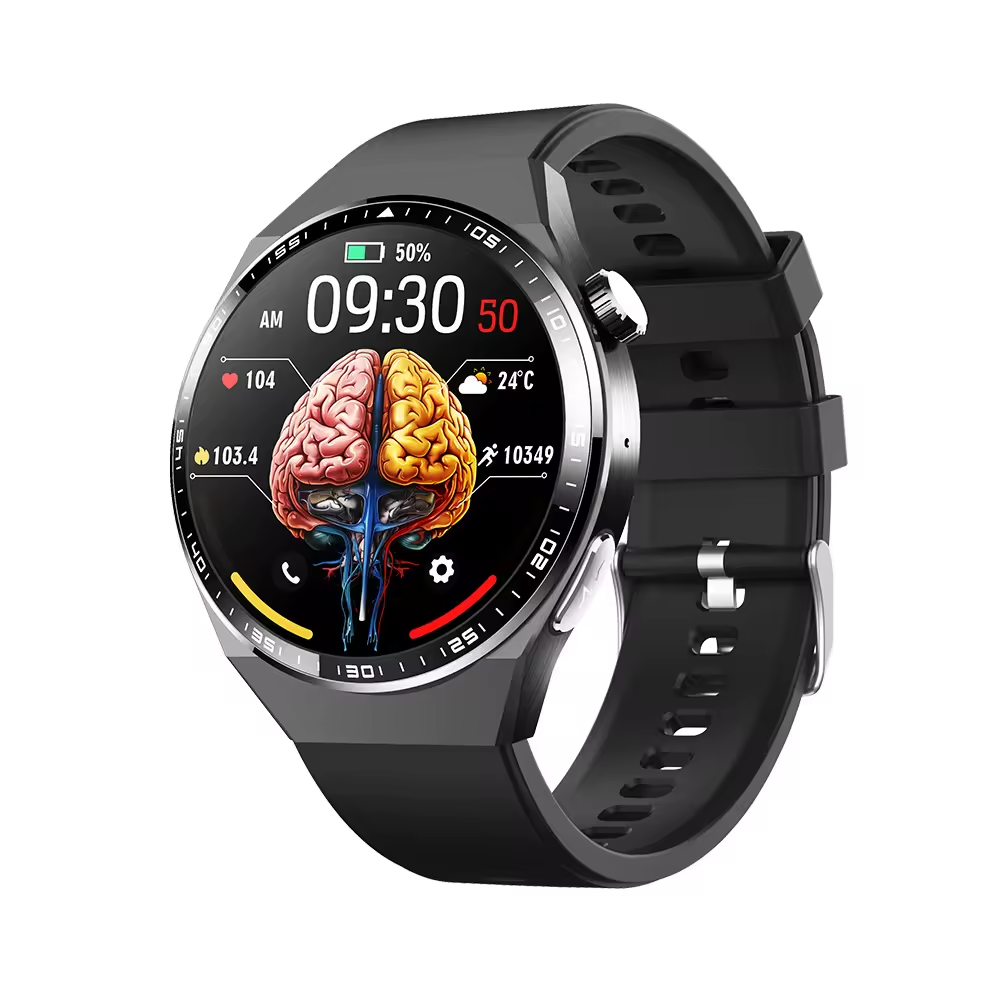
| HealthLink | Large display + broad health checks | On-demand SpO₂ reading | ECG, blood pressure, temperature, sleep |
| VitaSync | Everyday health + calling | SpO₂ wellness readings | Heart rate, sleep, Bluetooth calls, sport modes |
| VitaCore | Multi-metric health checks | Blood oxygen within a broader wellness check | Blood pressure, stress and other wellness metrics |
REXQU O2Max: Best if Blood Oxygen Is the Priority
REXQU O2Max is the most natural starting point if SpO₂ is the feature you care about most. It is positioned around oxygen-focused wellness tracking while still giving you heart-rate, blood-pressure and ECG-related functionality in the same wearable. That makes it easier to compare blood-oxygen trends with other cardiovascular wellness data.
REXQU HealthLink: Best for a Large Health Dashboard
HealthLink combines on-demand blood-oxygen readings with ECG, blood-pressure, temperature and sleep information on a large display. It suits shoppers who want several health-related metrics in one interface rather than buying a watch primarily for sport.
REXQU VitaSync: Best for Everyday Use
VitaSync is a more general-purpose option, combining SpO₂ wellness information with sleep, activity and Bluetooth calling. It is a sensible choice when blood oxygen matters but you also want normal smartwatch convenience throughout the day.
REXQU VitaCore: Best for Multi-Metric Checks
VitaCore is aimed at users who prefer several wellness readings together. Rather than treating SpO₂ as a standalone feature, it places blood oxygen alongside other health indicators so you can review the broader pattern.
Smartwatch SpO₂ vs a Finger Pulse Oximeter
A smartwatch wins on convenience because it is already on your wrist and can make repeated wellness tracking easier. A finger pulse oximeter is purpose-built for oxygen saturation measurement and, depending on the specific product and regulatory status, may be more appropriate when measurement accuracy is being used in a clinical context.
The key distinction is purpose. REXQU smartwatches are consumer wellness devices. They are designed to help users follow trends, not to diagnose hypoxaemia or replace professional assessment.
If you want the deeper evidence discussion—including skin-tone considerations, FDA-related accuracy issues and practical interpretation—read the full REXQU SpO₂ Accuracy & Skin Tone Health Guide.
When Should You Pay Attention to a Blood Oxygen Trend?
The strongest use case for a wearable is noticing that your personal pattern has changed. If readings repeatedly look different from your normal trend, especially when you are also feeling unwell, it is reasonable to confirm the information using an appropriate validated device or discuss it with a healthcare professional.
A smartwatch should not be used to rule out a medical problem simply because the displayed number looks reassuring. Symptoms and clinical context matter. That distinction is especially important with blood oxygen because optical measurements can be affected by signal quality and other user-specific factors.
Frequently Asked Questions About Blood Oxygen Smartwatches
Can a smartwatch really measure blood oxygen?
Many smartwatches can estimate SpO₂ using optical sensors at the wrist. The feature can be useful for wellness trends, but accuracy varies by device and measurement conditions.
What is the best REXQU watch for blood oxygen monitoring?
If blood oxygen is your main priority, O2Max is the most oxygen-focused option. HealthLink, VitaSync and VitaCore are stronger choices when you want SpO₂ as part of a broader daily-health feature set.
Does a blood oxygen smartwatch replace a medical pulse oximeter?
No. A consumer wellness watch should not be treated as a substitute for a validated medical device when clinical decisions depend on the measurement.
Why does my smartwatch SpO₂ reading change?
Movement, fit, skin temperature, circulation, sensor contact, skin pigmentation and normal biological variation can all contribute to differences between readings.
Should I compare smartwatch blood oxygen readings day to day?
Yes, trend comparison is one of the more useful ways to use the feature. Try to take on-demand readings under similar conditions so the comparison is more meaningful.
Bottom Line: Is Blood Oxygen Monitoring Worth Having on a Daily Health Watch?
For many users, yes—provided the feature is understood correctly. A daily health monitoring watch with blood oxygen tracking makes it easy to include SpO₂ in the same wellness routine as heart rate, sleep and activity. Its strongest value is convenience and trend awareness, not diagnosis.
If oxygen tracking is the feature you care about most, start with REXQU O2Max. If you want a broader health dashboard, compare HealthLink, VitaSync and VitaCore. You can also browse all current models in the REXQU Health Smartwatches collection.
This article is for general information and wellness education and is not medical advice. REXQU smartwatches are consumer wellness devices, not diagnostic medical devices. For how REXQU researches health-related content and handles evidence, see our Editorial & Research Standards.