
The best daily health monitoring watch is not necessarily the model with the longest feature list. It is the one you will actually wear consistently, understand easily and use to build useful wellness trends over time. REXQU’s health-focused lineup includes models for different priorities: broad multi-vital checks, simple everyday monitoring, ECG, bright displays and easier use for older wearers.
This buying guide compares the strongest REXQU options and explains who each one suits. If you first want to understand what the sensors actually measure, read Daily Health Monitoring Smartwatch: What It Tracks & How It Works.
What Makes the Best Daily Health Monitoring Watch?
A strong daily health watch should do four things well: collect useful data, make that data easy to understand, fit comfortably enough to wear day and night, and avoid turning wellness tracking into a chore.
- Reliable everyday heart-rate tracking so you can see resting and daily trends.
- Blood oxygen or other wellness metrics when those are important to you.
- Sleep tracking that works automatically when you wear the watch overnight.
- Easy trend history in a companion app rather than only showing the latest number.
- Battery life that fits your routine so you do not remove the watch constantly.
- A clear display and simple controls if readability is a priority.
Additional features such as blood-pressure trends, ECG, temperature and stress indicators can be useful, but they should match your actual reason for buying the watch rather than simply adding more menus.
Best Daily Health Monitoring Watches: REXQU Comparison
| Model | Best for | Key wellness features | Display/use style |
|---|---|---|---|
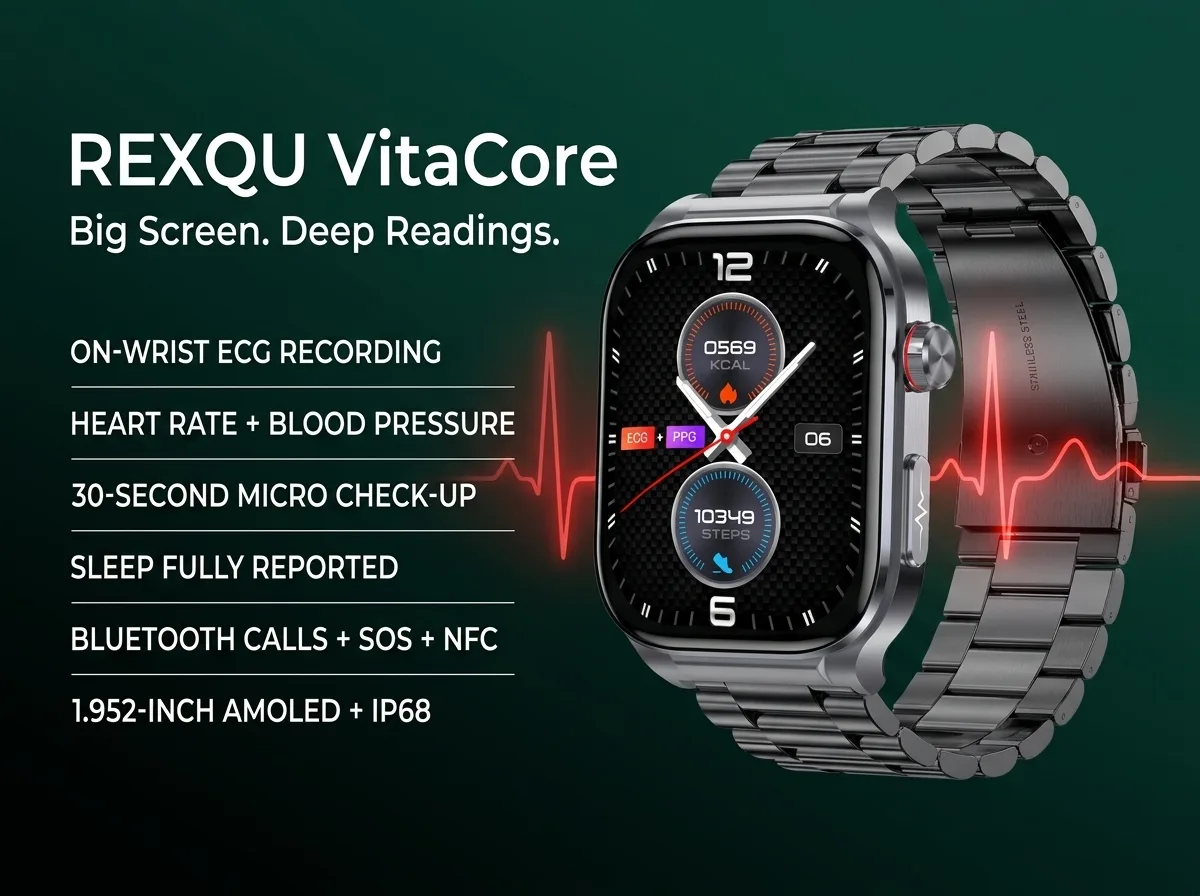
| REXQU VitaCore | Best all-round multi-vital check | Heart rate, BP wellness trends, SpO₂, temperature, stress | Large 2.04-inch AMOLED; 30-second multi-vital check |
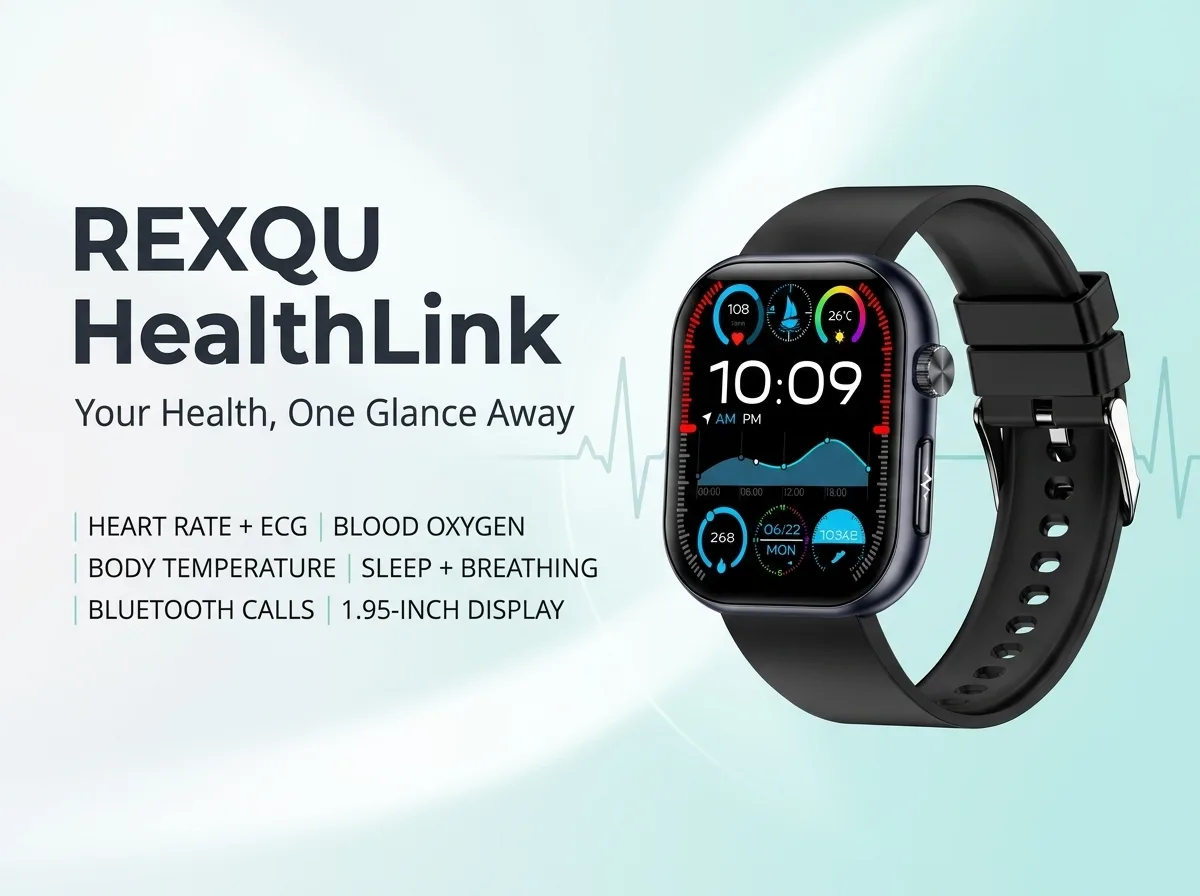
| REXQU HealthLink | Best if ECG matters | Heart rate, SpO₂, sleep, ECG, temperature | 1.95-inch AMOLED with on-demand ECG |
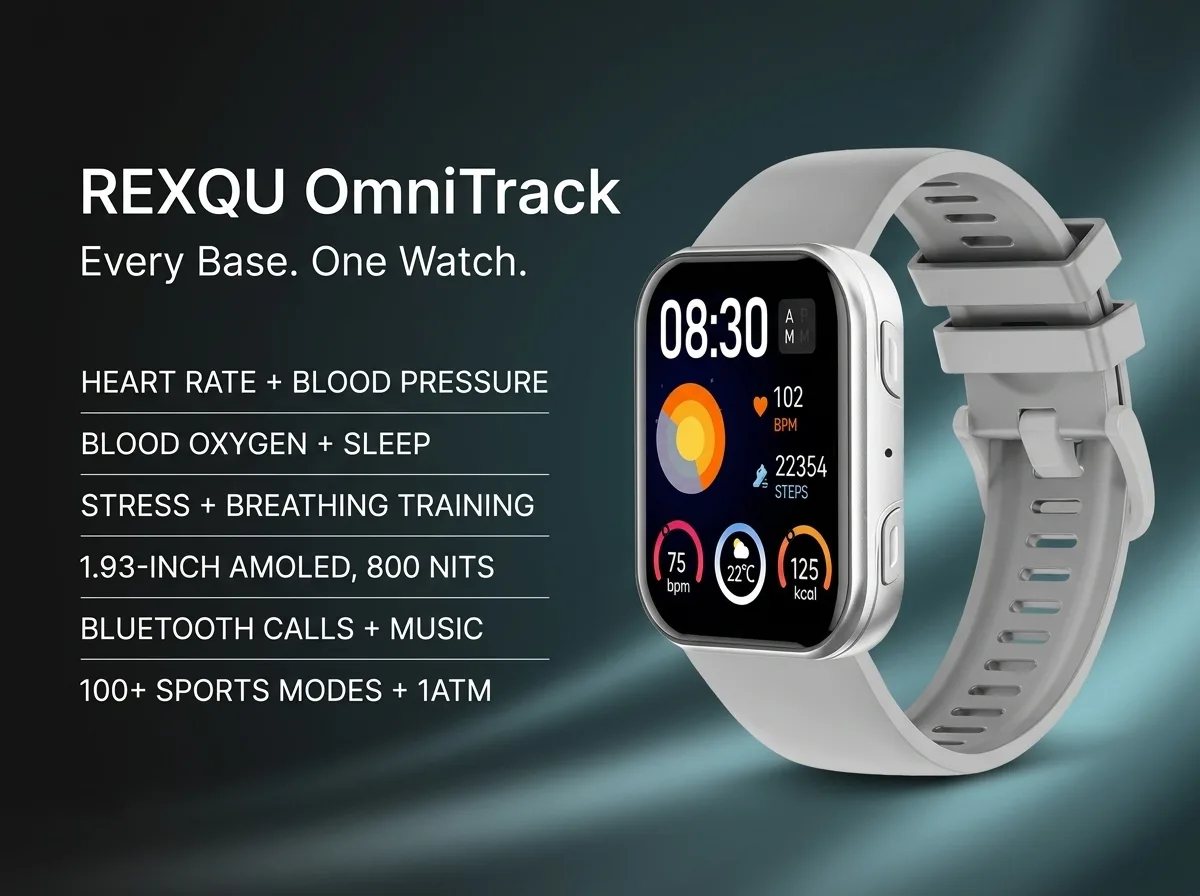
| REXQU OmniTrack | Best for outdoor readability | Everyday wellness tracking, stress and activity features | Bright 1.93-inch AMOLED |
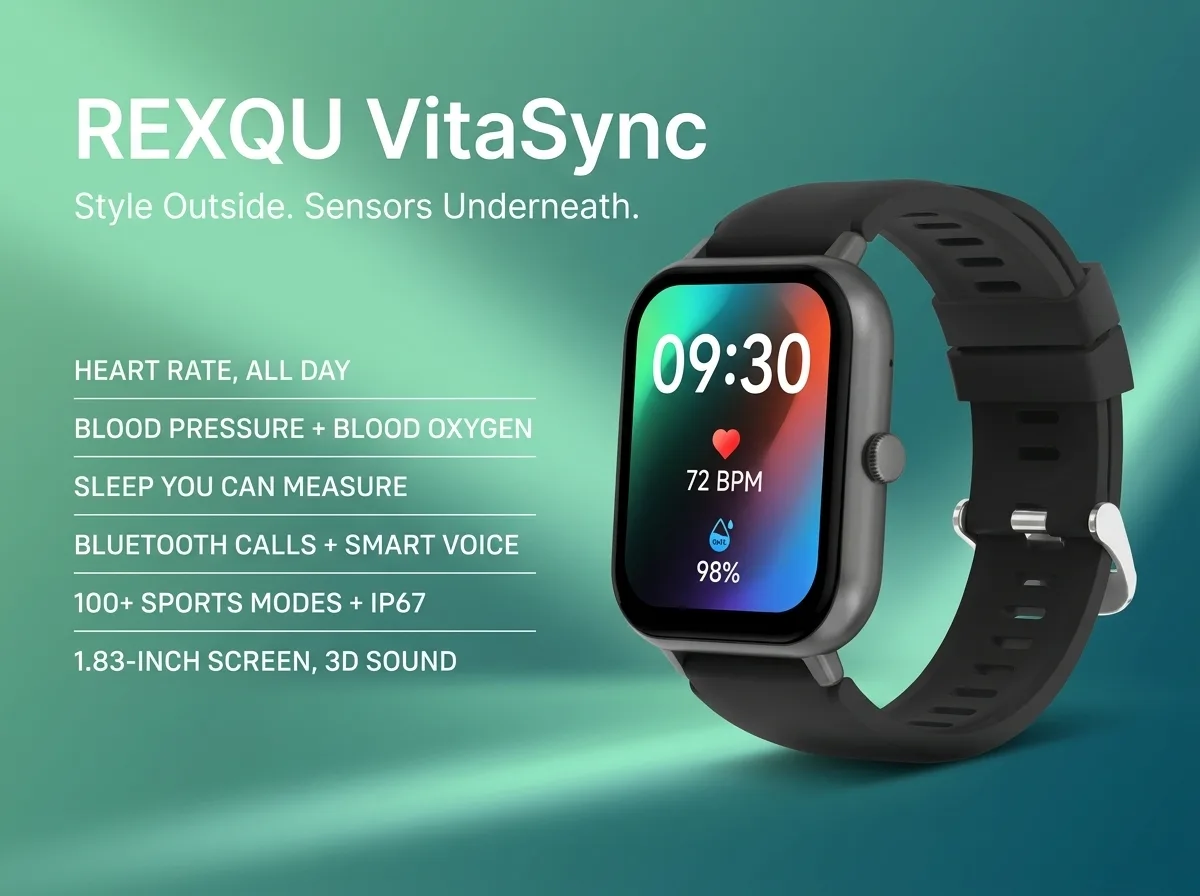
| REXQU VitaSync | Best everyday smartwatch balance | Heart rate, SpO₂, sleep, BP wellness checks | 1.83-inch display plus Bluetooth calling and sport modes |
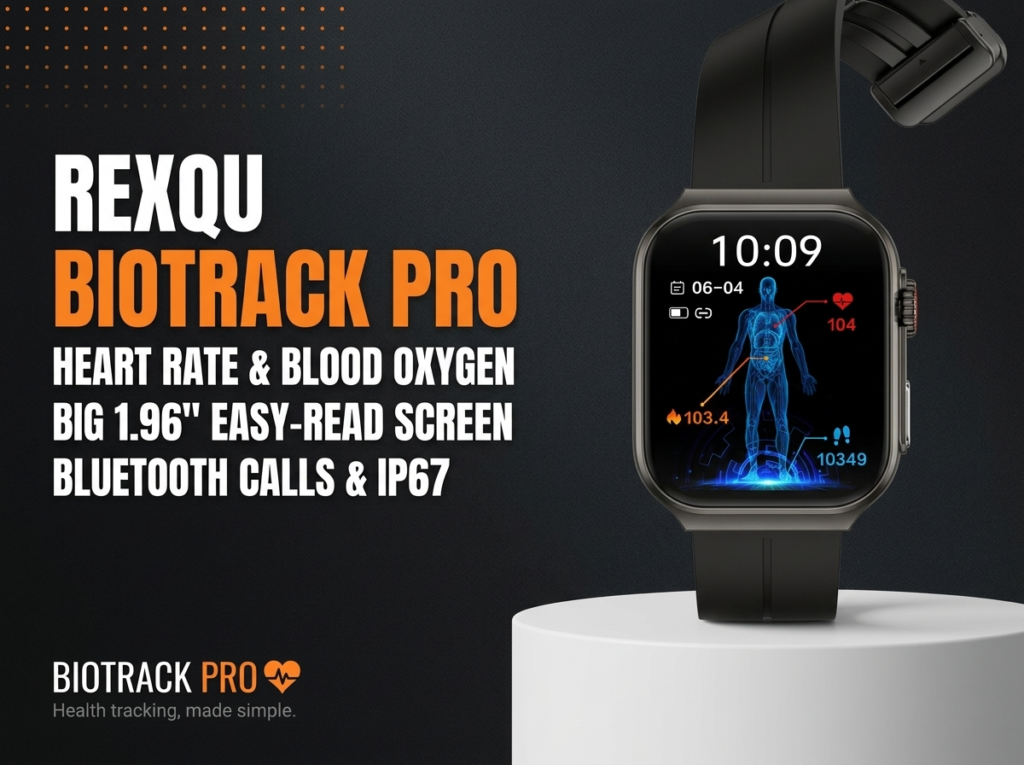
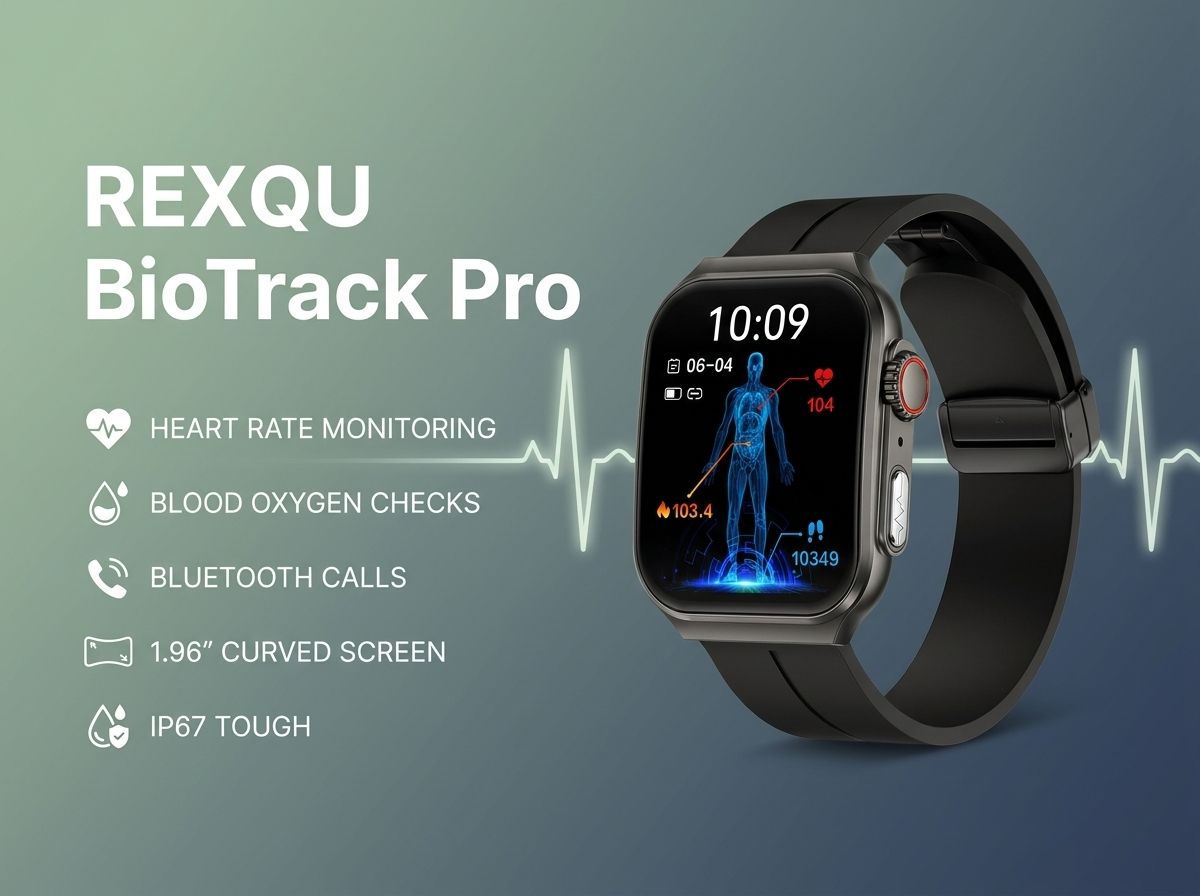
| REXQU BioTrack Pro | Best for simple, readable use | Heart rate, SpO₂ and everyday wellness trends | Large curved display and easy-wear design |
For the broadest view of the current range, visit the REXQU Health Smartwatches category.
Best Overall: REXQU VitaCore
VitaCore is the strongest all-round choice for someone who wants several wellness measurements gathered in one deliberate check. Its 30-second scan brings heart rate, blood-pressure wellness trends, SpO₂, temperature and stress together on one screen, which is easier than opening separate menus for each metric.
That makes VitaCore a good fit for buyers who like a simple daily routine: sit down, take one combined check, then review the longer trend history in the companion app.
View VitaCore specs and current price →
Best Daily Health Monitoring Watch With ECG: REXQU HealthLink
If an on-demand rhythm trace is important, HealthLink adds single-lead ECG to the everyday health-monitoring mix. It also includes heart-rate, blood-oxygen, sleep and temperature information, giving it a broader heart-health focus than a basic fitness tracker.
ECG should be understood correctly: a consumer wrist ECG records a short single-lead trace and is not equivalent to a clinical 12-lead ECG. For the evidence and limitations, see REXQU’s AFib and smartwatch ECG Health Guide.
Best for Outdoor Visibility: REXQU OmniTrack
OmniTrack makes sense if you regularly use your watch outside and want a bright screen that is easier to read in daylight. It combines general wellness monitoring with stress and activity features, so it works well for someone who wants health trends without giving up everyday smartwatch functionality.
Best Everyday Balance: REXQU VitaSync
VitaSync is a good choice when health monitoring is important but not the only reason you wear a smartwatch. It combines heart-rate, SpO₂, sleep and BP wellness features with Bluetooth calling and a larger set of activity modes.
That combination suits buyers who want one watch for daily communication, exercise and wellness tracking rather than a device that feels dedicated only to health metrics.
Best for Simplicity and Readability: REXQU BioTrack Pro
BioTrack Pro is the model to consider when ease of use matters more than having the longest sensor list. Its large curved display and straightforward design make health information easier to see at a glance.
It is particularly relevant for first-time smartwatch users and buyers shopping for a parent or partner who may prefer larger on-screen information and simpler day-to-day interaction. If you are specifically shopping for an older wearer, also compare the REXQU Smartwatches for Seniors category.
Which Health Metrics Matter Most?
Choosing by sensor count is rarely the best approach. Start with the metric you genuinely intend to use.
Heart rate
Heart rate is the foundation metric for everyday wearables. The American Heart Association explains that resting pulse varies with factors including activity and fitness. A smartwatch is most useful for seeing how your own pattern changes over time.
Blood oxygen (SpO₂)
SpO₂ can add another layer of wellness information, but pulse oximetry has known limitations. The FDA notes that circulation, skin pigmentation, skin temperature and other factors can influence readings. REXQU’s SpO₂ Accuracy Health Guide explains this in more detail, and our daily blood-oxygen smartwatch article focuses on practical use.
Sleep
Sleep tracking is valuable when you wear the watch consistently enough to compare nights and weeks. It is best viewed as a trend tool rather than a clinical sleep study. For more detail, read Daily Health Monitoring Watch Sleep Tracking Explained.
Blood-pressure trends
Cuffless blood-pressure features are convenient, but current American Heart Association guidance says cuffless BP technologies still require more validation before they should be relied on for diagnosis or treatment decisions. Use them for wellness trends and awareness, and confirm medically important readings with appropriate validated equipment. See REXQU’s Blood Pressure Numbers Health Guide and BP smartwatch accuracy article.
Automatic Monitoring or On-Demand Checks?
This buying decision matters almost as much as the sensor list. Some people want their watch to collect information quietly in the background. Others prefer to sit down and take one deliberate multi-vital check.
- Choose background monitoring if you want trends without remembering to start readings.
- Choose on-demand checks if you prefer a controlled measurement while sitting still.
- Choose a hybrid model if you want passive heart-rate and sleep trends plus manual ECG, SpO₂ or multi-vital scans.
For a direct comparison, see Automatic Health Monitoring Watch: BioVision vs VitaCore.
Battery Life: More Important Than It Looks
Health tracking only works when the watch is on your wrist. A model that spends long periods on the charger creates gaps in sleep and trend data. Think about when you can realistically charge: while showering, working at a desk or during a short evening routine.
If battery life is a major buying criterion, our Health Monitoring Watch Battery Life guide compares what the advertised figures mean in everyday use.
How to Get Better Data From Any Daily Health Watch
- Wear the watch snugly enough for consistent sensor contact.
- Keep the sensor clean and dry.
- For manual ECG, SpO₂ or BP checks, sit still and support your arm.
- Take comparable measurements at similar times when possible.
- Review weekly trends instead of reacting to a single unusual value.
- Use appropriate medical equipment and professional advice when a decision depends on clinical accuracy.
Best Daily Health Monitoring Watch for a Parent
For an older wearer, simplicity can matter more than maximum features. Look for a readable display, straightforward controls, a comfortable strap and enough battery life that charging does not become frustrating. BioTrack Pro is the easiest starting point in this guide; VitaCore is stronger if the wearer is comfortable taking a deliberate multi-vital check.
If safety features such as SOS, fall detection or GPS are more important than the health sensors themselves, browse Smartwatches for Seniors instead of choosing only from the daily-health category.
REXQU Daily Health Monitoring Watch Recommendations
Frequently Asked Questions
What is the best daily health monitoring watch overall?
For the broadest one-check wellness snapshot, VitaCore is the strongest all-round option in this guide. The better choice can change if ECG, outdoor visibility, simplicity or everyday calling matters more to you.
Can a health monitoring watch replace medical equipment?
No. REXQU watches are wellness devices. Wearable trends can add useful context, but medically important blood-pressure, oxygen or heart-rhythm concerns should be evaluated with appropriate clinical methods.
Which REXQU health watch is easiest to use?
BioTrack Pro is the simplest recommendation here because its design emphasizes a larger display and straightforward everyday use.
Which model should I choose if ECG matters?
HealthLink is the ECG-focused choice in this daily-health group. If ECG is your primary buying criterion, compare the wider REXQU ECG Smartwatch collection.
Where can I compare all REXQU health watches?
Visit the REXQU Health Smartwatches category for the full current range and product pages.
The Bottom Line
The best daily health monitoring watch is the model whose strengths match the way you actually plan to use it. VitaCore is the best all-round multi-vital choice; HealthLink adds ECG; OmniTrack prioritizes a bright display; VitaSync balances wellness with everyday smartwatch functions; and BioTrack Pro keeps things simpler. Compare the full current range at REXQU Health Smartwatches →.
REXQU smartwatches are consumer wellness devices and are not intended to diagnose, treat, cure or prevent disease. Product features and pricing can change; check the linked static product page for current specifications.