
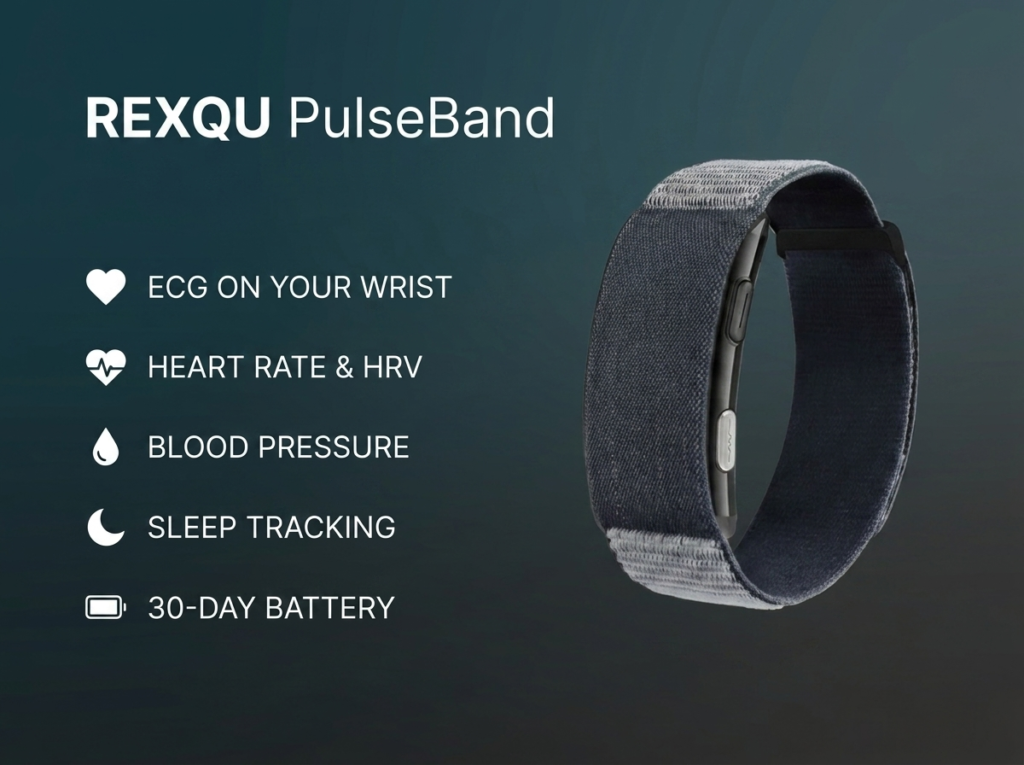
ECG smartwatch battery life varies dramatically depending on the kind of watch you choose. A screenless ECG band can run for weeks, while a bright display, Bluetooth calling and other smartwatch functions usually bring runtime down to several days.
For REXQU shoppers, the clearest example is the PulseBand, rated for roughly 25–30 days per charge because it has no screen. Display-equipped ECG models such as CardioSense and HealthWave trade some of that endurance for an on-wrist interface and broader smartwatch functions.
ECG Smartwatch Battery Life Compared
| Model | Display | Stated battery life | Best for |
|---|---|---|---|
| REXQU PulseBand | Screenless | About 25–30 days | Longest runtime |
| REXQU CardioSense | 2.01-inch display | About 5–7 days | Large display plus ECG and BP wellness trends |
| REXQU HealthWave | 2.04-inch AMOLED | Up to about 4 days | Screen-equipped ECG at a lower entry price |
| REXQU Infinity Pro | 1.56-inch round AMOLED | Multi-day | Traditional-watch styling with ECG |
Battery figures vary with settings and real-world use. Check each linked static product page for the latest specifications before buying.
Why Screenless ECG Watches Last Longer
The display is one of the biggest differences between a month-long tracker and a conventional smartwatch. A screen consumes power every time it lights up, refreshes, shows a notification or stays active during a call.
PulseBand avoids that power draw entirely. Detailed ECG, heart-rate and other wellness information lives in the companion app, allowing the band to devote more of its battery capacity to sensors and Bluetooth syncing rather than a watch face.
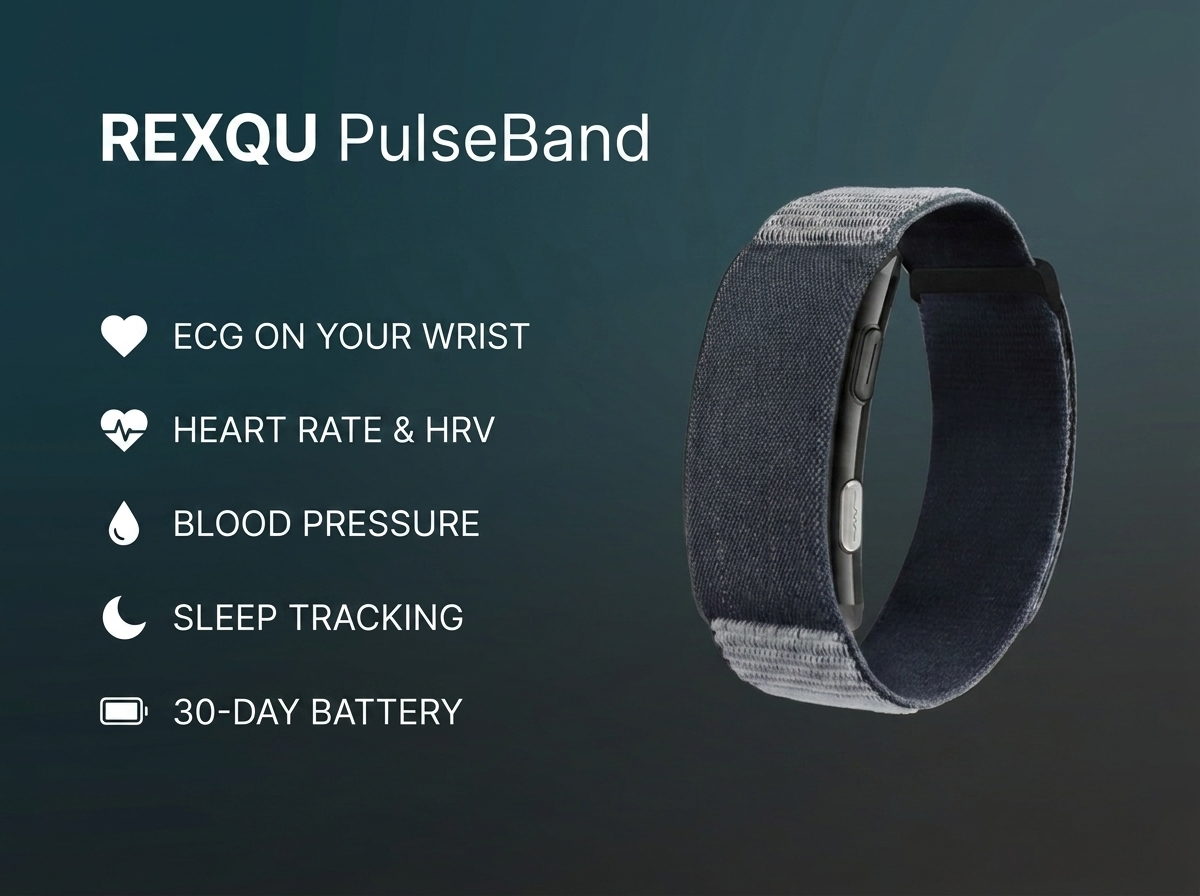
View PulseBand specs and current price →
Does Taking an ECG Use a Lot of Battery?
An individual short ECG recording uses some power, but it is not necessarily the dominant battery drain in normal smartwatch use. Display brightness, always-on mode, GPS, Bluetooth calls, music and frequent notifications can have a larger cumulative effect.
That means you should not avoid taking an ECG simply to save battery if ECG is the feature you bought the watch to use. It usually makes more sense to reduce unnecessary screen and communication activity first.
CardioSense: Multi-Day Battery With a Large ECG Display
CardioSense is the stronger fit if you want a screen large enough to review heart-focused information directly on the wrist. Its stated 5–7 day battery range supports a practical weekly charging routine while still providing ECG, blood-pressure wellness trends and other daily health features.
HealthWave: Shorter Runtime, Screen-Equipped ECG
HealthWave sits toward the shorter end of the ECG battery comparison, with up to about four days of typical use in its published specifications. The tradeoff is a large AMOLED display and an accessible entry point into REXQU’s screen-equipped ECG range.
If you can build a twice-weekly charging habit, four days may be perfectly workable. If you regularly forget to charge devices, PulseBand or a longer-lasting screened model may fit better.
What Else Drains an ECG Smartwatch Battery?
- Always-on display: one of the clearest ways to reduce runtime.
- High brightness: especially noticeable on large AMOLED screens.
- GPS workouts: continuous satellite use is power intensive.
- Bluetooth calling: speaker, microphone and wireless connection all use additional energy.
- Music playback: active audio increases drain.
- Frequent notifications: repeated vibrations and screen wake-ups add up.
- Overnight tracking: uses some battery and requires enough charge remaining at bedtime.
Why Battery Life Matters for ECG and Sleep Trends
A dead watch creates a gap in your wellness history. That matters most when you want consistent overnight sleep, resting heart-rate or HRV trends.
For ECG specifically, the main value is having the watch available when you want to capture a short rhythm trace. A model that is frequently on the charger may not be on your wrist at the moment you want it.
To understand what the ECG itself can show, read Single-Lead ECG Smartwatch: What It Can and Can’t Show.
How to Extend ECG Smartwatch Battery Life
- Lower screen brightness.
- Turn off always-on display if you do not need it.
- Reduce unnecessary notification mirroring.
- Use GPS only when you need route or distance tracking.
- Keep long phone calls on your phone when convenient.
- Charge during downtime instead of overnight if sleep tracking matters.
- Keep the charging contacts clean so the watch reaches a full charge reliably.
Should You Choose Battery Life or a Display?
The answer depends on how you use ECG data.
- Choose screenless: if you are happy reviewing ECG and trends in the phone app and want the longest runtime.
- Choose a display: if you want heart rate, notifications and other information visible immediately on your wrist.
- Choose the middle ground: if 5–7 days is enough and you want both ECG and a large display.
The Best ECG Smartwatch Buying Guide compares the wider REXQU range by battery, display and use case.
Frequently Asked Questions
Which REXQU ECG watch has the longest battery life?
PulseBand has the longest stated runtime among the models compared here at roughly 25–30 days per charge.
Does using ECG every day damage the battery?
Normal use of the watch’s ECG feature is part of the intended operating pattern. Like all rechargeable batteries, overall capacity gradually declines over many charge cycles, but occasional ECG recordings are not the only or necessarily the biggest power draw.
Can I sleep-track with an ECG smartwatch?
Many ECG watches also include sleep tracking. The practical issue is making sure enough charge remains overnight so the watch does not shut down midway through sleep.
Is 4–7 days good smartwatch battery life?
For a display-equipped health smartwatch with calls, notifications and several sensors, that range can support a practical once- or twice-weekly charging routine.
Where can I compare all REXQU ECG watches?
Browse the REXQU ECG Smartwatches category or read the complete ECG smartwatch buying guide.
The Bottom Line
ECG smartwatch battery life comes down largely to the features surrounding the ECG. PulseBand wins for maximum runtime because it is screenless; CardioSense provides a strong multi-day balance with a large display; and HealthWave suits buyers comfortable with more frequent charging. Compare the full REXQU ECG Smartwatch range →.
REXQU ECG watches are consumer wellness devices and are not intended to diagnose, treat, cure or prevent disease.