
Looking for a drop resistant smartwatch that can take a hit off a ladder rung, a knock against rebar, or a fall on loose rock and keep tracking your heart rate afterward? Most fitness trackers are built for gyms and sidewalks, not job sites and trails — but REXQU makes two watches specifically engineered to survive drops and impacts: the LifeGuard Pro and the EnduroMax.
What Makes a Drop Resistant Smartwatch Different
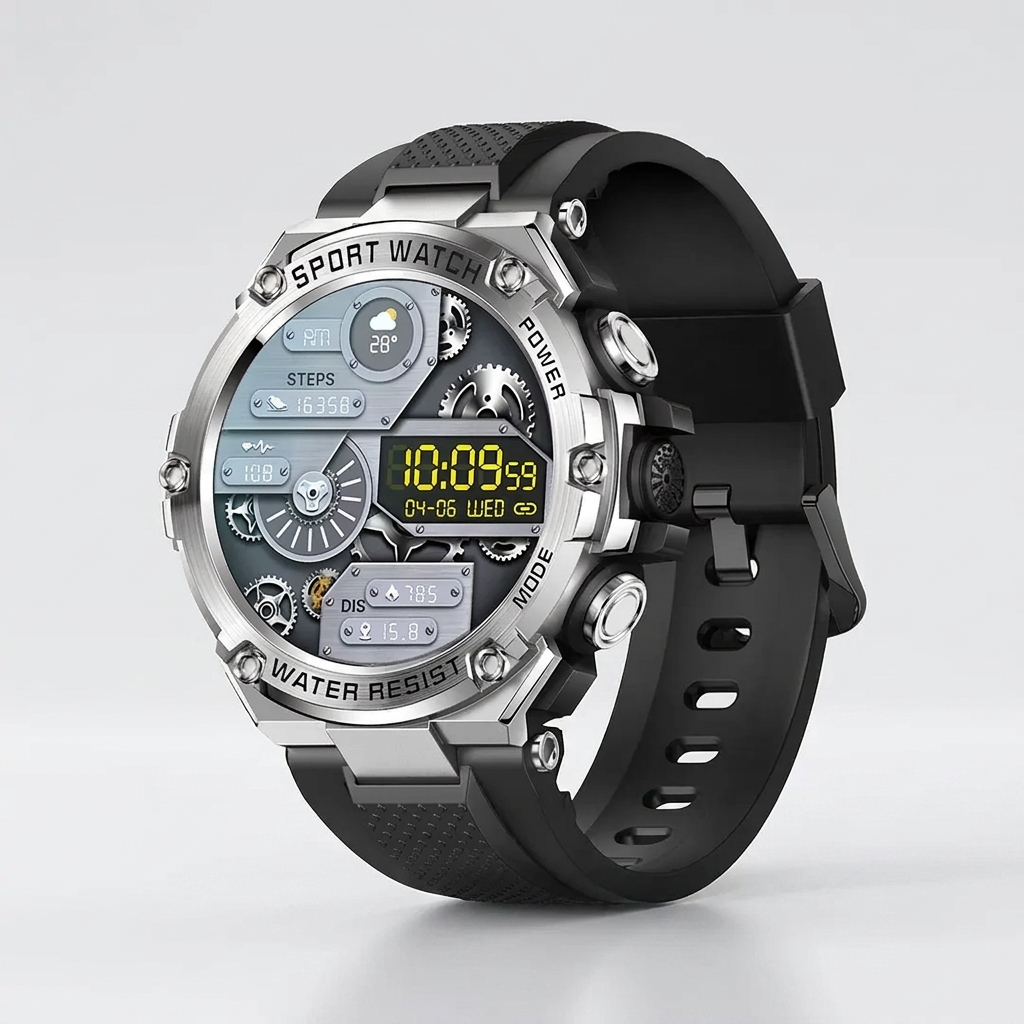
An ordinary smartwatch case is built to look good, not to absorb a hit. A true drop resistant smartwatch uses a reinforced shell — often a raised bezel, shock-dampening internal mounting, and sealed buttons — so the display and electronics survive impacts that would crack a standard glass face. Manufacturers sometimes reference military drop-test standards like MIL-STD-810 when describing this kind of durability testing, though not every “rugged” watch is independently certified — it’s worth checking what a brand actually backs up with hard specs.
REXQU builds two models around this idea, and they take slightly different approaches.
REXQU LifeGuard Pro: Built for Drop-and-Smash Resistance
The REXQU LifeGuard Pro is the more direct answer if impact resistance is your top priority. It pairs a drop-and-smash-resistant case with a 1.5-inch HD display and an 800mAh battery — one of the largest batteries in REXQU’s rugged lineup, which also means fewer charging cycles putting stress on the charging port. On top of the tough build, it tracks heart rate around the clock and takes Bluetooth calls, so you’re not sacrificing everyday features for toughness. It’s priced at $149.97, available in 2 colors.
REXQU EnduroMax: Rugged Zinc-Alloy Construction
The REXQU EnduroMax takes a different route to the same goal — a rugged zinc-alloy body rather than a reinforced polymer shell, which trades a little weight for a denser, harder frame. It runs a 1.43-inch AMOLED display, adds sleep tracking alongside heart rate monitoring, and also lands at $149.97 in 2 color options.
How to Judge Drop Resistance Before You Buy
There is no single consumer smartwatch rating that guarantees survival from every fall. IP ratings cover dust and water, not impact. MIL-STD-810 references can be useful only when the manufacturer states which specific test methods were used. For that reason, compare the physical design as well as the marketing label.
- Raised bezel: helps keep the glass from being the first surface to hit the ground.
- Reinforced side structure: spreads impact through the case instead of concentrating it around the display.
- Protected buttons and lugs: these small moving or load-bearing parts are common failure points.
- Replaceable strap: a rugged case is less useful if a damaged band cannot be replaced.
- Published test details: treat vague “military-grade” or “shockproof” language cautiously unless the maker explains what was tested.
If you work on job sites, the smartwatch for construction workers guide covers dust, sunlight, gloves and shift-length battery life too. For the full range, see the best rugged smartwatch buying guide.
Comparison: LifeGuard Pro vs EnduroMax
| Feature | REXQU LifeGuard Pro | REXQU EnduroMax |
|---|---|---|
| Toughness approach | Drop & smash-resistant case | Rugged zinc-alloy build |
| Display | 1.5″ HD | 1.43″ AMOLED |
| Battery | 800mAh | Standard rugged battery |
| Health tracking | Heart rate, Bluetooth calls | Heart rate, sleep tracking |
| Price | $149.97 | $149.97 |
Who Actually Needs This Kind of Rugged Watch
If you work construction, warehouse logistics, or any job where your wrist regularly bangs into equipment, pallets, or scaffolding, the LifeGuard Pro’s smash-resistant case is the safer bet — you want the case engineered specifically to absorb that kind of blunt impact. Trail runners and hikers who are more worried about a fall on rocky terrain than repeated daily knocks may prefer the EnduroMax’s denser zinc-alloy shell paired with sleep tracking for recovery data after long days out.
Either way, both models sit inside REXQU’s broader rugged smartwatches collection, which also covers GPS navigation and flashlight-equipped models if drop resistance isn’t your only requirement.
Frequently Asked Questions
Is a drop resistant smartwatch the same as a waterproof one? Not exactly — waterproofing (IP68, 3ATM, 5ATM ratings) protects against dust and moisture, while drop resistance is specifically about surviving physical impacts. Both LifeGuard Pro and EnduroMax combine rugged, sealed bodies with their impact-resistant construction, so you’re getting both types of protection in one watch.
Will it survive a drop onto concrete? Real-world results vary with drop height and angle, but both watches are built with reinforced cases specifically to handle the kind of accidental drops and knocks that happen on job sites and trails — far beyond what a standard fashion smartwatch is designed to take.
Bottom line: if everyday bumps and drops are a real risk where you work or play, a purpose-built drop resistant smartwatch like the LifeGuard Pro or EnduroMax is worth the upgrade over a standard fitness tracker.