
If you are shopping for a smartwatch for seniors with heart rate monitoring, nearly every modern watch can show a pulse number. The real differences are how continuously it tracks, whether the watch can alert the wearer when a reading moves outside the usual pattern, how easy the number is to read, and whether family or emergency features are built around the same device.
For REXQU shoppers, three especially relevant senior-friendly options are the IntelliFit, CardioSense and VistaMax. Each tracks heart rate, but they solve different problems: family connection, large heart-health readings, or a big lightweight screen with long standby.
How Heart Rate Monitoring on a Senior Smartwatch Works
Most wrist-worn smartwatches track heart rate using an optical sensor called photoplethysmography (PPG). LEDs on the underside of the watch shine light into the skin, and the sensor measures tiny changes in reflected light as blood volume changes with each heartbeat. Software turns that signal into a beats-per-minute estimate.
Because the sensor can run automatically in the background, a smartwatch can build a day-long trend rather than showing only one pulse reading. That is the main advantage for everyday wellness: you can compare resting periods, walks, exercise and sleep over time.
For a simple explanation of pulse and resting heart rate, see the MedlinePlus guide to pulse. For individual medical concerns, a clinician remains the appropriate source of advice.
What to Look For in a Smartwatch for Seniors With Heart Rate Monitoring
A useful senior watch should do more than display a number. Look for these five things:
- Continuous background tracking: more useful for trends than a once-a-day spot check.
- Readable display: large digits and good contrast matter when checking a number quickly.
- Alerts: the watch should be able to flag readings that move outside its configured or learned range where supported.
- Comfort: heart-rate data is only useful if the watch is worn consistently.
- Related safety features: family care, calling or SOS may matter more than an extra fitness mode for an older wearer.
REXQU IntelliFit: Heart Rate Monitoring With Family Care
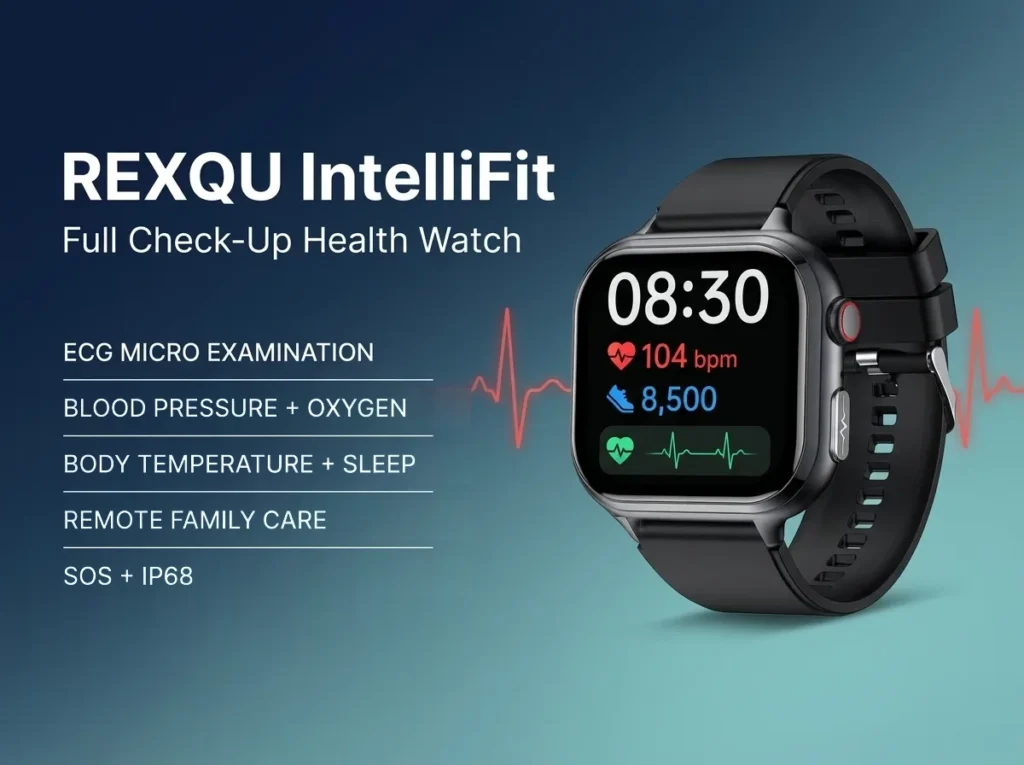
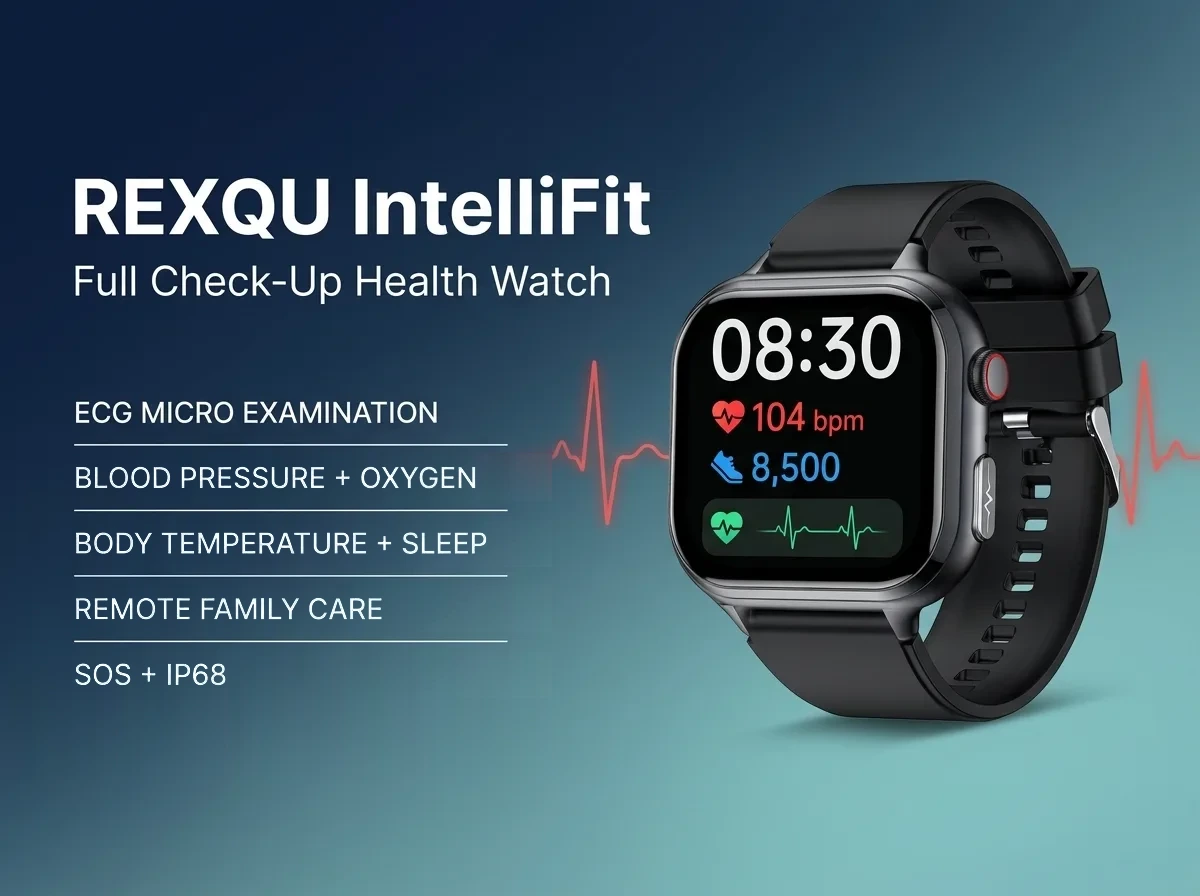
The IntelliFit runs round-the-clock heart monitoring and automatic background checks, with trend charts in its free companion app. REXQU also positions it around remote family care, Bluetooth calling and one-button SOS.
That combination makes IntelliFit especially relevant for an adult child buying for a parent who lives independently. The watch is not remotely diagnosing anything, but consensual family sharing can make it easier to notice a pattern and have a useful conversation rather than relying on memory.
If family visibility is the central concern, see the dedicated smartwatch for seniors with family monitoring guide.
REXQU CardioSense: Large Heart-Health Display Plus ECG
The CardioSense combines 24/7 heart-rate tracking with a 2.01-inch display and an on-demand wrist ECG. The ECG is a different sensor and a different type of measurement: optical PPG estimates pulse continuously, while the ECG records a short electrical rhythm trace when the user deliberately takes a reading.
For someone who wants large heart-rate numbers and also values the ability to capture an ECG trace for later discussion with a doctor, CardioSense is a strong fit. REXQU’s current specifications also list Bluetooth calling and about 5–7 days of normal battery life.
For more detail on what a wrist ECG can and cannot show, read Single-Lead ECG Smartwatch: What It Can (and Can’t) Show.
REXQU VistaMax: Large Display and Long Standby
The VistaMax tracks heart rate around the clock and uses a 2.01-inch display, but its main difference is comfort and battery standby. The current REXQU seniors category lists a light 37-gram body and up to 25 days of standby.
That can matter for someone who wants a big heart-rate display without wearing a heavy watch or remembering frequent charging. If readability is the biggest issue, compare it with VitaCore and CardioSense in the large display smartwatch for seniors guide.
Heart Rate Monitoring Comparison
| Model | Heart-Rate Approach | Display | Extra Senior Feature | Price |
|---|---|---|---|---|
| IntelliFit | 24/7 monitoring + alerts/trends | 1.91-inch HD | Family care, Bluetooth calls, SOS | $159.97 |
| CardioSense | 24/7 optical heart rate + on-demand ECG | 2.01-inch | Large heart-health display, Bluetooth calls | $159.97 |
| VistaMax | 24/7 heart-rate tracking | 2.01-inch | Light 37g body, up to 25-day standby | $149.97 |
What Does a Heart Rate Alert Actually Mean?
A heart-rate alert from a consumer smartwatch is best treated as a prompt to pay attention, not a diagnosis. Readings can be affected by movement, watch fit, skin contact, exercise, stress, temperature and other factors.
If a watch repeatedly shows a pattern that is unusual for the wearer, or if the person also has symptoms such as chest discomfort, fainting, severe shortness of breath or other concerning symptoms, the correct response is not to keep checking the watch — it is to seek appropriate medical advice or emergency care.
How to Get More Consistent Heart Rate Readings
- Wear the watch snugly, not loosely. The sensor needs stable skin contact.
- Position it just above the wrist bone. Too close to the hand can increase movement.
- Stay still for spot checks. Motion can make optical readings noisier.
- Compare similar situations. Morning resting heart rate is more useful when compared with other mornings than with a post-walk reading.
- Look at trends, not isolated numbers. One odd reading may be sensor noise; a repeated pattern is more useful to discuss.
Heart Rate Monitoring vs ECG: What Is the Difference?
These features are often confused:
| Feature | Heart Rate Monitoring | On-Wrist ECG |
|---|---|---|
| Sensor | Optical PPG | Electrical electrodes |
| What it shows | Estimated beats per minute and trends | Short electrical rhythm trace |
| How it runs | Can run automatically in background | Usually deliberate 30–60 second recording |
| Best for | Everyday pulse trends | Capturing a rhythm snapshot for review |
If ECG is important, compare the REXQU ECG smartwatch category and the Best ECG Smartwatch buying guide.
Heart Rate Monitoring for a Parent Who Lives Alone
The heart-rate sensor itself does not create a safety system. For someone who lives alone, you may also want to consider:
- Bluetooth calling: easier everyday contact from the wrist.
- Manual SOS: a fast way to deliberately ask for help.
- Family care: consensual sharing of wellness trends.
- Fall detection: useful when the concern is being unable to press an SOS button after a hard fall.
For the full safety comparison, browse the Best Smartwatch for Seniors guide.
Battery Life Matters for Continuous Monitoring
Continuous heart-rate tracking only works while the watch is powered and worn. If charging becomes a burden, the wearer may take the watch off for long periods and lose the very trend data they bought it for.
If this is a concern, compare the long-battery senior smartwatch guide. VistaMax is especially relevant for shoppers who want a large display and long standby, while IntelliFit offers a strong balance of battery and family features.
Frequently Asked Questions
What is the best REXQU smartwatch for seniors with heart rate monitoring?
IntelliFit is the strongest all-round family-connected option, CardioSense is best for a large heart-health display plus ECG, and VistaMax is a good fit for a large lightweight screen with long standby.
Is smartwatch heart rate monitoring medical-grade?
No. REXQU watches are consumer wellness devices. Optical heart-rate readings are useful for awareness and trends but are not a substitute for medical evaluation.
Can family members see heart-rate trends?
IntelliFit includes remote family-care sharing through the companion app. Sharing should be set up with the wearer’s knowledge and consent.
Does a bigger display make heart-rate tracking more accurate?
No. Display size affects readability, not sensor accuracy. A larger screen simply makes the number and trend easier to see.
Do these watches require a subscription?
REXQU does not charge a recurring subscription for the core watch and companion-app features discussed here.
The Bottom Line
A good smartwatch for seniors with heart rate monitoring should make the data easy to collect, easy to read and easy to fit into normal life. Choose IntelliFit for heart-rate trends plus family care, calling and SOS; CardioSense for a large heart-health display plus ECG; or VistaMax for a large lightweight display with long standby. Compare all REXQU smartwatches for seniors →
REXQU smartwatches are consumer wellness devices intended for general awareness and lifestyle tracking. They are not medical devices and are not a substitute for diagnosis, treatment or professional medical advice.