
If you are looking for a smartwatch for seniors with long battery life, the key is to compare normal-use battery separately from standby time. A watch that claims 30 days on standby may still need charging every week under everyday use with calls, health tracking and a bright display.
For senior buyers, that difference matters because a watch cannot provide SOS, family care or wellness tracking while it is sitting on a charger. In the current REXQU range, the strongest long-battery options for older wearers include the IntelliFit, VistaMax, GuardBand and VitaCore.
Best REXQU Smartwatches for Seniors With Long Battery Life
| Model | Normal Use | Standby | Senior-Friendly Strength | Price |
|---|---|---|---|---|
| IntelliFit | 5–12 days | 30+ days | Bluetooth calls, SOS, family care, 1.91-inch display | $159.97 |
| VistaMax | Multi-day | Up to 25 days | 2.01-inch display, light 37g body | $149.97 |
| GuardBand | 7–10 days | 15–20 days | Screenless, SOS, GPS-oriented safety, fall detection | $139.97 |
| VitaCore | 5–10 days | Varies with use | 2.04-inch always-on display, one-press SOS | $149.97 |
| CardioSense | 5–7 days | 10–15 days | 2.01-inch display, ECG, Bluetooth calling | $159.97 |
Why Battery Life Matters More for a Senior Smartwatch
Battery life is not just a convenience feature when the watch is being used for safety or family connection. If the device is off the wrist every night, or is frequently left uncharged, features such as SOS and automatic fall detection cannot help during that gap.
Longer battery life can also make adoption easier for someone who does not want another device to charge every day. The goal is not necessarily to find the biggest battery number on a specification sheet; it is to find a charging routine the wearer can realistically maintain.
Normal Use vs Standby: Do Not Confuse the Two
Normal-use battery life assumes the watch is being worn and used: the screen wakes, sensors run, Bluetooth is active and perhaps calls or workouts are used. Standby means much lighter use, with the display mostly off and fewer active functions.
For example, the IntelliFit is rated at roughly 5–12 days of normal use but 30+ days on standby. That does not mean a parent using Bluetooth calls, health tracking and notifications should expect a full month between charges.
Similarly, the VistaMax advertises up to 25 days of standby, which is excellent for a large-screen watch, but everyday runtime will depend on how much the screen and sensors are used.
IntelliFit: Best Long-Battery Senior Watch for Family Connection
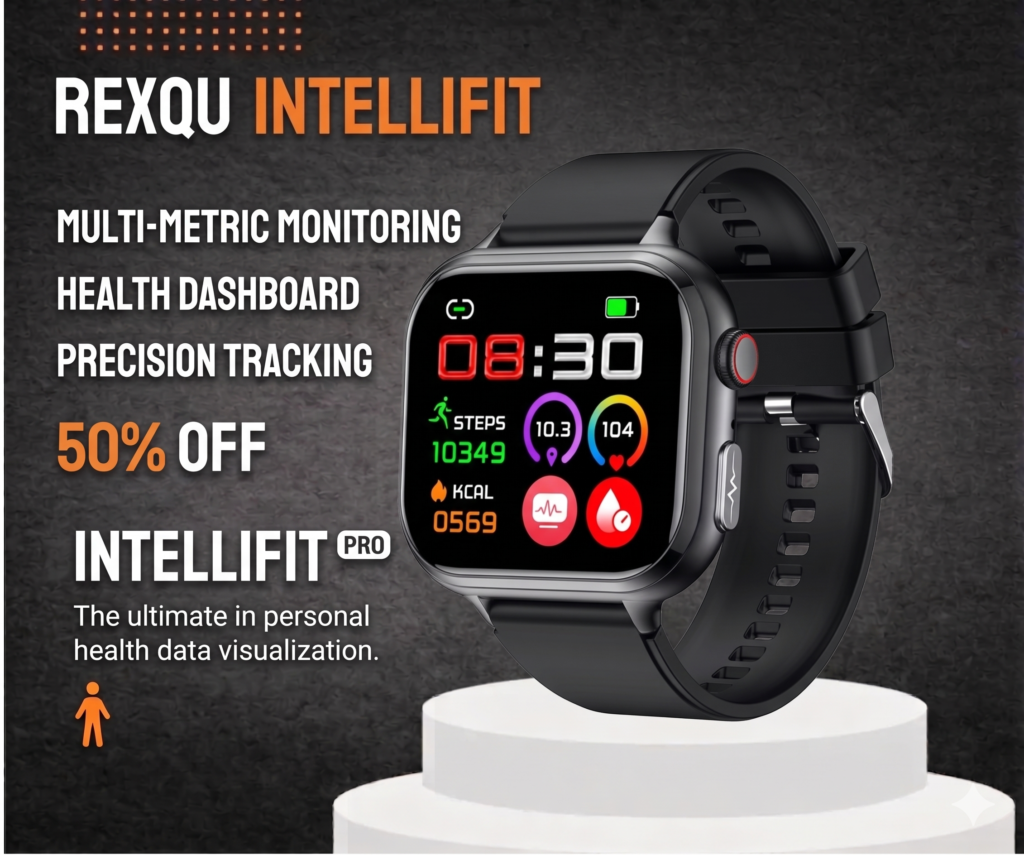
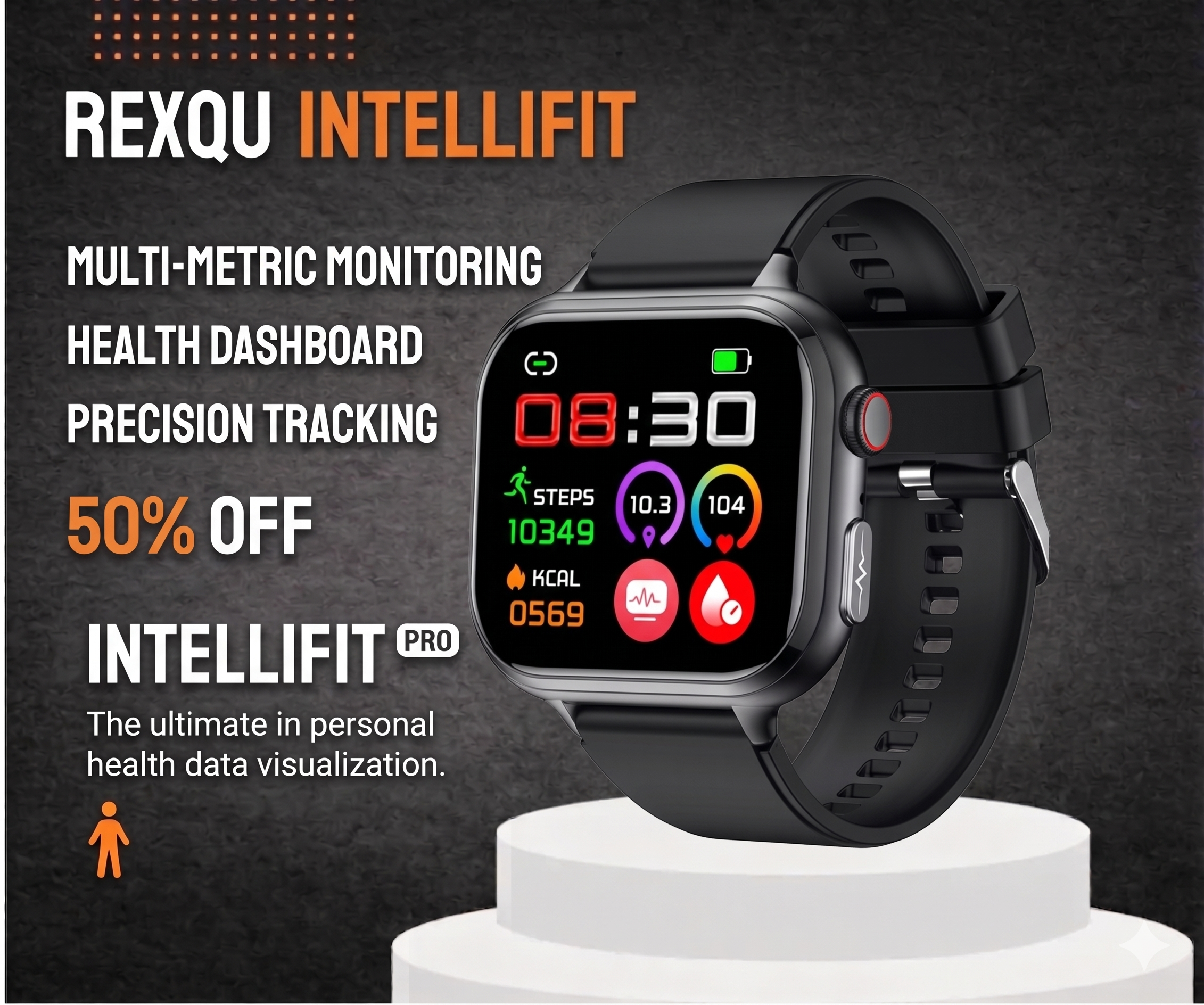
The IntelliFit is one of the strongest all-round choices if you want long battery life without giving up family-focused features. Current REXQU specifications list 5–12 days of normal use and more than 30 days on standby.
It also combines a 1.91-inch display, Bluetooth calling, one-button SOS and remote family care. That makes it especially practical for an adult child buying for a parent who lives independently. For more detail, see the family-monitoring guide.
VistaMax: Best for a Large Screen With Long Standby
The VistaMax pairs a 2.01-inch display with a light 37-gram body and up to 25 days of standby. It is a useful middle ground for someone who wants a screen large enough to read comfortably but does not want a heavy watch or very frequent charging.
If readability is the main concern, compare it with VitaCore and CardioSense in the large display smartwatch for seniors guide.
GuardBand: Long Battery for a Safety-First Screenless Band
The GuardBand is different because it has no display. Removing the screen reduces power demand and keeps the interface simple. Current REXQU specifications list about 7–10 days of normal use and 15–20 days of standby.
GuardBand adds one-press SOS, GPS-oriented position sharing and automatic fall detection. For someone who is wearing the device mainly as a safety layer rather than to read notifications, that tradeoff can make sense. See the fall-detection guide for the safety differences.
VitaCore: Big Screen Without Nightly Charging
The VitaCore uses a 2.04-inch always-on AMOLED — the largest display in REXQU’s current senior-friendly collection — yet current specifications still list about 5–10 days between charges depending on use.
That is a useful balance when the wearer needs large text and an always-visible screen but does not want a daily charging routine. One-press SOS and Bluetooth calling add further senior relevance.
What Drains a Senior Smartwatch Battery Fastest?
Battery life varies significantly depending on settings and habits. The biggest power users are usually:
- Always-on display: convenient for readability, but it uses more power.
- High screen brightness: especially noticeable on large AMOLED displays.
- Bluetooth calls: speaker and microphone use consume more energy than passive tracking.
- Frequent notifications: every screen wake and vibration adds up.
- GPS and workout tracking: location and continuous exercise sensing are more demanding.
- Frequent manual health checks: extra sensor sessions use additional power.
How to Extend Battery Life Without Disabling Useful Features
- Lower screen brightness one step. The display is often the biggest source of power consumption.
- Use a simple watch face. Avoid constantly animated faces when battery life matters.
- Turn off notifications the wearer does not need. Keep calls and important messages, remove promotional app alerts.
- Use always-on display only if it improves accessibility. For someone who can comfortably tap to wake, turning AOD off can extend runtime.
- Keep the magnetic charging contacts clean. Poor contact can leave the watch only partly charged.
- Charge on a routine rather than at 1%. A predictable weekly schedule is easier to remember.
Best Charging Routine for an Older Parent
The easiest routine is usually to charge during a predictable low-risk period — for example while showering, eating breakfast or sitting down for a regular television program — rather than leaving the watch off overnight every night.
For a watch that lasts a week or more, choosing one consistent day can work well. Families using IntelliFit’s family-care features can also make battery status part of a normal check-in rather than waiting until the watch goes dead.
Battery Life vs Safety Features: Which Should Win?
Do not choose a watch purely because it lasts longer if it leaves out the feature the wearer actually needs. A person with significant fall concerns may benefit more from GuardBand’s automatic fall detection than from a large-screen model with longer standby but no automatic detection.
Likewise, someone who needs a readable screen and family calling may get more practical value from IntelliFit or VitaCore even if another watch has a bigger standby number.
Frequently Asked Questions
Which REXQU smartwatch for seniors has the longest standby time?
Among the senior-friendly models discussed here, IntelliFit is rated at more than 30 days standby, while VistaMax is listed at up to 25 days.
Which model lasts longest while being used normally?
IntelliFit is listed at roughly 5–12 days of normal use, GuardBand at 7–10 days, VitaCore at 5–10 days and CardioSense at 5–7 days. Actual results depend on screen, calls, sensor use and settings.
Is standby time the same as battery life?
No. Standby is a low-use condition. Real-world daily wear with the screen, Bluetooth and sensors active will usually be shorter.
Should a senior charge a smartwatch every night?
Not if the model lasts several days. A weekly or twice-weekly routine can reduce the amount of time the watch spends off the wrist.
Do REXQU watches require a subscription?
REXQU does not charge a recurring subscription for the core watch and companion-app features described here.
The Bottom Line
The best smartwatch for seniors with long battery life is the one that stays charged without sacrificing the features the wearer actually needs. Choose IntelliFit for long normal use plus 30+ day standby, SOS and family care; VistaMax for a large, light screen with up to 25-day standby; GuardBand for screenless fall-detection safety; or VitaCore for a 2.04-inch always-on display with 5–10 day battery life. Compare all REXQU smartwatches for seniors →
Battery figures are manufacturer/runtime estimates and vary with use. REXQU smartwatches are consumer wellness and lifestyle devices, not medical devices or professional emergency-response systems.