
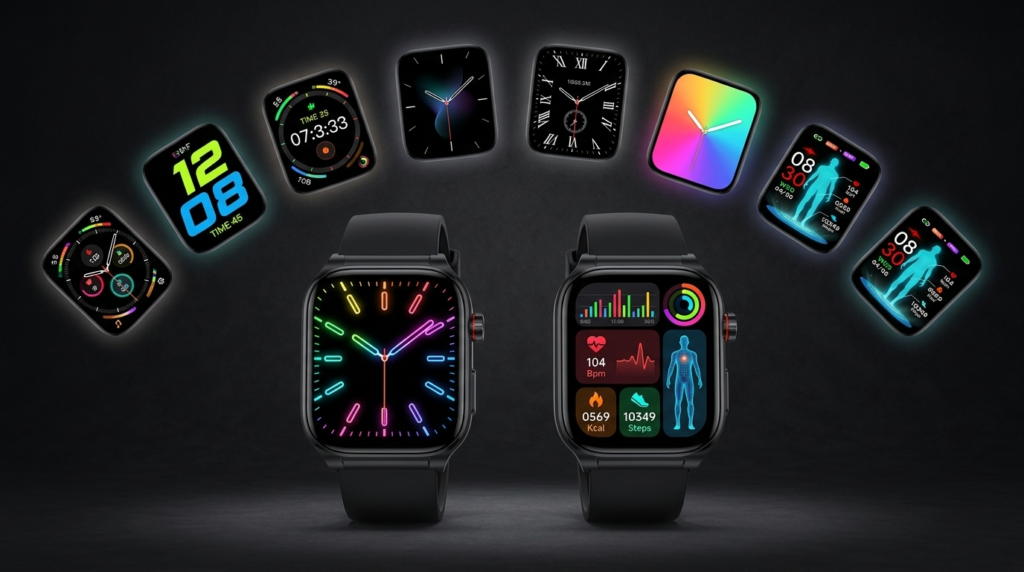
Choosing the best blood pressure smartwatch is less about finding the watch with the longest feature list and more about matching the watch to how you actually want to use it. Some people want a simple one-tap blood-pressure check. Others want ECG, blood oxygen, sleep tracking, alerts or a screenless band they can wear for weeks between charges.
This buying guide explains how cuffless blood-pressure watches work, what accuracy realistically means, which REXQU models fit different buyers and when you should still use a validated arm cuff. You can also browse the full static REXQU Blood Pressure Smartwatches collection at any time.
What Is a Blood Pressure Smartwatch?
A blood pressure smartwatch is a wrist-worn consumer wearable that estimates blood-pressure trends using sensors and software rather than an inflatable upper-arm cuff. Depending on the model, it may also track heart rate, blood oxygen, sleep, ECG, stress or other wellness metrics.
The biggest advantage is convenience. You are more likely to collect regular trend information from a watch you already wear than from a device you have to unpack and set up each time.
The trade-off is equally important: wrist-based consumer readings should be treated as wellness estimates and trends, not as a replacement for a validated blood-pressure monitor when a medical decision depends on the number.
How Does a Cuffless Blood Pressure Smartwatch Work?
Traditional blood-pressure monitors use an inflatable cuff around the upper arm. A cuffless smartwatch instead relies on wrist-based sensor information and algorithms to estimate blood-pressure trends. Depending on the device, optical pulse signals, heart-rate information and other measurements may contribute to the estimate.
That difference matters. A smartwatch can make frequent monitoring easier, but the reading is not produced in the same way as a clinical cuff.
If you want the technical explanation, see Cuffless Blood Pressure Watch: How It Works, Accuracy & Best REXQU Picks.
Best REXQU Blood Pressure Smartwatches: Side-by-Side Comparison
| Model | Best For | Blood Pressure Style | Key Extras | Display |
|---|---|---|---|---|
| VitaCore | Best all-round wellness check | On-demand wellness readings | ECG, SpO₂, temperature, stress | 2.04-inch always-on AMOLED |
| CardioSense | Best large-screen ECG + BP watch | Blood-pressure wellness trends | 30-second ECG, heart rate, sleep | 2.01-inch display |
| BioVision | Best hands-off trend tracking | Background 24-hour trend collection | ECG, sleep, body composition | HD display |
| Chronex | Best for alerts and awareness | Background checks with alerts | ECG, temperature, SOS calling | 1.43-inch AMOLED |
| VitaSync | Best everyday calling + wellness mix | Spot-check wellness readings | SpO₂, heart rate, sleep, Bluetooth calls | 1.83-inch display |
| PulseBand | Best screenless option | App-based wellness trends | ECG, HRV, long battery life | Screenless |
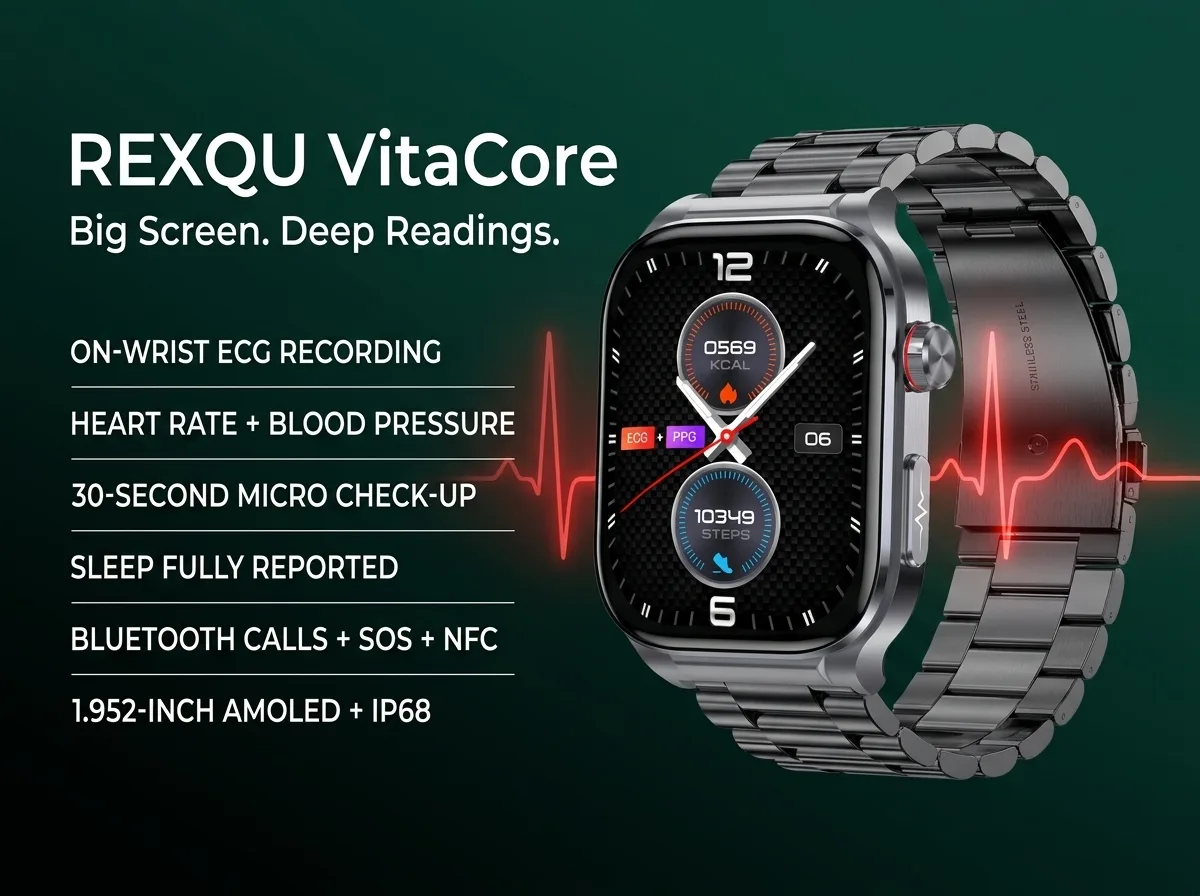
Best Overall Blood Pressure Smartwatch: REXQU VitaCore
The REXQU VitaCore is the strongest all-round choice if you want several wellness readings in one routine rather than a watch built around one narrow feature.
Its main appeal is convenience: blood pressure, heart rate, blood oxygen, temperature and stress information can be brought together in one short check, while the 2.04-inch always-on AMOLED gives you plenty of screen space for everyday use.
Choose VitaCore if you want:
- A broad multi-vital wellness check.
- A large always-on display.
- ECG and SpO₂ alongside blood-pressure trends.
- An all-purpose health-watch experience rather than a single-feature device.
View REXQU VitaCore →
Best Blood Pressure Smartwatch With ECG: REXQU CardioSense
If your priority is combining blood-pressure trends with an easy-to-use wrist ECG, the REXQU CardioSense is the stronger fit.
Its 2.01-inch display is especially useful for buyers who do not want to navigate tiny menus. CardioSense adds a 30-second on-demand ECG, heart-rate tracking, sleep-stage estimates, guided breathing exercises and IP67 water resistance.
For a dedicated model review, read Blood Pressure Smartwatch With ECG: REXQU CardioSense.
View REXQU CardioSense →
Best for 24-Hour Blood Pressure Trend Tracking: REXQU BioVision
The REXQU BioVision is better suited to buyers who want their watch to build a blood-pressure trend history with less manual effort.
REXQU uses “24-hour” to describe background wrist-based trend collection across the day. That should not be confused with clinical 24-hour ambulatory blood-pressure monitoring, which uses an inflatable upper-arm cuff.
Read the full comparison in 24-Hour Blood Pressure Monitoring Smartwatch: BioVision vs Chronex.
Best Blood Pressure Watch for Alerts: REXQU Chronex
The REXQU Chronex is the better match if you want a watch that focuses on everyday awareness and alerts rather than a dashboard you constantly inspect.
Chronex also includes ECG, temperature tracking and SOS calling, making it worth considering for buyers who want broader everyday safety features alongside blood-pressure trends.
Best Everyday Blood Pressure Smartwatch: REXQU VitaSync
The REXQU VitaSync is a good fit if you want blood-pressure wellness tracking without making health features the entire personality of the watch.
It combines blood pressure, heart rate, blood oxygen, sleep and Bluetooth calling on a 1.83-inch display, which makes it a more conventional everyday smartwatch option.
Best Screenless Blood Pressure Tracker: REXQU PulseBand
The REXQU PulseBand is for people who want wellness tracking without another screen competing for attention.
Readings are viewed through the companion app rather than a watch face. The major advantage is battery life and simplicity: the screenless format can run far longer between charges than a conventional smartwatch display.
How Accurate Are Blood Pressure Smartwatches?
This is the most important question in the buying process. A wrist-based smartwatch can be useful for trend awareness, but it should not be treated as a validated medical blood-pressure monitor.
Factors that can influence a reading include:
- Band fit.
- Wrist position.
- Movement during the reading.
- Skin temperature.
- Time of day.
- Recent exercise, caffeine or stress.
- The device’s own sensor and algorithm design.
The American Heart Association has noted both the promise and the remaining validation challenges around cuffless blood-pressure technology. You can read its overview of cuffless technologies at the American Heart Association.
For a REXQU-specific deep dive, see Blood Pressure Smartwatch Accuracy: What to Know.
Blood Pressure Smartwatch vs Upper-Arm Cuff
| Feature | Blood Pressure Smartwatch | Validated Upper-Arm Cuff |
|---|---|---|
| Main benefit | Convenient trend awareness | Clinically established home measurement |
| Ease of frequent use | Very high | Moderate |
| Wear all day | Yes | No |
| Use for diagnosis/treatment decisions | No | As directed by a healthcare professional |
| Best use | Patterns between formal checks | Reliable spot measurements |
REXQU’s evidence-based Understanding Your Blood Pressure Numbers guide explains common blood-pressure categories and how to interpret measurements more responsibly.
How to Choose the Best Blood Pressure Smartwatch
Use this checklist before buying.
1. Decide whether blood pressure is your main feature
If you mainly want a blood-pressure trend tool, BioVision or VitaCore may make more sense. If ECG is equally important, CardioSense or CoreX Pro deserves more attention.
2. Decide whether you want a screen
A traditional smartwatch is easier for quick on-wrist checks. A screenless band such as PulseBand is better if you want fewer distractions and longer battery life.
3. Consider display size
Large displays are easier for older buyers and anyone who dislikes small text. CardioSense and VitaCore are particularly strong here.
4. Consider battery life
Long battery life matters more when you want overnight sleep tracking and all-day trends. A watch that spends too much time on the charger cannot collect useful data.
5. Look at the companion app
The value of a blood-pressure watch is not just the number on the wrist. Trend charts, history and the ability to review readings over time are often more useful.
6. Decide whether you need ECG, SpO₂ or SOS features
Do not pay attention only to the blood-pressure label. Think about which additional features will genuinely change how you use the watch.
How to Get More Consistent Blood Pressure Watch Readings
- Sit quietly before a deliberate spot check.
- Wear the watch snugly in the same position each day.
- Support your arm and keep your wrist still.
- Take readings at similar times when comparing trends.
- Do not overreact to one isolated number.
- Confirm concerning readings with a validated cuff when appropriate.
- Speak with a healthcare professional about persistent concerns or symptoms.
Can You Take Blood Pressure Watch Data to Your Doctor?
Yes. The most useful way to use wearable data in a healthcare conversation is to bring a pattern rather than one random reading.
Before an appointment, review the trend history, note repeated unusual readings and bring any validated cuff readings your clinician has asked you to collect.
See Blood Pressure Smartwatch for Doctor Visits: What Helps for a practical appointment checklist.
Frequently Asked Questions About Blood Pressure Smartwatches
Can a smartwatch diagnose high blood pressure?
No. A consumer smartwatch is a wellness tool. Diagnosis and treatment decisions require appropriate validated measurements and professional care.
Can a blood pressure watch replace an arm cuff?
No. Use the watch for convenience and trends and use a validated cuff when you need a medically reliable measurement.
Which REXQU blood pressure smartwatch is best?
VitaCore is the best all-rounder, CardioSense is best if ECG and a large screen are priorities, BioVision is strongest for hands-off trend tracking, Chronex is strong for alerts, and PulseBand is the best screenless option.
Do blood pressure smartwatches require a subscription?
REXQU’s core smartwatch wellness features do not require a recurring REXQU subscription.
Which blood pressure watch is best for seniors?
For many older users, display size and simplicity matter more than the number of features. CardioSense and VitaCore are worth considering because of their larger displays. You can also browse REXQU Smartwatches for Seniors.
Best Blood Pressure Smartwatch: Final Recommendations
There is no single best blood pressure smartwatch for every buyer. The best choice depends on what you want the watch to do beyond the blood-pressure estimate.
- Best overall: REXQU VitaCore
- Best with ECG and large display: REXQU CardioSense
- Best for hands-off trend tracking: REXQU BioVision
- Best for alerts: REXQU Chronex
- Best everyday smartwatch mix: REXQU VitaSync
- Best screenless option: REXQU PulseBand
Ready to compare the current models? Visit the static REXQU Blood Pressure Smartwatches category → or open any of the product pages above for the latest specifications and pricing.
REXQU smartwatches are consumer wellness devices and are not intended to diagnose, treat, cure or prevent disease. Use validated medical equipment and professional guidance for diagnosis and treatment decisions.