
Blood pressure smartwatch battery life is easy to overlook when comparing sensors, but it directly affects how useful the watch is. If the battery regularly dies overnight or during the day, you lose the trend data that makes wrist-based wellness tracking valuable in the first place.
REXQU models range from screenless bands designed to last for weeks to bright AMOLED watches built for several days of active use. This guide compares the main options, explains why their battery figures differ and helps you choose the right charging routine.
Blood Pressure Smartwatch Battery Life Compared
| Model | Stated battery life | Display | Best for |
|---|---|---|---|
| REXQU PulseBand | About 25–30 days | Screenless | Longest runtime and minimal charging |
| REXQU BioVision | About 7–10 days | 1.81-inch HD | Background wellness trends with a full display |
| REXQU Chronex | About 7–10 days | 1.43-inch AMOLED | Compact screen plus health alerts |
| REXQU VitaCore | About 5–10 days | 2.04-inch always-on AMOLED | Large display and multi-vital checks |
Real-world runtime varies with brightness, calls, notifications, sensor settings and how often you actively use the display. Check each static product page for the latest specifications.
Why Blood Pressure Smartwatch Battery Life Varies
Blood-pressure wellness tracking is only one part of the power equation. The biggest differences usually come from the rest of the watch:
- Screen: a large, bright or always-on display consumes much more power than no display at all.
- Bluetooth calls: using the watch as a speaker and microphone can reduce runtime noticeably.
- GPS and workouts: satellite tracking and long activity sessions draw more power.
- Health sensor frequency: more frequent background sampling consumes additional energy.
- Notifications and vibration: repeated screen wake-ups and alerts add to daily drain.
- ECG and other manual features: short readings are not necessarily huge drains by themselves, but a feature-rich watch often has several power-hungry systems working together.
REXQU PulseBand: Longest Battery Life
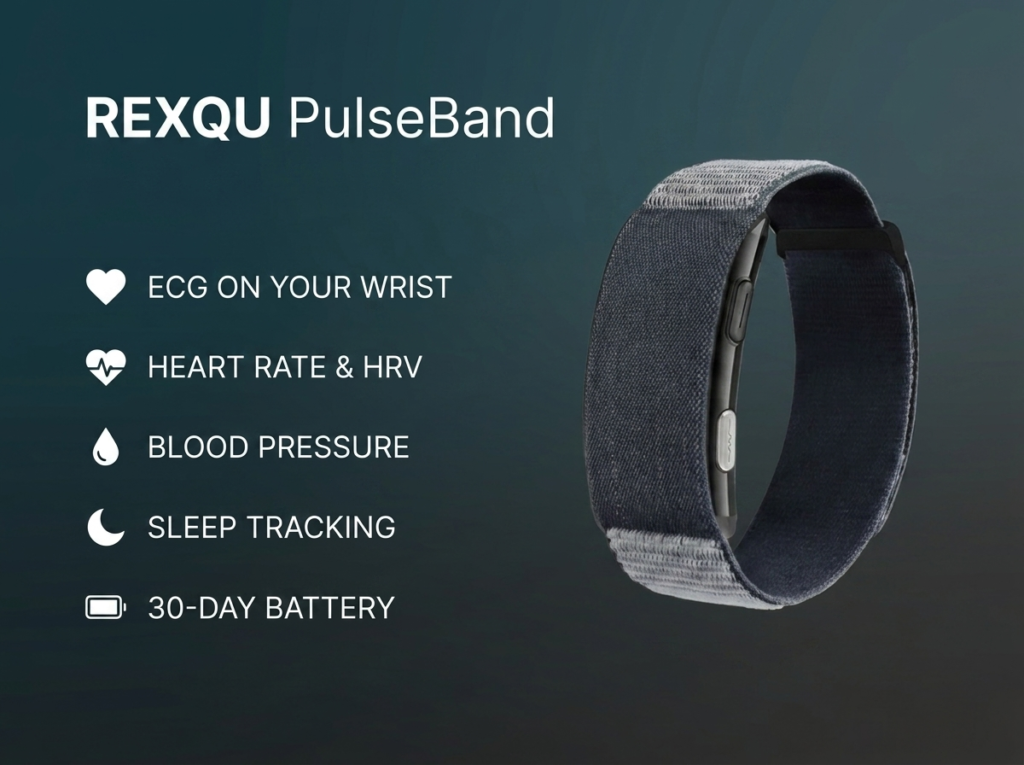
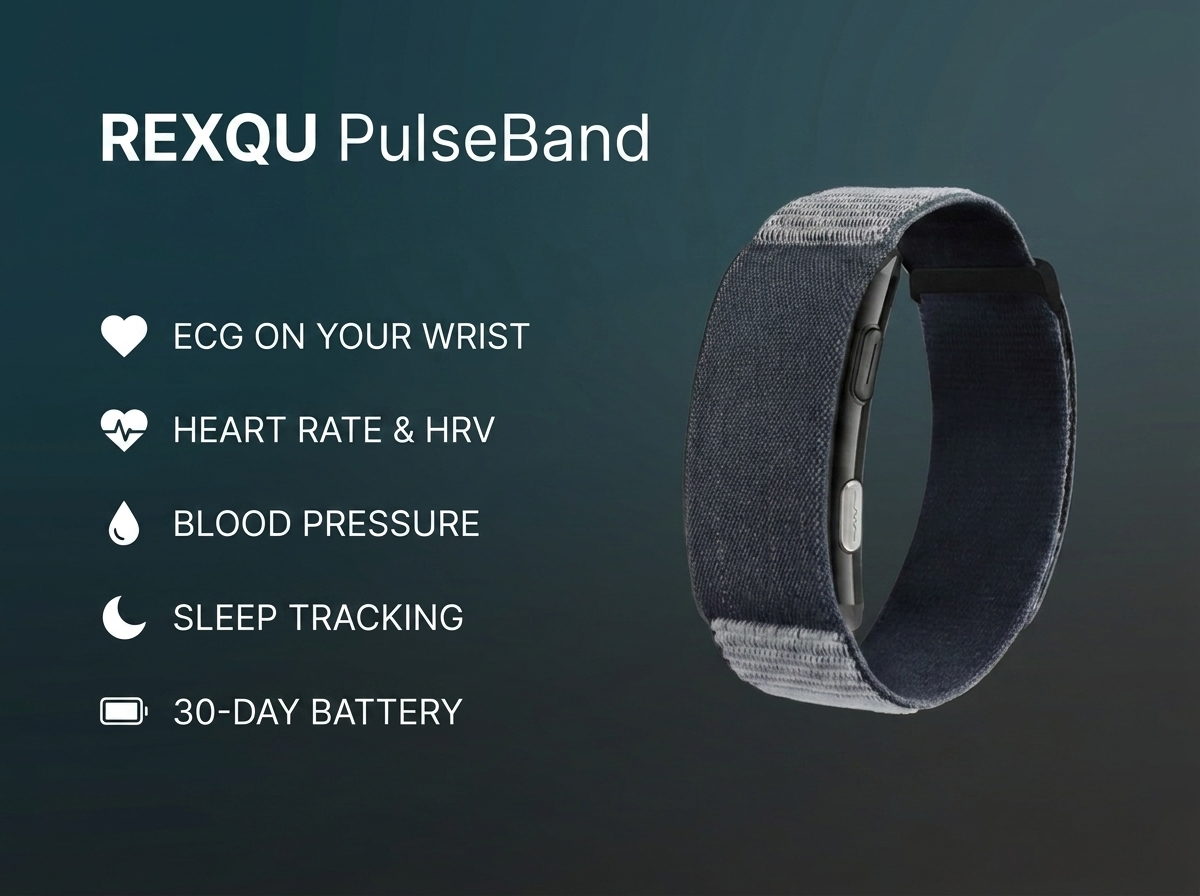
PulseBand is the obvious choice if charging as rarely as possible matters most. Its screenless design moves the detailed information to the companion app rather than powering a watch face all day, which is why its stated battery life stretches to roughly 25–30 days.
That makes it particularly suitable for people who want overnight tracking and long wear periods without building their routine around a charger.
View PulseBand specs and current price →
REXQU BioVision: A Week-Plus Middle Ground
BioVision is a better fit if you still want a full display and a broader health feature set. Its stated 7–10 day range gives you a practical middle ground between a screenless tracker and a larger always-on watch.
BioVision also emphasizes background wellness trends, so a longer charge cycle can help reduce gaps in that passive data. For the monitoring approach itself, see Automatic Health Monitoring Watch: BioVision vs VitaCore.
REXQU Chronex: Compact AMOLED With Multi-Day Battery
Chronex targets a similar week-long charging rhythm but in a smaller AMOLED format. It suits buyers who want a conventional watch face, health alerts and a compact form factor without charging every night.
If alert-based monitoring matters more than passive trend collection, compare it with BioVision in 24-Hour Blood Pressure Monitoring: BioVision vs Chronex.
REXQU VitaCore: Large Display, More Charging Flexibility Needed
VitaCore uses a larger 2.04-inch always-on AMOLED and centers its experience around a 30-second multi-vital check. That larger screen is useful if readability and one-screen results matter, but it is also one reason VitaCore sits toward the shorter end of this comparison.
For many users, 5–10 days is still comfortably multi-day. The important question is whether you prefer a larger, richer display enough to accept more frequent charging than a screenless tracker.
How Much Battery Does Blood Pressure Tracking Use?
Cuffless blood-pressure features estimate pressure indirectly using wrist sensors and algorithms. The health sensor itself is only part of total power consumption. Display time, calls, GPS and other active functions can use just as much—or more—battery depending on the watch.
So if you want longer battery life, do not automatically disable the feature you bought the watch for. Start by reducing screen brightness, unnecessary notifications and communication features you rarely use.
Does Longer Battery Life Improve Blood Pressure Tracking?
Longer battery life does not make an individual blood-pressure estimate more accurate. It simply helps you wear the watch more consistently, which can create a more complete wellness trend.
Accuracy is a separate issue. The American Heart Association’s current guidance says cuffless BP devices are promising but still should not be relied on for diagnosis or treatment decisions without appropriate validation. For that topic, read Blood Pressure Smartwatch Accuracy: What to Know and the REXQU Blood Pressure Numbers Health Guide.
How to Extend Blood Pressure Smartwatch Battery Life
- Lower display brightness. Use only as much brightness as you need.
- Disable always-on mode if you do not need it.
- Limit unnecessary notifications.
- Use the phone for long calls when convenient.
- Use GPS only for workouts where it adds value.
- Charge during natural downtime. Showering or desk time can be better than charging overnight if you want continuous sleep tracking.
- Keep the watch and app software current.
Which Battery Life Fits Your Routine?
| Your preference | Best match |
|---|---|
| I want to charge as rarely as possible | PulseBand |
| I want a screen and roughly a week of use | BioVision or Chronex |
| I want a larger always-on display and multi-vital checks | VitaCore |
| I wear the watch every night for sleep tracking | Choose enough normal-use battery to avoid overnight gaps |
Frequently Asked Questions
Is 7–10 days of battery life good for a blood pressure smartwatch?
Yes. For a display-equipped health watch, that range can support a practical weekly charging routine while still allowing overnight wear.
Why does PulseBand last much longer?
Its screenless design removes one of the biggest everyday power drains. Detailed readings are viewed in the companion app instead.
Will battery life decrease as the watch ages?
Rechargeable batteries gradually lose capacity over time. Heat, charging patterns and usage all influence how quickly that happens.
Should I choose a watch only by battery life?
No. Battery is one buying criterion. Also consider display readability, health features, ECG, monitoring style and whether you actually want a screen.
Where can I compare all REXQU blood-pressure watches?
Use the Best Blood Pressure Smartwatch Buying Guide or browse the REXQU Blood Pressure Smartwatches category.
The Bottom Line
Blood pressure smartwatch battery life should match the way you plan to wear the device. Choose PulseBand for maximum runtime, BioVision or Chronex for a screen plus a roughly weekly charge cycle, or VitaCore for a larger display and broader multi-vital workflow. Compare the full range at REXQU Blood Pressure Smartwatches →.
REXQU smartwatches are consumer wellness devices and are not intended to diagnose, treat, cure or prevent disease.