
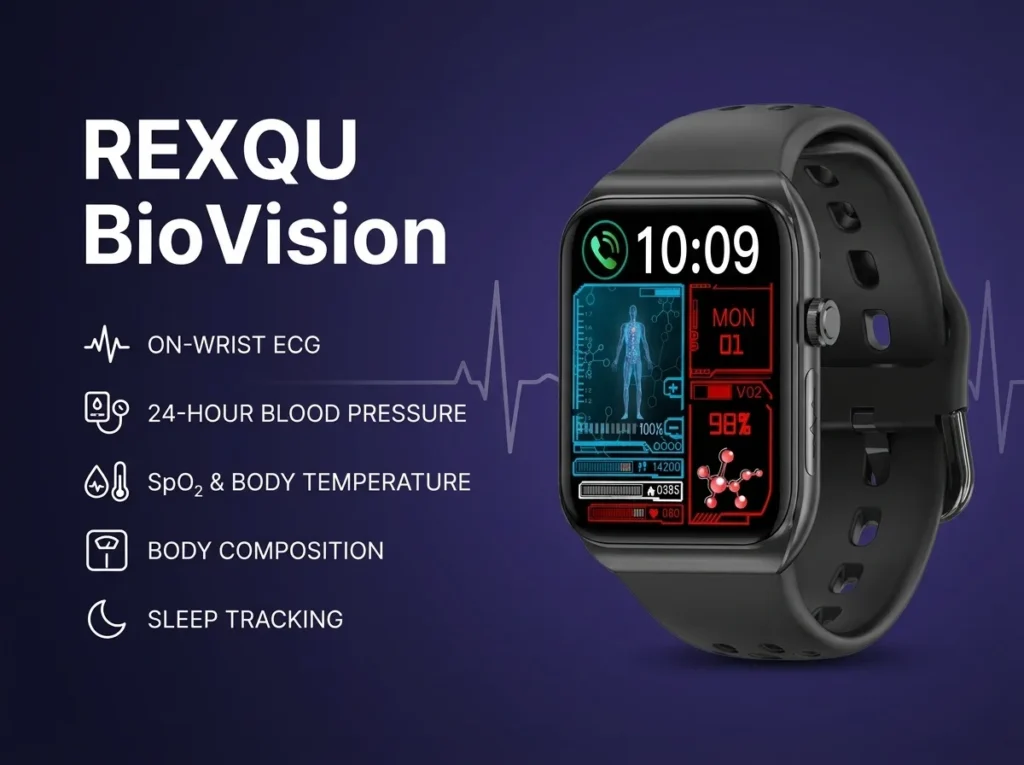
24-hour blood pressure monitoring from a smartwatch can be useful when your goal is to understand how your blood-pressure trend changes across mornings, workdays, exercise, stress and sleep. But it is important to separate continuous wrist-based wellness tracking from clinical 24-hour ambulatory blood pressure monitoring (ABPM), which uses an inflatable cuff and is ordered by a healthcare professional.
In this guide, we compare REXQU BioVision and REXQU Chronex, explain what “24-hour” means on a consumer smartwatch, and show how to use wrist-based blood-pressure data more effectively.
What Is 24-Hour Blood Pressure Monitoring?
Blood pressure naturally changes during the day. It can rise with activity, stress, caffeine or poor sleep and fall during periods of rest. That is why clinicians sometimes use 24-hour ambulatory blood pressure monitoring when they need a fuller picture than a single office reading can provide.
Clinical ABPM typically uses an upper-arm cuff that automatically inflates at set intervals over a full day and night. The American Heart Association has discussed the value of out-of-office monitoring because it can reveal patterns that a single clinic measurement may miss.
A consumer smartwatch works differently. When REXQU describes a model as offering 24-hour blood-pressure monitoring, that refers to background wrist-based wellness trend collection, not clinical ABPM. The benefit is convenience: the watch is already on your wrist and can build a longer trend history in the companion app.
24-Hour Blood Pressure Monitoring Smartwatch vs Clinical ABPM
| Feature | Consumer Smartwatch | Clinical 24-Hour ABPM |
|---|---|---|
| How it measures | Wrist sensors and software estimation | Inflatable upper-arm cuff |
| Main purpose | Wellness trends and awareness | Clinical assessment and diagnosis support |
| Convenience | High — worn like a normal watch | Lower — cuff inflates repeatedly |
| Data frequency | Background or periodic trend readings depending on model | Scheduled measurements, often every 20–30 minutes |
| Use for medication decisions | No | Only under clinician guidance |
For a deeper explanation of the numbers themselves, see REXQU’s evidence-based Understanding Your Blood Pressure Numbers Health Guide.
REXQU BioVision: Best for Hands-Off Blood Pressure Trend Tracking
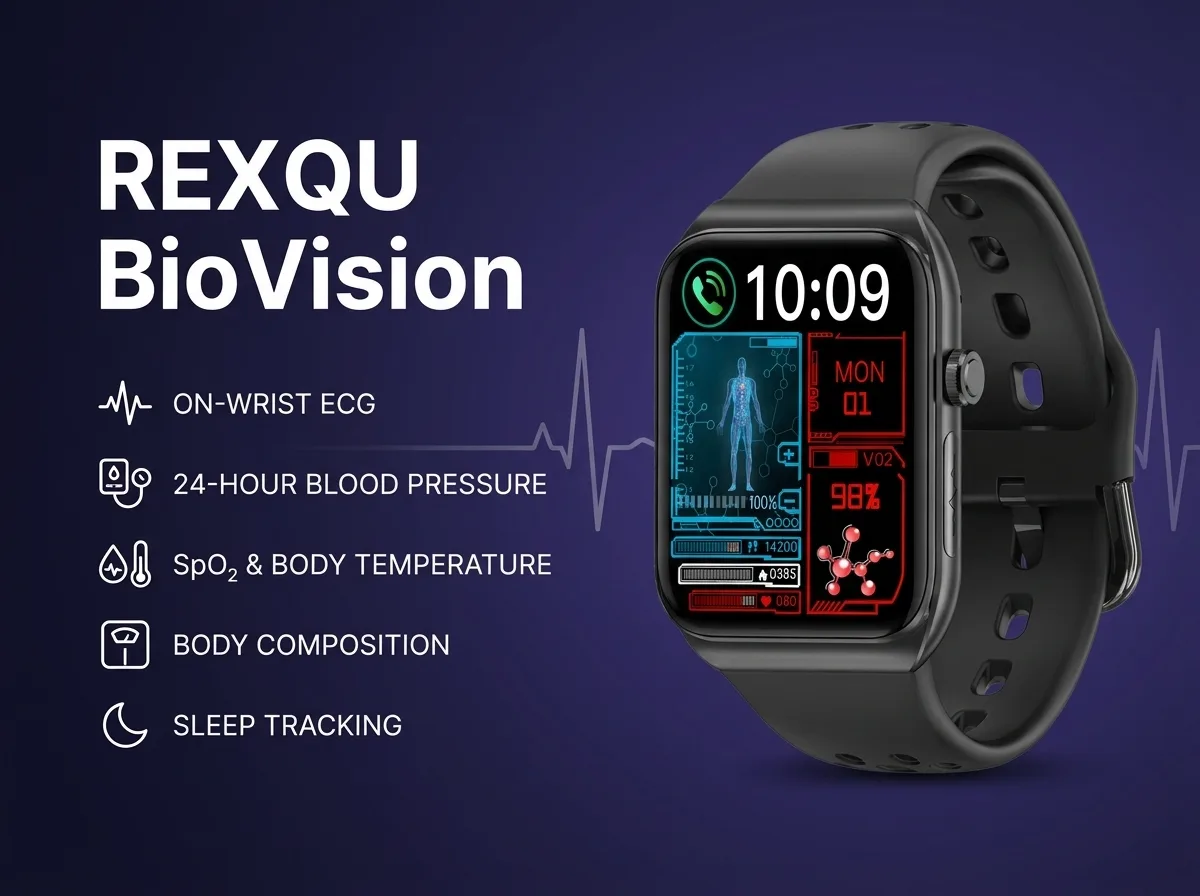
The REXQU BioVision is the stronger fit if your priority is passive, all-day blood-pressure trend collection rather than remembering to take repeated spot checks.
BioVision combines blood-pressure tracking with on-demand ECG, sleep staging and body-composition features. The idea is not that every wrist reading should be treated as a clinical number. The value is that you can look back across days and weeks and ask more useful questions:
- Are morning readings consistently different from evening readings?
- Do stressful workdays look different from weekends?
- Does your trend change after poor sleep?
- Are unusual readings isolated, or do they repeat?
View REXQU BioVision →
REXQU Chronex: Best for Blood Pressure Alerts and Everyday Awareness
The REXQU Chronex takes a different approach. Instead of positioning the experience around an always-visible stream of trend data, Chronex is better suited to people who want background wellness checks paired with a gentle alert when a reading appears outside their usual pattern.
Chronex also includes on-demand ECG, temperature tracking, a 1.43-inch AMOLED display and one-button SOS calling. That combination makes it particularly relevant if you care about both everyday cardiovascular awareness and convenience features for yourself or an older family member.
BioVision vs Chronex for 24-Hour Blood Pressure Monitoring
| Feature | REXQU BioVision | REXQU Chronex |
|---|---|---|
| Best for | Hands-off trend collection | Alerts and everyday awareness |
| Blood-pressure approach | Background 24-hour trend tracking | Background checks with unusual-reading alerts |
| ECG | On demand | On demand |
| Additional wellness data | Body composition, sleep staging | Temperature tracking |
| SOS calling | Not a primary feature | Yes |
| Subscription | No recurring REXQU subscription | No recurring REXQU subscription |
If neither approach is exactly what you need, compare more models on the static REXQU Blood Pressure Smartwatches category page.
How Accurate Is 24-Hour Blood Pressure Monitoring on a Smartwatch?
Wrist-based cuffless blood-pressure readings are best treated as wellness estimates and trend information. Fit, motion, wrist position, skin temperature and the device’s algorithm can all influence the result.
For that reason, one unusual smartwatch number matters less than a repeatable pattern. If you need blood-pressure readings for diagnosis, medication adjustment or treatment decisions, use the validated measurement method recommended by your clinician.
REXQU has a separate article devoted specifically to this question: Blood Pressure Smartwatch Accuracy: What to Know.
How to Get More Consistent Smartwatch Blood Pressure Readings
You can improve the usefulness of your trend data by being consistent about how you take readings.
- Wear the watch snugly. The sensors should maintain steady contact with the skin without being uncomfortably tight.
- Rest before a deliberate spot check. Sit quietly for a few minutes rather than measuring immediately after climbing stairs or exercising.
- Keep your wrist still. Motion can interfere with both optical measurements and ECG traces.
- Compare like with like. Morning readings are most useful when compared with other morning readings taken under similar conditions.
- Look for repeated patterns. A trend across several days is usually more informative than one isolated number.
- Confirm concerning readings appropriately. If something looks unusual, use a validated upper-arm cuff if available and speak with a healthcare professional when appropriate.
How to Use 24-Hour Blood Pressure Trends Before a Doctor Visit
The most useful role for a smartwatch may be helping you arrive at an appointment with better questions. Instead of saying, “My blood pressure seemed high once,” you may be able to show that your morning trend has been consistently different from your evening trend or that unusual readings tend to occur at a particular time.
Before an appointment:
- Review at least several days of trend history.
- Note repeated unusual readings rather than every small fluctuation.
- Record any symptoms or circumstances that occurred at the same time.
- Bring validated cuff readings as well if your clinician has asked you to monitor at home.
- Do not change medication based on smartwatch data alone.
For a dedicated appointment-preparation guide, read Blood Pressure Smartwatch for Doctor Visits: What Helps.
Who Is BioVision Better For?
Choose BioVision if you want your watch to quietly build a longer blood-pressure trend history with minimal intervention. It is particularly suitable for someone who enjoys looking at charts and patterns in the companion app and wants blood-pressure information alongside ECG, sleep and body-composition features.
Who Is Chronex Better For?
Choose Chronex if alerts, SOS calling and a more immediately visible on-wrist experience matter more than having the most hands-off trend-collection approach.
Frequently Asked Questions About 24-Hour Blood Pressure Monitoring
Is a smartwatch the same as a 24-hour ambulatory blood pressure monitor?
No. Clinical ABPM uses an inflatable upper-arm cuff and is intended for medical assessment. A smartwatch provides convenient wrist-based wellness trends.
Can I use BioVision instead of my home blood-pressure cuff?
Not when you need clinically reliable readings for diagnosis or treatment decisions. Use a validated cuff for those purposes and use BioVision as an additional trend-awareness tool.
Does 24-hour tracking mean the watch measures every second?
No. “24-hour” refers to the ability to collect background trend information across the day rather than a literal second-by-second clinical blood-pressure measurement.
Which is better: BioVision or Chronex?
BioVision is the stronger choice for hands-off all-day trend collection. Chronex is better if you value on-wrist alerts and SOS functionality.
Bottom Line: Is 24-Hour Blood Pressure Monitoring on a Smartwatch Worth It?
If you understand its role correctly, yes. A 24-hour blood pressure monitoring smartwatch can make it much easier to notice patterns that occasional spot checks might miss. The key is to use the watch for trend awareness rather than treating it as a replacement for clinical equipment.
For passive trend tracking, start with the REXQU BioVision. For alerts and everyday safety features, consider the REXQU Chronex. To compare all current options, visit the REXQU Blood Pressure Smartwatches collection.
REXQU smartwatches are consumer wellness devices and are not intended to diagnose, treat, cure or prevent disease. Blood-pressure readings should not be used on their own for medical decisions.