
A blood pressure smartwatch for doctor visits can be useful when it helps you bring organised trend information to an appointment instead of trying to remember what happened over the previous week. The key is understanding what a wrist wearable can contribute—and what still needs to come from a validated blood-pressure monitor and your healthcare professional.
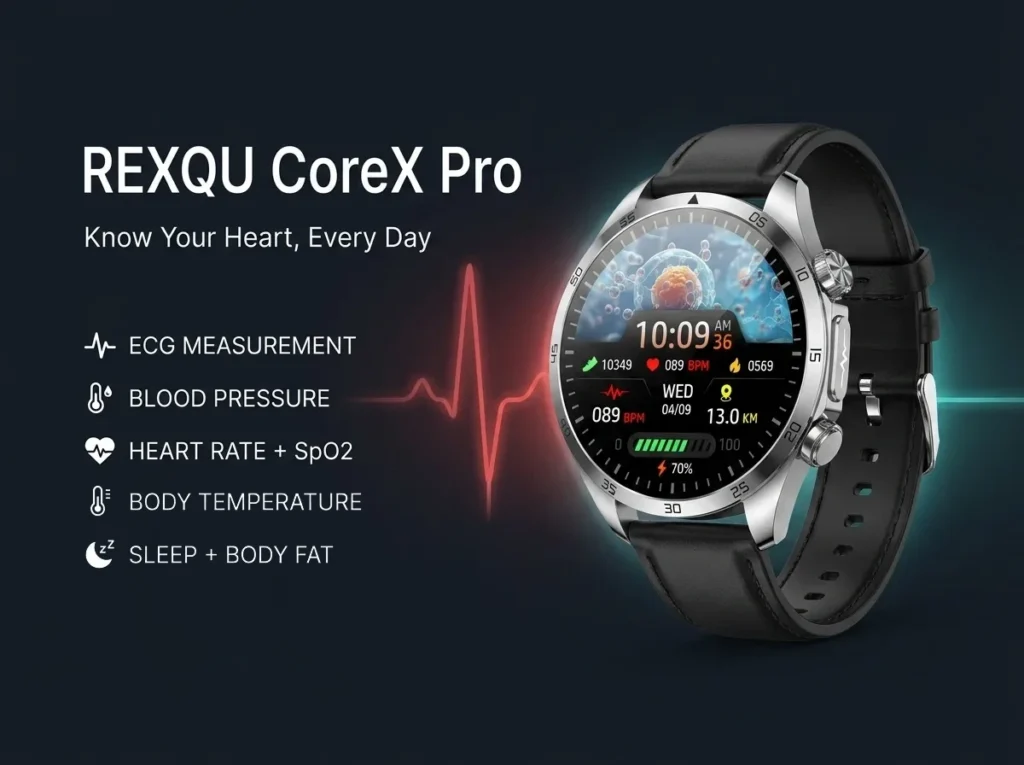
REXQU watches such as the CoreX Pro and VitaCore can store blood-pressure wellness trends alongside heart rate, sleep and other daily metrics. CoreX Pro also adds on-wrist ECG functionality, while VitaCore is designed around a broader multi-metric health check. That can make appointment preparation easier because your recent data is already organised in the companion app.
Why Blood Pressure Trends Can Help at a Doctor Visit
A clinic reading shows what your blood pressure was at one point in time. That matters, but it does not always show what happens during the rest of your week. Blood pressure naturally varies with time of day, activity, stress, caffeine, sleep and many other factors.
The CDC notes that nervousness during an office reading can sometimes raise blood pressure, a phenomenon commonly called white-coat hypertension. The agency also encourages self-measured blood-pressure monitoring with the support of a healthcare team. Its current guidance is available in Measuring Your Blood Pressure.
A smartwatch can add another layer of context by recording wellness trends during ordinary life. That does not make the wrist estimate diagnostic, but it may help you remember when changes occurred and give you useful questions to discuss.
What Makes a Blood Pressure Smartwatch Useful for Doctor Visits?
If appointment preparation is your goal, look beyond the presence of a blood-pressure icon. A useful blood pressure smartwatch for doctor visits should make it easy to collect, review and explain your data.
- Trend history: you should be able to review more than one isolated reading.
- Clear charts: weekly or daily graphs are easier to discuss than a long list of numbers.
- Time stamps: knowing when a reading occurred helps put it in context.
- Other wellness metrics: heart rate, sleep and activity can help you remember what was happening around the same period.
- ECG recording when relevant: a short rhythm trace can be useful to save if you are specifically discussing palpitations or rhythm concerns.
- No subscription barrier: you should be able to access your own history without paying for every report.
Blood Pressure Smartwatch vs Validated Home Cuff
The two tools serve different purposes. A wrist wearable is convenient and can help you see patterns. A validated automatic upper-arm cuff is the preferred tool when you and your healthcare professional need reliable home blood-pressure measurements for diagnosis or management.
The American Heart Association specifically recommends an automatic, cuff-style upper-arm monitor for home blood-pressure monitoring and advises against relying on wrist or finger monitors for that purpose. See the AHA’s Home Blood Pressure Monitoring guidance.
The practical approach is to use each tool for what it does best:
| Task | Smartwatch | Validated Upper-Arm Cuff |
|---|---|---|
| Convenient all-day wellness trend | Useful | Not designed for continuous wear |
| Home measurement for clinical decision-making | Not a substitute | Preferred |
| Reviewing heart rate, sleep and BP estimates together | Useful | Usually limited to blood pressure |
| Confirming an unusual smartwatch BP estimate | No | Appropriate when validated and used correctly |
| Capturing a short wrist ECG | Available on selected ECG models | No |
For a deeper explanation of wrist accuracy, read Blood Pressure Smartwatch Accuracy: What to Know.
REXQU CoreX Pro for Doctor Visits: ECG Plus Wellness Trends
The REXQU CoreX Pro is the stronger option when your appointment may involve both blood-pressure trends and heart-rhythm questions. It combines heart-rate and blood-pressure wellness tracking with an on-wrist ECG function.
A short ECG recording can be helpful as a record of what the watch captured at a particular moment. The important point is not to interpret the trace yourself as a diagnosis. Save it, note why you took it, and discuss it with the appropriate healthcare professional if it relates to a concern.
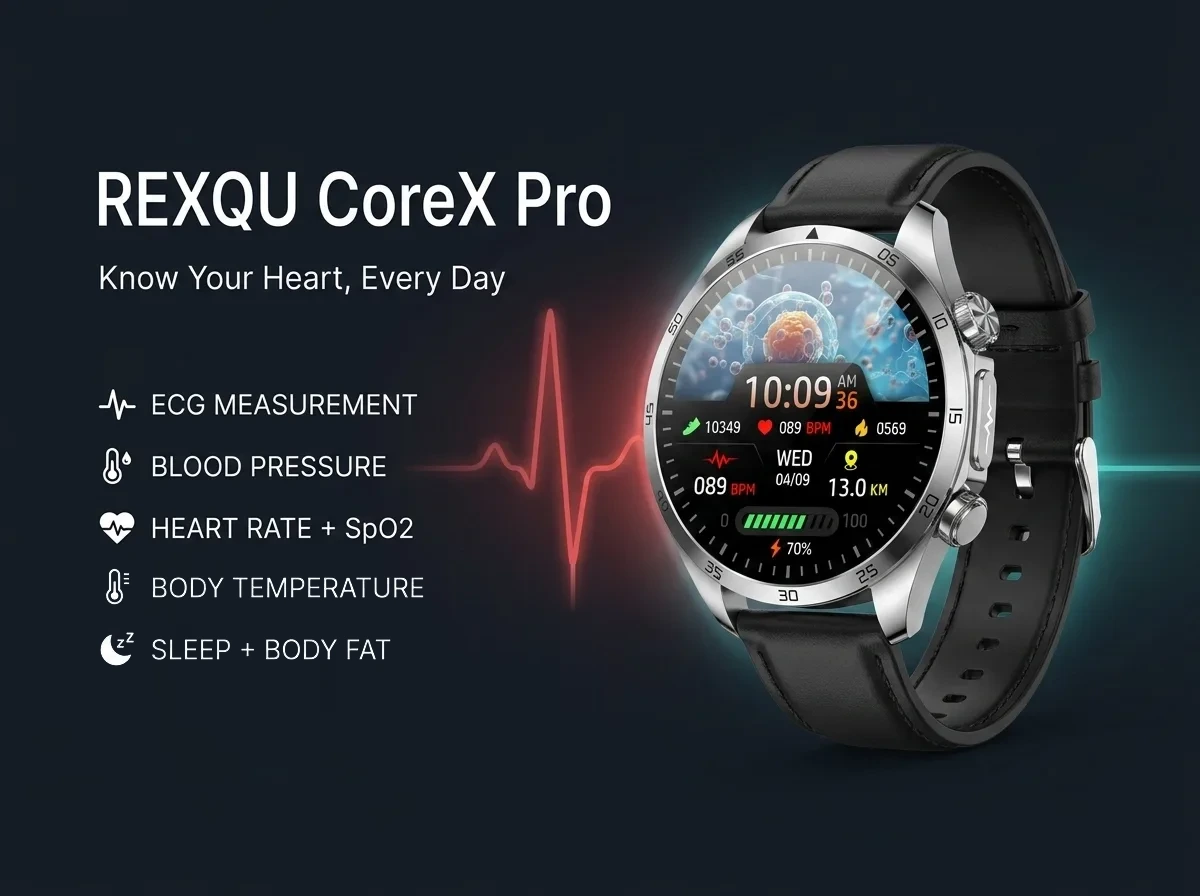
CoreX Pro May Suit You If:
- you want blood-pressure wellness trends plus ECG capability;
- you sometimes want to record a short wrist rhythm trace;
- you want heart rate, blood oxygen, sleep and stress information in the same app;
- you prefer a watch that combines appointment-prep data with normal smartwatch use.
REXQU VitaCore for Doctor Visits: Simple Multi-Metric Review
The REXQU VitaCore is a better fit if your priority is a simple health dashboard rather than ECG. It is designed to place several wellness readings together so you can review recent patterns in one place.
That can be useful before a routine primary-care visit because you can look back at the same period for heart rate, blood-pressure estimates and other wellness data instead of switching between separate devices and apps.
VitaCore May Suit You If:
- you mainly want general daily-health trends;
- you prefer a straightforward dashboard over ECG-focused features;
- you want a larger display for reviewing readings;
- you want blood pressure as one part of a broader wellness picture.
CoreX Pro vs VitaCore for Appointment Preparation
| Feature | REXQU CoreX Pro | REXQU VitaCore |
|---|---|---|
| Best for | BP trends plus ECG/rhythm context | Simple multi-metric wellness review |
| Blood-pressure wellness tracking | Yes | Yes |
| On-wrist ECG | Yes | Not the main feature |
| Heart-rate trends | Yes | Yes |
| Blood oxygen | Yes | Yes |
| Sleep tracking | Yes | Yes |
| Best appointment use | Bring trend history plus saved rhythm context | Review broad wellness trends together |
How to Prepare Your Blood Pressure Data Before a Doctor Visit
The most useful preparation happens before you are sitting in the waiting room. Use this checklist:
- Follow your doctor’s measurement plan first. If you have been asked to use a validated home cuff, that is your primary blood-pressure record.
- Keep a simple BP log. Note the date, time and readings from your validated cuff as instructed.
- Review your smartwatch trend. Look for dates where your wellness estimates or heart-rate pattern changed noticeably.
- Write down symptoms or circumstances. Note exercise, illness, poor sleep, stress, dizziness, palpitations or anything else that explains why a date stands out.
- Save relevant ECG traces. If your watch has ECG and you recorded a trace during a symptom, make it easy to find before the appointment.
- Bring your actual monitor if requested. The AHA recommends taking your home monitor to an appointment so the healthcare team can check the device and your technique.
- Prepare two or three questions. For example: “Does this pattern concern you?” or “How often do you want me to measure at home?”
How to Take Better Home Blood Pressure Readings
If you are bringing cuff readings to an appointment, technique matters. The CDC recommends sitting quietly with your back supported, keeping both feet flat on the floor, resting the arm at chest height, and avoiding talking during the measurement. It also recommends taking readings at consistent times and, when advised, taking more than one reading separated by a short interval.
Your smartwatch can still be worn during this routine, but do not substitute the wrist estimate for the validated cuff measurement your healthcare professional asked you to record.
What Should You Actually Show Your Doctor?
You do not need to scroll through months of smartwatch screens. A concise summary is more useful:
- your validated home-cuff log, if you have one;
- a weekly or monthly smartwatch trend only if it adds context;
- one or two saved ECG traces that relate to a specific concern;
- the dates when symptoms occurred;
- any medication or lifestyle changes that happened around the same time.
The smartwatch should make the conversation easier, not overwhelm it with data.
Frequently Asked Questions About Blood Pressure Smartwatches for Doctor Visits
Can I use a blood pressure smartwatch instead of a cuff?
No. REXQU watches are consumer wellness devices. If blood-pressure readings are being used for diagnosis, treatment or medication decisions, follow your healthcare professional’s advice and use an appropriate validated monitor.
Can smartwatch trends still be useful to a doctor?
They can be useful as supporting context, especially when they help you remember when a change happened or when you recorded a symptom. The clinician decides whether the information is medically relevant.
Should I bring my smartwatch to the appointment?
You can, particularly if you want to show a chart or saved ECG trace. It is often easier to review the relevant screens beforehand so you know exactly where the information is.
What is white-coat hypertension?
It refers to blood-pressure readings that are elevated in a healthcare setting but lower outside it. Home monitoring with an appropriate validated device can help your healthcare team understand whether this may be happening.
Which REXQU watch is better for appointment preparation?
CoreX Pro is the better fit if ECG/rhythm context matters. VitaCore is simpler if you mainly want a broader daily-health dashboard.
Bottom Line: Can a Blood Pressure Smartwatch Help at a Doctor Visit?
Yes—as a supporting record of wellness trends. The best use of a blood pressure smartwatch for doctor visits is to help you organise patterns, dates, heart-rate context and, on ECG-equipped models, short rhythm recordings. It should complement rather than replace validated blood-pressure monitoring.
For clinical blood-pressure basics, start with REXQU’s evidence-based Understanding Your Blood Pressure Numbers guide. To compare current REXQU options, browse the Blood Pressure Smartwatch collection.
This article is for general information and wellness education and is not medical advice. REXQU smartwatches are consumer wellness devices, not diagnostic medical devices. See our Editorial & Research Standards for how REXQU approaches evidence, limitations and product-related health content.