
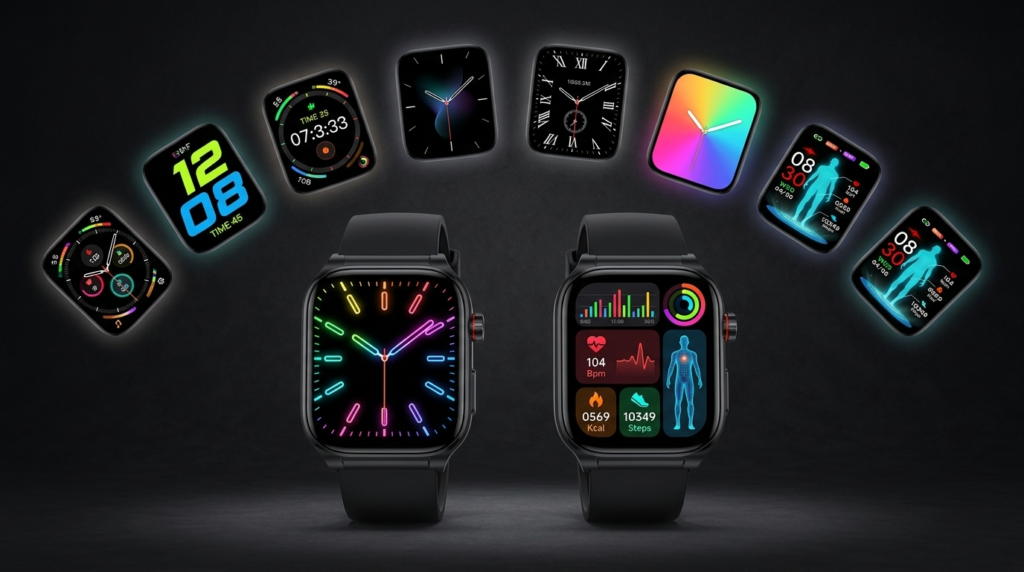
A cuffless blood pressure watch estimates blood pressure from sensors at the wrist without inflating an upper-arm cuff. That makes the technology convenient for everyday wellness tracking, but it also means the number is produced indirectly and should not automatically be treated as equivalent to a validated cuff measurement.
REXQU blood-pressure watches use wrist-based sensing and software to present BP wellness estimates alongside other daily metrics such as heart rate, sleep and activity. The strongest use case is trend awareness: seeing how your personal pattern changes over time while continuing to use an appropriate validated monitor whenever blood pressure is being used for diagnosis or treatment decisions.
How Does a Cuffless Blood Pressure Watch Work?
A traditional blood-pressure monitor uses an inflatable cuff around the upper arm. The cuff temporarily compresses the artery and the device measures pressure as blood flow returns. A cuffless watch does not perform that direct cuff-based measurement.
Instead, cuffless systems estimate blood pressure using one or more sensor signals and an algorithm. According to the American Heart Association, many cuffless devices use technologies such as photoplethysmography (PPG), tonometry, pulse-arrival time or pulse-transit time, sometimes combined with machine learning.
PPG: The Optical Sensor on the Wrist
PPG uses light-emitting diodes and optical detectors to measure changes in blood volume close to the skin. It is the same broad sensor family widely used for heart-rate tracking in consumer wearables.
For blood-pressure estimation, the device analyses characteristics of the pulse waveform and combines them with its algorithm. Some systems may also use other signals or user inputs.
Why the Watch Is Estimating Rather Than Directly Measuring Pressure
The important word is estimate. Without an inflatable cuff, the watch is inferring blood pressure from indirect signals. That is why factors such as motion, body position, wrist height, skin contact, circulation and calibration can influence the result.
The AHA’s professional summary of cuffless BP technology explains that real-world performance may be particularly sensitive to motion, sensor positioning, posture and hydrostatic pressure. Read the American Heart Association summary on cuffless devices.
Are Cuffless Blood Pressure Watches Accurate?
The answer is not a simple yes or no because cuffless devices are a broad category. Some medical devices have undergone regulatory review, while many consumer wearables are intended for general wellness and have not been validated for clinical decision-making.
The American Heart Association’s recent scientific statement says cuffless technology has significant potential but that many devices still lack adequate evidence for diagnosing hypertension or guiding treatment. A Canadian expert statement reaches a similar conclusion: cuffless readings used for clinical management should be confirmed with a validated cuff-based monitor.
For REXQU users, the responsible interpretation is straightforward:
- use the watch to follow personal wellness trends;
- do not change medication based on a smartwatch estimate;
- confirm unusual or clinically important readings using an appropriate validated device;
- discuss persistent concerns with a healthcare professional.
For a deeper accuracy discussion, see Blood Pressure Smartwatch Accuracy: What to Know.
What Can Affect a Cuffless Blood Pressure Watch Reading?
Because wrist BP estimates depend on indirect sensor signals, consistency matters. Common influences include:
- Wrist position: raising or lowering the wrist changes its height relative to the heart and can affect the signal.
- Movement: walking, talking with your hands or exercising can introduce motion artefacts.
- Watch fit: a loose strap can reduce sensor contact; an excessively tight strap can also alter local conditions.
- Body posture: standing, sitting and lying down can produce different cardiovascular conditions.
- Skin temperature and circulation: cold skin or reduced peripheral circulation can weaken optical signals.
- Calibration: some cuffless systems depend heavily on calibration quality and may require recalibration.
- Device algorithm: two watches can use similar sensor types but process the data differently.
How to Get More Consistent Cuffless BP Wellness Readings
If your goal is to compare your own trend from one day to the next, use a repeatable routine:
- Sit quietly for several minutes before an on-demand reading.
- Wear the watch snugly in the position recommended by the manufacturer.
- Rest your forearm and keep the wrist still.
- Try to measure at similar times when comparing days.
- Avoid interpreting a reading taken immediately after vigorous exercise as a resting baseline.
- If the number looks very different from your usual pattern, repeat the watch reading calmly.
- If the result matters medically, confirm it with a validated upper-arm cuff and follow your healthcare professional’s guidance.
Cuffless Blood Pressure Watch vs Upper-Arm Cuff
| Feature | Cuffless Smartwatch | Validated Upper-Arm Cuff |
|---|---|---|
| Convenience | Very high; already on your wrist | Requires a separate measurement session |
| All-day wellness trends | Useful | Not designed for continuous wear |
| Clinical BP measurement | Not a substitute unless specifically validated for that purpose | Preferred for home clinical monitoring |
| Heart rate, sleep and activity context | Often included | Usually not included |
| Diagnosis/treatment decisions | Do not rely on a general-wellness watch alone | Use as advised by your healthcare team |
This is why the two tools are better viewed as complementary rather than interchangeable. A smartwatch can make trend awareness easier; a validated cuff is the appropriate tool when blood-pressure accuracy is central to a medical decision.
Which REXQU Cuffless Blood Pressure Watch Fits Best?
REXQU has several watches and bands with blood-pressure wellness features. The right model depends on whether you want a large health dashboard, ECG capability or a screenless design.
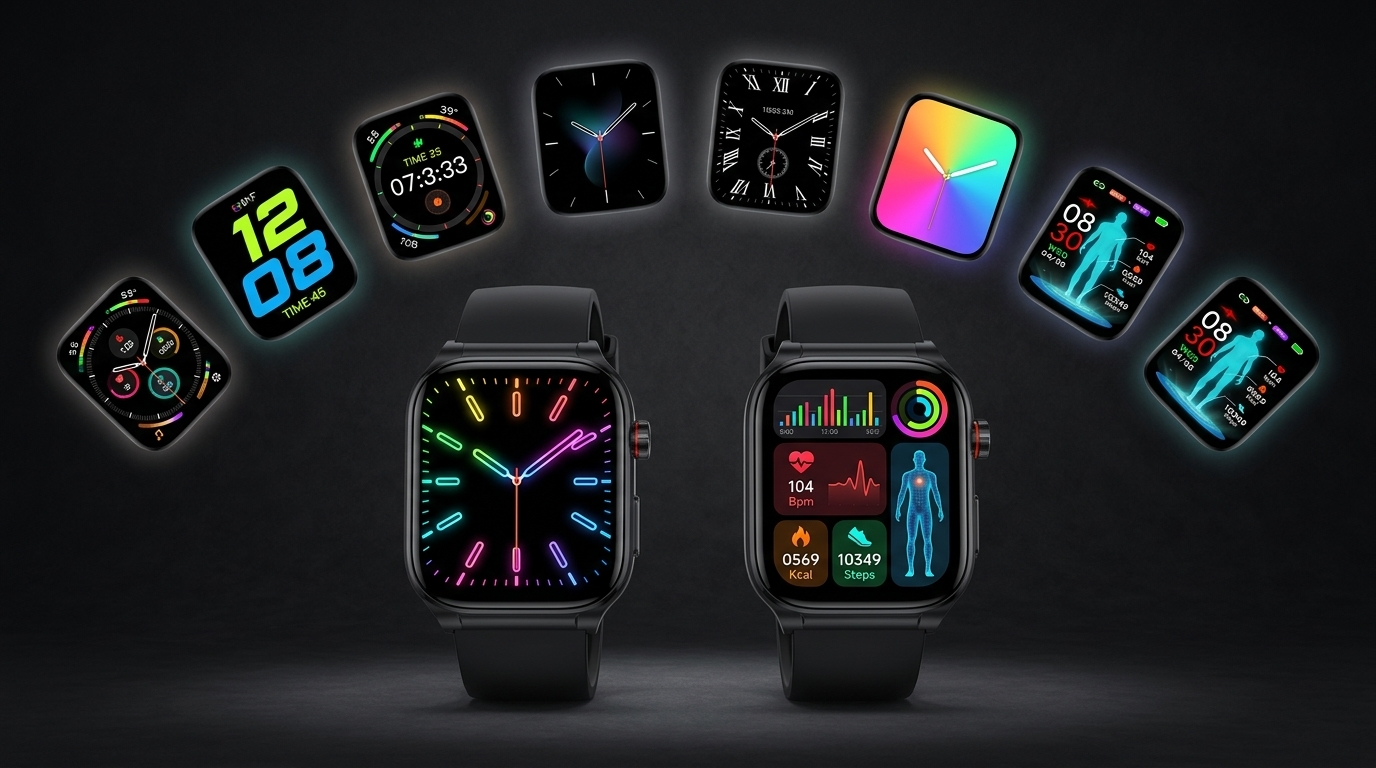
| REXQU Model | Best For | Blood Pressure Use | Other Features |
|---|---|---|---|
| VitaCore | Large all-round health dashboard | Wrist BP wellness estimates | Heart rate, SpO₂, stress and other wellness metrics |
| CoreX Pro | BP trends plus ECG | Wrist BP wellness tracking | On-wrist ECG, heart rate, sleep, blood oxygen |
| PulseBand | Screenless, long-wear tracking | Blood-pressure wellness trends | ECG, HRV-related tracking, up to 30-day battery |
REXQU VitaCore: Best All-Round Health Dashboard
VitaCore is a strong choice if you want blood-pressure wellness estimates alongside several other daily-health metrics on a large display. It is designed for users who want a quick snapshot of multiple wellness readings rather than a BP-only device.
REXQU CoreX Pro: Best for BP Plus ECG
CoreX Pro adds on-wrist ECG to its blood-pressure and heart-rate wellness features. That makes it more suitable for people who want rhythm information as well as BP trend context.
REXQU PulseBand: Best Screenless Option
PulseBand removes the watch display entirely and focuses on long-wear sensor tracking. It is a useful alternative if you want wrist wellness trends without another screen demanding attention.
Who Should Consider a Cuffless Blood Pressure Watch?
A cuffless watch may be useful if you want:
- a convenient wellness trend on a device you already wear;
- blood-pressure estimates alongside heart rate, sleep and activity;
- a way to notice whether your personal pattern is changing;
- more context between occasional validated cuff measurements.
It is less appropriate as your only BP tool if you are managing diagnosed hypertension, adjusting medication, monitoring pregnancy-related blood pressure or making another medical decision where validated measurements are important.
Can a Cuffless Watch Help Between Doctor Visits?
It can help you remember trends and dates, but the best way to bring blood-pressure information to a healthcare professional is still to follow the measurement plan they recommend. If that includes home monitoring, use a validated cuff as instructed.
Your smartwatch trend may still provide useful supporting context—for example, showing that a change in your wellness pattern started around the same week as a sleep disruption, new exercise routine or illness. See Blood Pressure Smartwatch for Doctor Visits for a practical appointment-preparation checklist.
Frequently Asked Questions About Cuffless Blood Pressure Watches
Does a cuffless blood pressure watch really measure BP?
It estimates blood pressure indirectly from sensor signals and algorithms rather than measuring pressure with an inflatable arm cuff.
Can a cuffless smartwatch replace an upper-arm monitor?
Not for clinical home monitoring unless the specific device has been appropriately validated and your healthcare professional recommends it. For REXQU consumer wellness watches, use the BP feature for trend awareness.
Why do smartwatch blood-pressure readings vary?
Motion, wrist position, posture, sensor fit, circulation, temperature, calibration and algorithm differences can all influence cuffless estimates.
Do all cuffless watches need calibration?
No single answer applies to every design. Many cuffless systems rely on calibration, while others use different algorithms or inputs. Follow the instructions for the specific device.
What is the best REXQU cuffless blood pressure watch?
VitaCore is a strong all-round choice, CoreX Pro suits users who also want ECG, and PulseBand is the screenless option.
Bottom Line: Is a Cuffless Blood Pressure Watch Worth It?
A cuffless blood pressure watch can be worthwhile when you value convenience and understand its role. It can help you follow personal wellness trends and combine BP estimates with other wearable data, but it should not be treated as a shortcut around validated blood-pressure measurement when accuracy matters clinically.
For the evidence and measurement basics, read REXQU’s Understanding Your Blood Pressure Numbers Health Guide. To compare current models, browse the REXQU Blood Pressure Smartwatch collection.
This article is for general information and wellness education and is not medical advice. REXQU smartwatches are consumer wellness devices, not diagnostic medical devices. See our Editorial & Research Standards for how REXQU approaches evidence, limitations and health-related product content.