
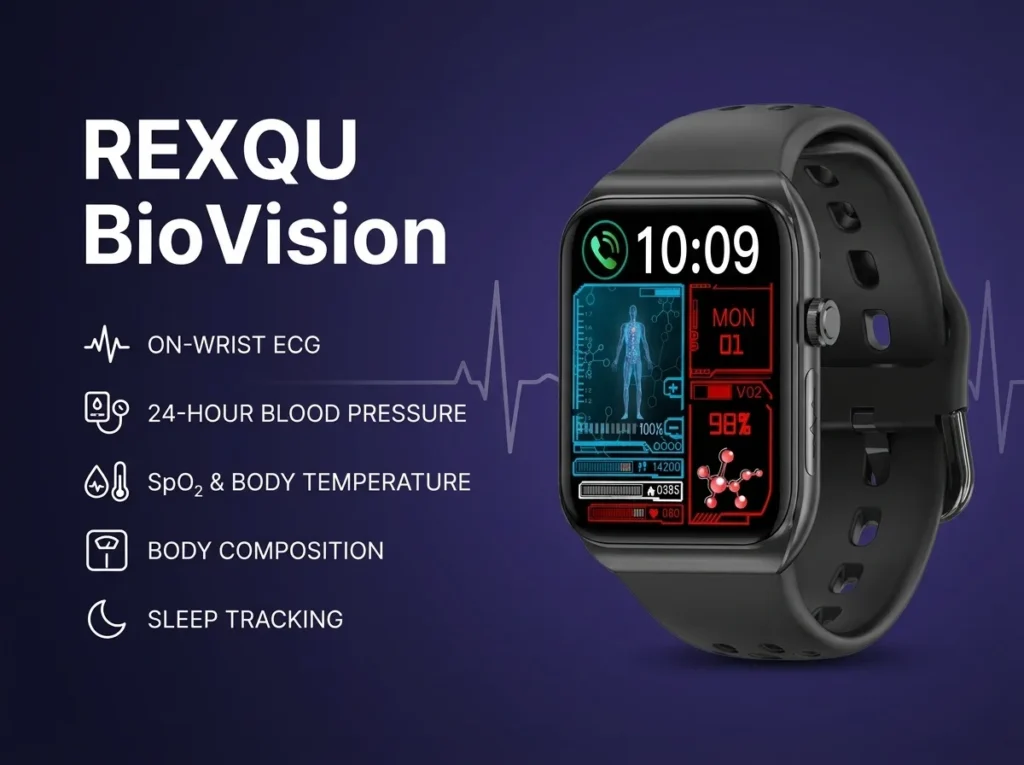
Looking for a smartwatch with temperature sensor tracking built in, so you can see how your body’s baseline shifts day to day without a separate thermometer? Skin-temperature sensing is one of the newer wellness features on health-focused watches, and it works differently than you might expect.
Here’s how two REXQU models handle it, what the readings actually measure, and how to use the feature without over-reading a single number.
What a Smartwatch With Temperature Sensor Actually Measures
A wrist-worn temperature sensor reads skin temperature, not core body temperature. Skin temperature shifts more, and faster, than your internal temperature — with room conditions, activity, circulation and time of day all moving the number. That’s why these features are framed as trend tools for comparing your own baseline over time, not as a clinical thermometer.
The REXQU HealthLink includes a dedicated skin-temperature sensor alongside heart-rate monitoring, on-demand ECG, SpO₂ spot checks and sleep trends, all shown on a large 1.95″ AMOLED display. It’s designed to compare your own temperature trend against your personal baseline rather than diagnose fever, and it’s $139.97.
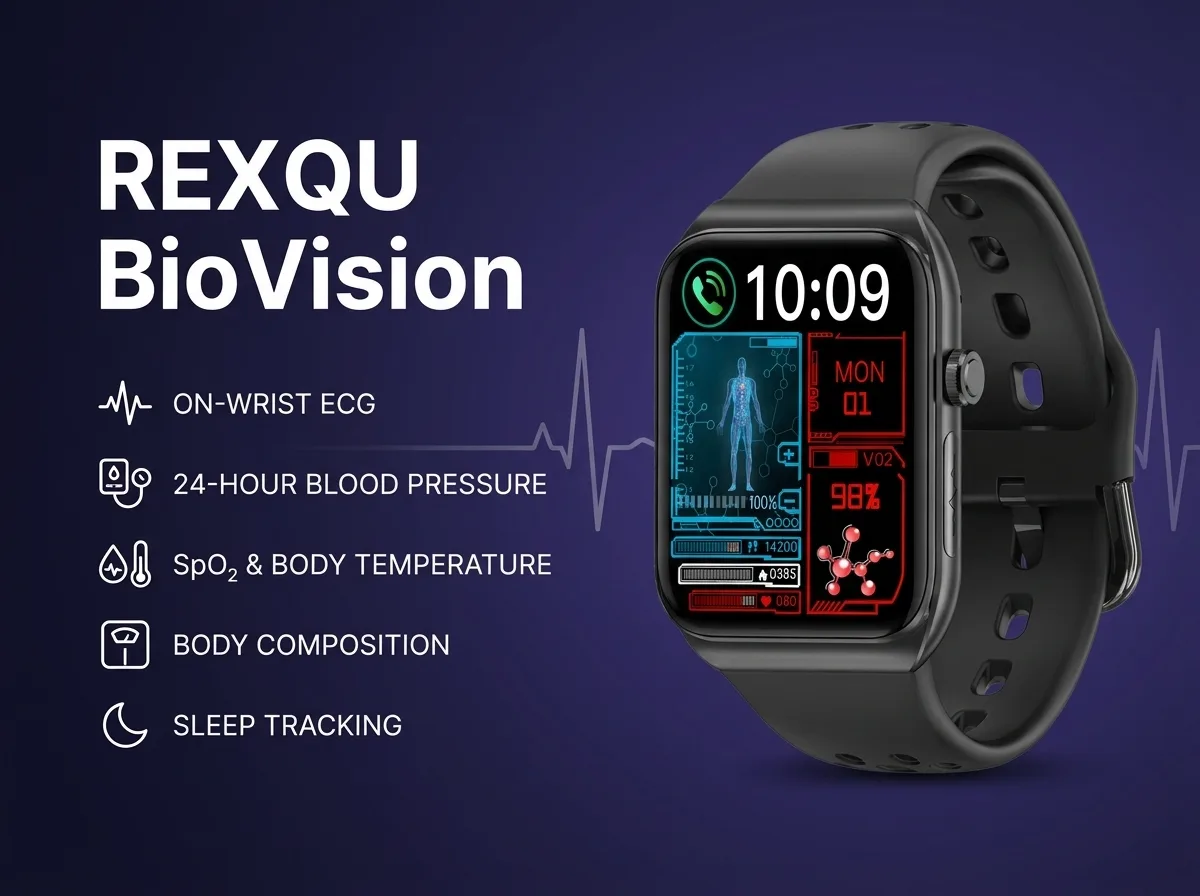
Temperature Alongside Body Composition
The REXQU BioVision pairs skin-temperature trends with a broader wellness dashboard: SpO₂, heart rate, estimated sleep patterns, and wrist-based body-composition estimates for BMI, body fat, muscle, hydration and basal metabolism. It runs 60+ sport modes, Bluetooth calls with SOS contact calling, and about 7-10 days of battery life on its 1.81″ HD touch display. It’s $149.97.
Choosing a Smartwatch With Temperature Sensor for Daily Use
If temperature tracking alongside core heart-health metrics — ECG, SpO₂, sleep — is the priority, HealthLink’s larger display and dedicated heart-rate focus make it the more direct pick. If you want temperature folded into a wider wellness picture that includes body composition, BioVision covers more ground for a similar price.
| Feature | HealthLink | BioVision |
|---|---|---|
| Temperature tracking | Skin-temperature trend sensor | Skin-temperature trend estimates |
| Other health sensors | Heart rate, ECG, SpO₂, sleep | Heart rate, SpO₂, sleep, body composition |
| Display | 1.95″ AMOLED | 1.81″ HD touch |
| Sport modes | — | 60+ |
| Battery | Up to 4 days | 7-10 days |
| Price | $139.97 | $149.97 |
How to Actually Use a Skin-Temperature Feature
- Wear the watch consistently, ideally overnight, so it can build your own personal baseline rather than comparing one reading to a generic average.
- Log readings at the same time of day when possible — morning skin temperature trends are typically more stable and comparable than readings taken right after exercise.
- Treat a sudden shift as a prompt to check in on how you’re feeling, not as a diagnosis. Skin temperature can rise from a hot room, a hot shower or a workout just as easily as from illness.
- Cross-reference with sleep and heart-rate trends on the same watch for a fuller picture, rather than reacting to temperature alone.
This is general wellness information, not medical advice — a wearable temperature trend is not a substitute for a clinical thermometer or a doctor’s evaluation. A useful independent overview of how wearable sensors approach temperature versus true core body temperature is this peer-reviewed systematic review of wearable temperature-sensing technology.
FAQ
Can a smartwatch with temperature sensor detect a fever?
Not reliably. These sensors track skin temperature trends for personal wellness awareness, not core body temperature, and neither HealthLink nor BioVision is marketed or intended as a fever-detection or diagnostic device.
How often should I check the temperature trend?
Passive, continuous tracking with a daily or weekly trend review in the app is more useful than checking a single reading, since one-off numbers move around with activity and environment.
Does temperature tracking drain the battery faster?
Background sensor tracking has some impact, which is part of why BioVision’s larger 1.81″ display and broader sensor suite lists a shorter runtime than a display-only watch, though its 7-10 days is still solid for a multi-sensor device.
Bottom line: a smartwatch with temperature sensor is a genuinely useful trend tool once you know what it is and isn’t measuring. See the full lineup on REXQU’s health smartwatches page, or the daily health monitoring watch guide for the complete category breakdown.