
When parents search for a waterproof kids smartwatch, the labels can be confusing. REXQU’s current kids models use IP67 or IPX7 ratings, and those codes are useful — but they should not be interpreted as permission for swimming, bathing or every type of water exposure.
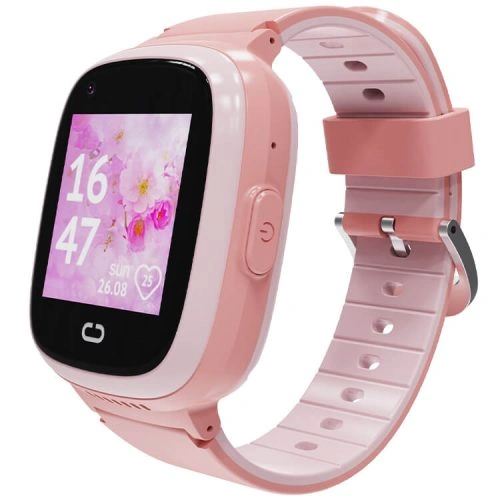
What Do IP67 and IPX7 Mean?
IP stands for Ingress Protection. The rating system is defined by IEC 60529, the international standard for enclosure protection.
The two positions in the code describe different things:
- First position: protection against solid particles such as dust.
- Second position: protection against water under specified test conditions.
In IP67, the “6” means the enclosure has the highest dust-protection category in this code and the “7” describes a temporary-immersion water test. In IPX7, the “X” does not mean the watch failed a dust test — it means a solids rating is not being specified.
IP67 vs IPX7: What Is the Difference for a Kids Watch?
| Rating | Dust claim | Water category | Practical takeaway |
|---|---|---|---|
| IP67 | Dust-tight category | Temporary immersion test category | Useful for dusty and wet everyday environments |
| IPX7 | Not declared | Temporary immersion test category | Same water digit, without a stated dust rating |
Which REXQU Kids Smartwatch Has Which Rating?
| Model | Rating | Best fit | View |
|---|---|---|---|
| KidGuard Pro | IP67 | Parents who also want a declared dust rating | KidGuard Pro → |
| KidTrack | IPX7 | Lightweight everyday wear | KidTrack → |
| KidView | IPX7 | Larger-screen first watch | KidView → |
Can a Child Wear the Watch in the Rain?
Yes — ordinary rain and everyday splashes are the kind of situations these water-resistance ratings are intended to help with.
That matters because a child should not have to panic about the watch every time it rains on the walk home or water splashes during hand-washing.
Can a Child Swim With an IP67 or IPX7 Watch?
Do not assume so. An IP rating describes a standardized enclosure test; it does not automatically certify the watch for swimming strokes, pool chemicals, repeated submersion or prolonged water exposure.
For the current REXQU kids range, the safest guidance is to remove the watch before swimming unless the individual product instructions explicitly say swimming is supported.
Can a Child Shower or Bathe With It?
It is better to remove the watch. Hot water, soap, shampoo and steam create conditions different from a room-temperature ingress test and can be harder on seals over time.
A child may forget to take a watch off, so building a simple rule — “watch comes off before bath or shower” — is easier than trying to interpret the rating every day.
What About Puddles and Accidental Dunking?
A brief accidental splash or dunk is very different from intentionally swimming with the watch. The “7” water category exists precisely because the enclosure has been tested beyond simple splash exposure.
Still, after unexpected immersion:
- Remove the watch from the water.
- Dry the case and strap carefully.
- Do not place it on the charger while wet.
- Let the charging contacts dry fully.
- Check that the speaker, microphone and touch screen behave normally before relying on calls or SOS.
Why Dust Protection Can Matter for Kids
The extra “6” in KidGuard Pro’s IP67 rating may be useful for children who spend time around playground sand, dusty sports fields or outdoor activities. It means the enclosure has a declared dust-protection category in addition to the water rating.
That does not make KidGuard Pro automatically “better” for every child. KidTrack may be preferable if weight matters most, while KidView’s larger display may be easier for a younger child to use.
Water Resistance vs Watch Weight
Durability is only one part of the buying decision. If the watch feels bulky or uncomfortable, a child may remove it — which defeats the value of GPS, calling and SOS.
Compare the models in the REXQU kids smartwatch weight guide if wrist comfort is a priority.
Water Resistance and Battery Charging
Do not charge a wet watch. Moisture around charging contacts can prevent a clean connection and may contribute to corrosion over time.
Teach the child to place the watch in the same dry charging area each day. For more practical charging advice, see the kids smartwatch battery-life guide.
Water Resistance Can Change Over Time
An IP rating describes the watch in its tested condition. Real-world wear can affect seals over time. Drops, impacts, cracked cases, worn seals and repeated chemical exposure may reduce protection.
Parents should inspect the watch periodically, especially after a hard impact. If the case or charging area looks damaged, treat the water rating more cautiously.
Waterproof Kids Smartwatch Care Checklist
- Remove before swimming unless explicitly supported.
- Remove before showers and baths.
- Dry after rain or heavy splashing.
- Never charge while wet.
- Avoid soap, shampoo and cleaning chemicals on the case.
- Inspect for cracks after hard impacts.
- Keep charging contacts clean and dry.
- Do not press buttons underwater unless the product instructions explicitly allow it.
Frequently Asked Questions About Waterproof Kids Smartwatches
Is IP67 better than IPX7?
For water, both use the same “7” water category. IP67 additionally declares the highest dust-protection category, while IPX7 does not specify a solids rating.
Does IPX7 mean the watch is not dust resistant?
Not necessarily. The “X” means no solids-protection rating is being declared in that code. It does not automatically mean the watch fails against dust.
Can my child wash their hands with the watch on?
Normal hand-washing and splashes are within the everyday situations these ratings are intended to handle, but avoid prolonged soaking in soapy water.
Can my child swim with KidGuard Pro?
Do not interpret IP67 alone as permission for swimming. Follow the product-specific instructions and remove the watch for pool use unless swimming is explicitly supported.
Which REXQU kids watch is the most water- and dust-protected?
KidGuard Pro is the only one of the three compared here with a published IP67 code that includes both a dust and water rating. KidTrack and KidView are listed as IPX7.
Bottom Line
A waterproof kids smartwatch should survive ordinary childhood moisture without becoming another thing a parent has to worry about constantly. KidGuard Pro’s IP67 rating adds a declared dust-protection level, while KidTrack and KidView use IPX7 with the same water digit.
For the full buying picture — GPS, calling, SIM, battery, weight and parental controls — read the Best Kids Smartwatch buying guide or browse the REXQU kids smartwatch collection.
Water-resistance ratings describe standardized test conditions and should not be treated as a guarantee against every real-world water exposure. Follow the specific product instructions supplied with the watch.