
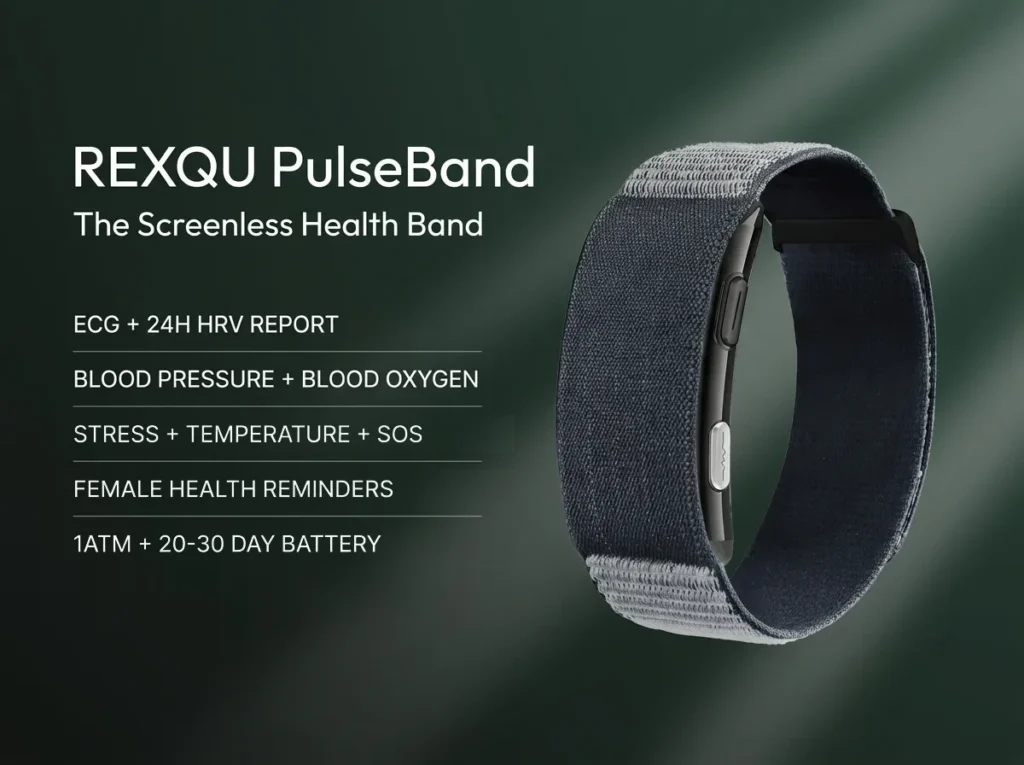
A screenless fitness tracker with body composition tracking can give you more context than steps and calories alone. The REXQU PulseBand is the screen-free model in the current REXQU lineup that lists on-band body composition analysis, including body-fat information, alongside ECG, heart rate, HRV, sleep and other wellness trends.
The key is to use body-composition data the right way. A wrist wearable can be convenient for watching direction over time, but it should not be treated as a replacement for a clinical body-composition assessment such as DXA or professionally administered testing.
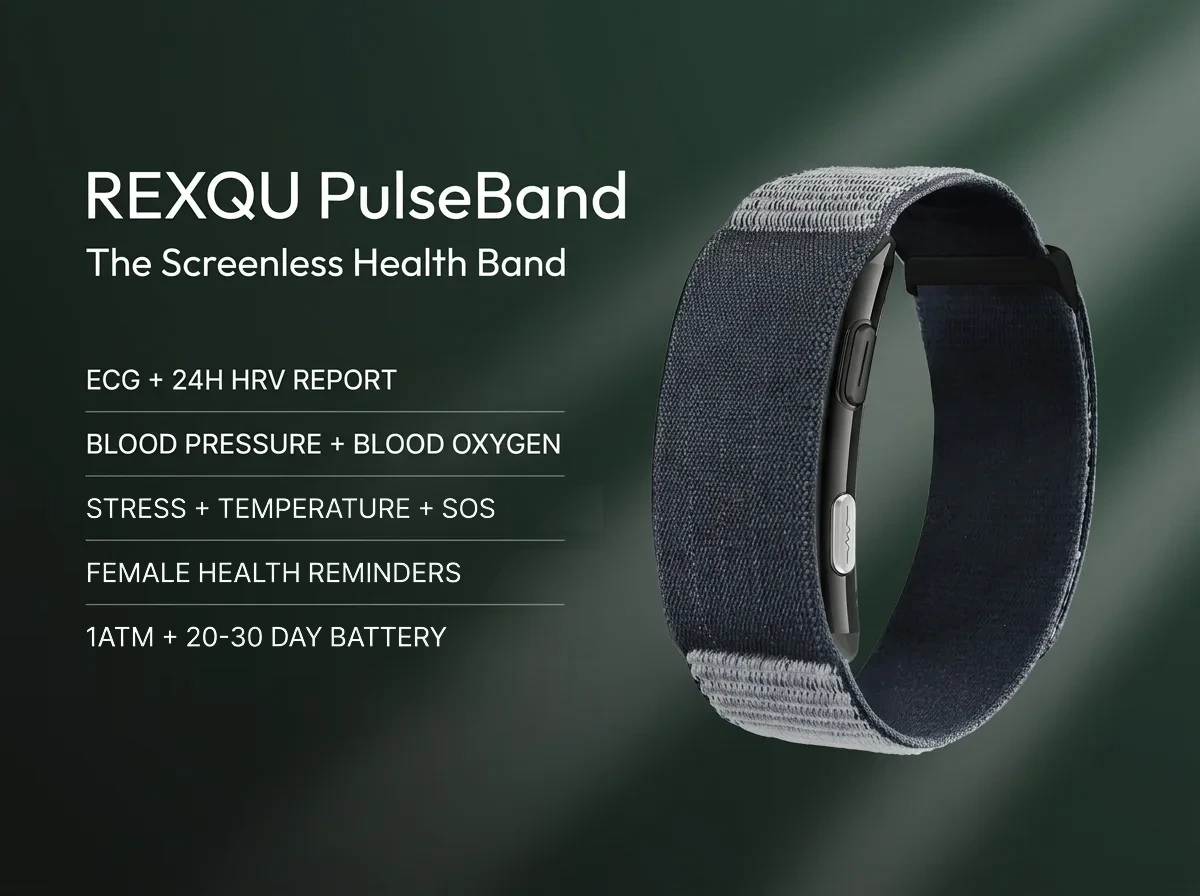
What Screenless Fitness Tracker Body Composition Tracking Means
Body composition describes how body weight is distributed among components such as fat and lean tissue. Consumer wearables increasingly estimate some of these values so users can follow trends between workouts, lifestyle changes or weight-management goals.
On PulseBand, REXQU lists body composition analysis including body fat as one of the band’s wellness features. The results are viewed in the free G BAND app rather than on the wrist, which fits the device’s screenless design.
REXQU does not position the band as a clinical body-composition instrument. That distinction is important because even established consumer body-composition technologies can vary in accuracy compared with reference methods.
What the REXQU PulseBand Tracks
The PulseBand combines body composition with a broader set of wellness measurements:
- On-band body composition analysis including body fat
- On-demand ECG recording
- 24/7 heart-rate monitoring
- 24-hour HRV monitoring with overnight analysis
- Blood-pressure wellness readings
- Blood-oxygen readings
- Body-temperature trends
- Sleep and stress tracking
- Steps and calories
- 25–30 days of typical battery life
Because all of the information is stored and displayed in G BAND, body composition can be reviewed alongside sleep, heart rate, activity and recovery trends rather than as an isolated number.
Why Track Body Composition Instead of Weight Alone?
Body weight can stay similar even while exercise, diet and hydration change the balance of fat and lean tissue. That is why some people prefer an additional body-composition trend instead of relying only on the scale.
For example, someone starting resistance training may see only a modest change in total weight while also changing body shape and fitness. A consumer body-composition estimate can provide another data point to watch—but the direction over repeated measurements is usually more useful than treating one percentage as exact.
How Accurate Are Wearable Body Composition Estimates?
Accuracy varies by device, measurement method, hydration, body size, electrode arrangement and the algorithm used. Research comparing consumer body-composition devices with reference methods shows that some devices can track body-fat estimates reasonably well while still showing meaningful individual error.
A recent study of wrist-worn body-composition technology found that wearable estimates can be useful for general monitoring, while also showing limitations and variability compared with DXA and clinical equipment. You can read the peer-reviewed research in PubMed’s study of wearable body-composition estimates.
The practical takeaway is simple: use a consumer wearable for consistent trend tracking, not as proof that your exact body-fat percentage is clinically correct.
How to Use PulseBand Body Composition Data Well
- Measure under similar conditions. If you compare readings, try to take them at a similar time of day and under similar hydration conditions.
- Watch the trend, not one reading. A single estimate may move because of hydration, recent exercise or normal measurement variation.
- Use the same device consistently. Comparing values from different scales, watches and apps can create misleading differences.
- Pair the number with other evidence. Weight, waist measurements, fitness performance, clothing fit and how you feel can provide useful context.
- Do not make medical decisions from the estimate. If body composition matters for a medical reason, use appropriate professional assessment.
Why a Screenless Design Works Well for Body Composition Tracking
The absence of a display does not reduce the usefulness of body-composition trends because detailed results are easier to review in an app anyway. A phone screen provides space for graphs, historical comparisons and related wellness data.
The screenless design also contributes to PulseBand’s 25–30 day battery life. That can make consistent data collection easier because the band spends less time on the charger.
If long runtime is important to you, see the screenless fitness tracker battery-life comparison.
PulseBand vs Other REXQU Screenless Fitness Trackers
| Model | Body Composition | Main Strength | Battery |
|---|---|---|---|
| PulseBand | Yes — including body fat | ECG, HRV, body composition and long battery | 25–30 days |
| CardioBand | Not a headline feature | ECG, HRV, sleep analysis and cycle tracking | 7–10 days |
| AeroBand | Not a headline feature | Simple daily tracking + call/message vibration alerts | 11–30 days |
| GuardBand | Not a headline feature | GPS, SOS and fall detection | 7–10 days |
If body composition is the reason you are shopping, PulseBand is the clear fit in this group. If safety, cycle tracking or phone-alert awareness matters more, one of the other bands may make more sense even without the body-composition feature.
Body Composition vs BMI
BMI uses only height and weight, so it cannot distinguish fat mass from muscle mass. Body-composition estimates attempt to provide more detail, which is why athletes and people changing their exercise routines often find them more interesting than BMI alone.
That does not make a consumer body-composition reading automatically more medically accurate. Both BMI and wearable body composition have limitations and should be interpreted in context rather than treated as a diagnosis.
Body Composition vs a Smart Scale
A smart scale and a wrist wearable can both provide convenient home estimates, but they do not necessarily measure or calculate body composition in the same way. Even two devices using similar underlying principles can produce different results because electrode placement and algorithms differ.
If you already use a smart scale, it is usually better to follow the trend from one consistent device than to expect identical percentages from the scale and PulseBand.
What Can Change a Body Composition Reading?
Consumer body-composition estimates can move for reasons that have little to do with actual fat gain or loss over a single day. Common influences include:
- Hydration
- Recent food or drink
- Recent exercise
- Time of day
- Skin contact and device positioning
- Normal algorithm and sensor variation
That is another reason weekly or monthly trends are often more meaningful than comparing morning and evening readings.
Who Is PulseBand Body Composition Tracking Best For?
PulseBand may suit you if you want:
- A screenless tracker with body-fat/body-composition information
- Long battery life for consistent daily wear
- ECG and HRV alongside fitness information
- One companion app rather than separate devices for several wellness trends
- A way to monitor direction during a fitness or lifestyle program
If you mainly want a simple band for heart rate, sleep and activity, the AeroBand may be the simpler choice. If GPS and personal-safety features matter more, compare the GuardBand.
Screenless Fitness Tracker Body Composition FAQs
Does the REXQU PulseBand measure body fat?
REXQU’s current PulseBand product page lists on-band body composition analysis including body fat, with results shown through the free G BAND app.
Is PulseBand body composition medically accurate?
No medical-accuracy claim should be assumed. Treat it as a consumer wellness estimate for watching trends, not as a replacement for DXA or a clinical body-composition assessment.
Should I use the body-fat number to change medication or treatment?
No. Do not make treatment or medication decisions from a consumer wearable body-composition estimate.
Does PulseBand require a subscription?
No REXQU subscription is required for its core G BAND app features.
Does PulseBand work with iPhone and Android?
Yes. It currently supports Android 8.0+ and iOS 13.0+ through G BAND. See the screenless tracker app compatibility guide.
Is PulseBand the Best Screenless Fitness Tracker for Body Composition?
If body composition is specifically what you want from a screenless REXQU tracker, PulseBand is the model to start with. Its combination of body-composition analysis, ECG, HRV, sleep tracking and 25–30 day battery life makes it the most feature-rich option for this particular search intent.
See the PulseBand product page for current specs and pricing, or compare all four options in the REXQU Screenless Fitness Tracker collection →.
REXQU bands are wellness and fitness devices, not medical devices. Body-composition readings are consumer estimates intended for general awareness and trend tracking, not diagnosis or treatment.