
A GPS smartwatch with SOS alert can add a useful layer of convenience for trail runs, day hikes and rides by combining route tracking with quick access to paired-phone calling or emergency-contact features. The important limitation is that a smartwatch SOS function is not the same thing as a dedicated satellite distress beacon.
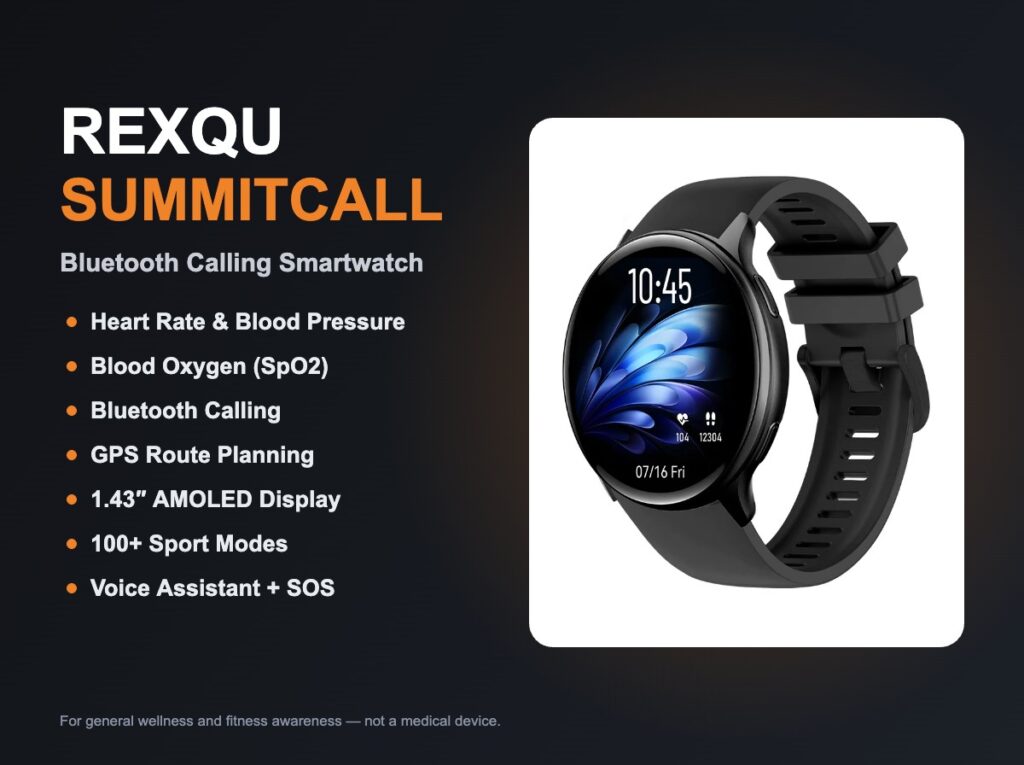
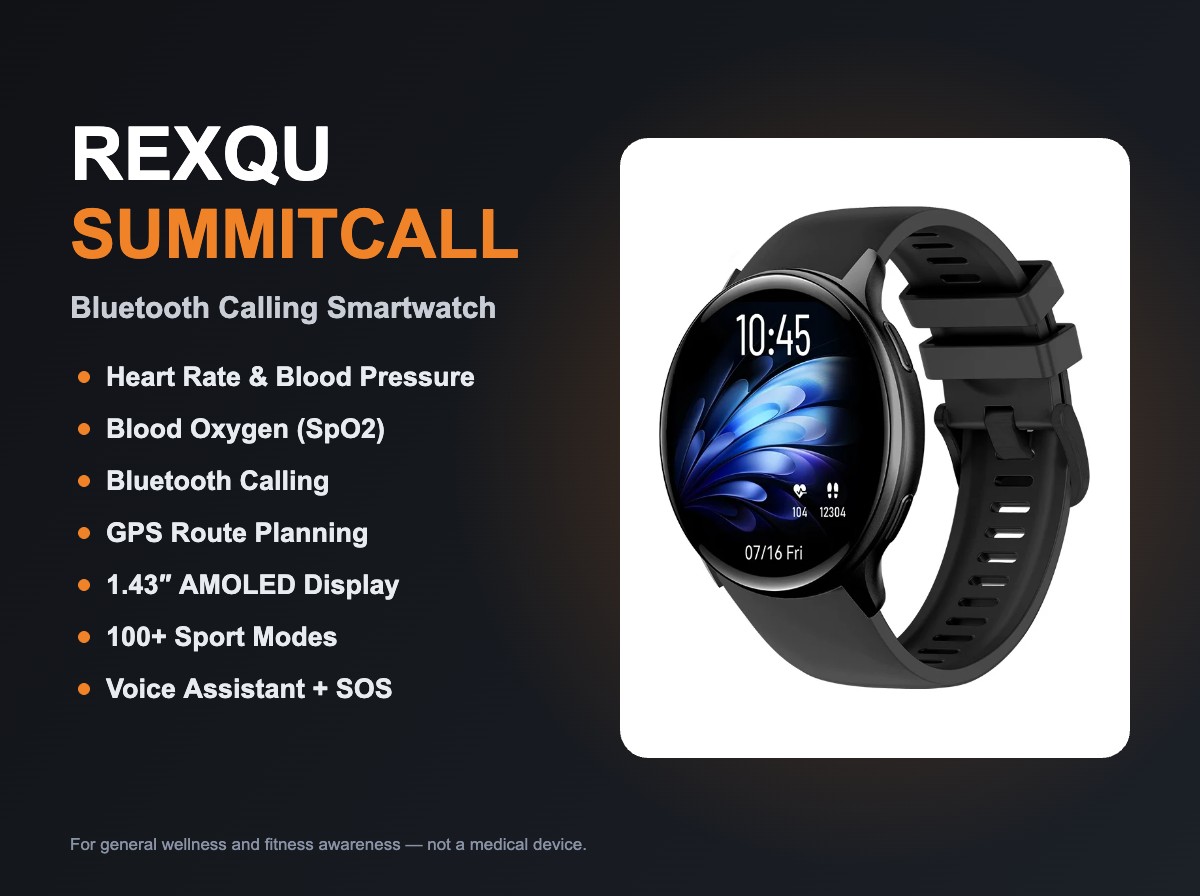
The REXQU SummitCall combines GPS route planning, Bluetooth calling, a 1.43-inch AMOLED, 100+ sport modes and wellness tracking. Its SOS/contact features depend on the paired-phone connection and should be treated as a backup communication layer rather than wilderness-rescue equipment.
Why a GPS Smartwatch With SOS Alert Matters
Most fitness trackers can log where you’ve been. Fewer can help you get found if something goes wrong. A GPS smartwatch with SOS alert does both jobs: it plots and follows your route in real time, and it gives you a direct, one-press way to signal for help without digging a phone out of a pack.
That distinction matters most exactly when you’d least want to be fumbling with a touchscreen — a rolled ankle, a storm rolling in, or a route that’s taking longer than you budgeted for daylight.
What’s Actually on the SummitCall
- Built-in GPS chip that plots and follows your route, with playback afterward so you can review exactly where you went.
- One-press SOS alert for the moments a run, ride, or hike goes sideways.
- Bluetooth calling — answer, reject, and dial saved contacts straight from the watch, so your phone can stay zipped in your pack.
- Built-in voice assistant for quick hands-free commands on the move.
- 1.43″ AMOLED display (466×466) that stays readable in full sun.
- 24/7 health monitoring — heart rate, blood pressure trends, SpO2, stress, and respiratory rate, plus sleep-stage tracking and 100+ sport modes.
- 3ATM water resistance — rated for rain, splashes, and hand-washing, though not for swimming or diving.
- Multi-day battery life, with a magnetic charge that takes under 2.5 hours.
None of this replaces dedicated backcountry safety gear. NOAA’s SARSAT guidance on 406 MHz emergency beacons explains why personal locator beacons are a different class of device: they are built specifically to transmit distress alerts through a satellite search-and-rescue system when mobile-phone coverage may be unavailable. A smartwatch can be a useful convenience layer, but it should not be your only emergency plan on remote routes.
Who a GPS Smartwatch With SOS Alert Is For
If you’re a regular trail runner, day hiker, or cyclist who wants a safety net without carrying a separate satellite messenger, a GPS smartwatch with SOS alert like the SummitCall covers the gap between “no plan” and “full expedition gear.” It’s especially useful for people who run or ride solo and want a fast way to reach someone if a route goes wrong.
It’s less suited to remote, multi-day backcountry trips where cell coverage is nonexistent — those routes still call for a dedicated satellite communicator with two-way messaging, since the SummitCall’s SOS and calling features rely on a paired phone and, for the SOS to reach emergency contacts, on the watch and phone having a working connection.
SummitCall vs a Dedicated Emergency Beacon
| Capability | REXQU SummitCall | Dedicated 406 MHz PLB |
|---|---|---|
| GPS / route features | Yes — route-planning smartwatch features | Some models include GNSS location in the distress signal |
| Bluetooth calling | Yes, through a paired phone | No |
| Emergency communication | Contact/SOS features depend on the paired-phone connection | Purpose-built satellite distress alert to search-and-rescue infrastructure |
| Fitness and wellness tracking | Yes | No |
| Best use | Connected day hikes, runs, rides and everyday outdoor use | Remote travel where a mobile connection may be unavailable |
The two devices solve different problems. SummitCall is a smartwatch with navigation and communication convenience; a PLB is specialist emergency equipment.
Before Relying on a GPS Smartwatch With SOS
- Test the feature before the trip. Make sure the watch, phone and companion app are paired and that your chosen contact receives the alert as expected.
- Keep the phone charged. Bluetooth calling and app-based SOS functions are only useful while the paired phone remains available.
- Download or carry a backup route. A smartwatch screen is not a substitute for a proper map on unfamiliar terrain.
- Tell someone your plan. Share the route and expected return time before heading out solo.
- Use dedicated emergency equipment for remote areas. If you expect to be beyond reliable mobile coverage, consider a PLB or other appropriate satellite communicator.
For more navigation-focused comparisons, see the Best GPS Smartwatch Buying Guide and the Multi-Satellite GPS Smartwatch guide.
Frequently Asked Questions
Does the SOS alert call emergency services directly?
No — the SOS alert on the SummitCall notifies your saved contacts through the paired app rather than dialing emergency services automatically. For wilderness trips beyond cell range, pair it with a dedicated satellite messenger.
Is it waterproof enough for a rainy trail run?
Yes. It’s rated 3ATM, which covers rain, splashes, and sweat, though it’s not built for swimming or diving.
Do I need a subscription to use the GPS or calling features?
No. The SummitCall works with the free Glory Fit Pro app on iPhone (iOS 9.0+) and Android (5.0+), with no recurring fees.
Bottom Line
A GPS smartwatch with SOS alert like SummitCall is best viewed as a connected outdoor convenience tool: route features, Bluetooth calling, sport tracking and quick access to contacts in one device. It is not a satellite rescue beacon, so remote trips still need a separate safety plan.
See the full REXQU GPS smartwatch collection, compare tougher outdoor options in the Rugged Smartwatch category, or check current specs on the REXQU SummitCall product page.