

Looking for blood pressure smartwatch alerts that catch an unusual reading the moment it happens, instead of waiting for you to remember a spot-check later? Two watches in REXQU’s blood pressure smartwatch lineup build this in as a standing feature: the REXQU Chronex and the REXQU CoreX Pro. Here’s what each one actually does when a reading looks off.
How Blood Pressure Smartwatch Alerts Work
Rather than waiting for you to open an app and tap “measure,” both watches track heart rate and blood pressure continuously in the background. When a reading falls outside your usual range, the watch flags it right on your wrist with a gentle vibration and an on-screen notice — no separate check required.
That’s a meaningfully different experience from a cuff you only reach for once a day. A cuff only sees you sitting still for the thirty seconds you’re using it; a watch on your wrist all day can catch a spike that happens during a stressful call or a flight of stairs, which a single morning reading would simply miss.
REXQU Chronex: Gentle Alerts Built Into Everyday Wear
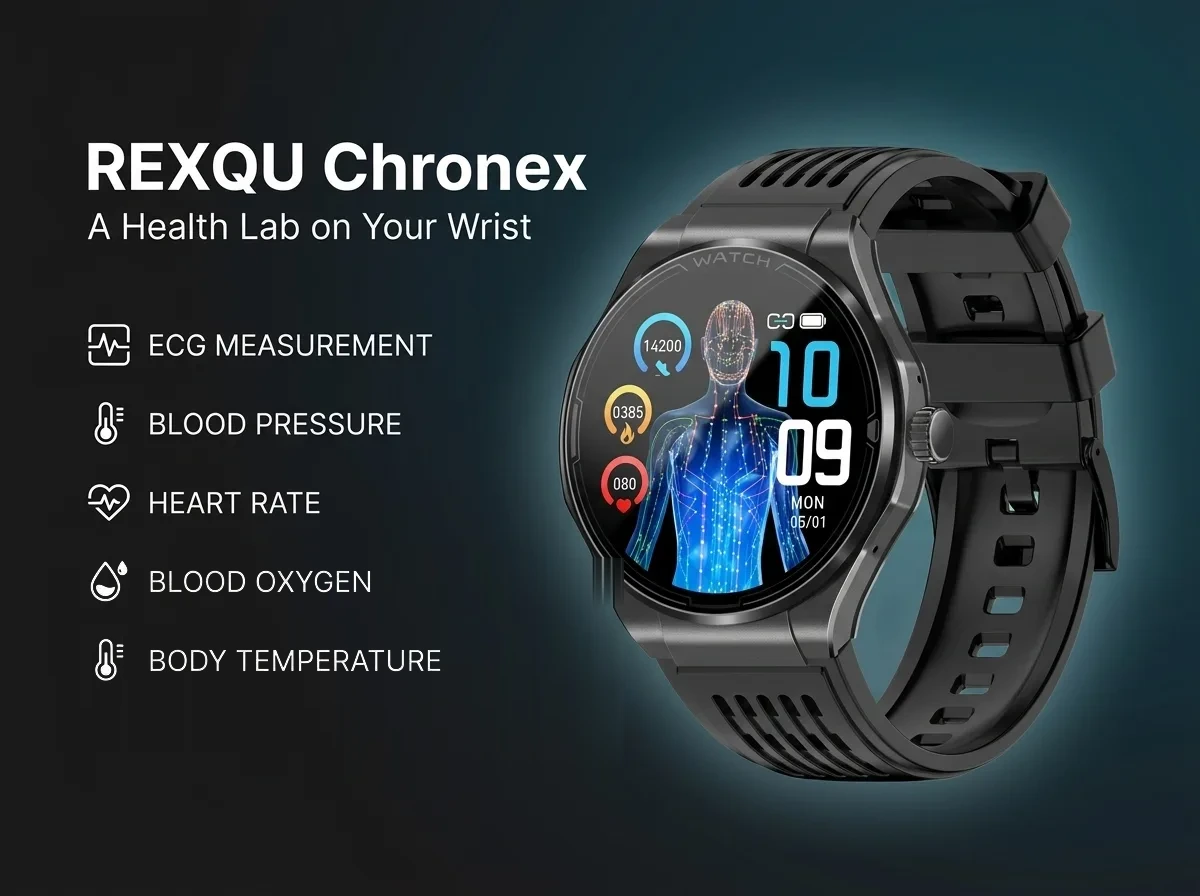
The REXQU Chronex ($159.97) tracks heart rate and blood pressure around the clock and sends a gentle alert the moment your numbers drift from normal. It pairs that with a 30-second on-wrist ECG recording, a 1.43-inch AMOLED display, and a one-button SOS call — all readings, trends, and ECG traces land in the free companion app afterward so you have a running history rather than a single number.
REXQU CoreX Pro: Alerts That Also Capture the Moment
The REXQU CoreX Pro ($159.97) runs what REXQU calls a Capture Loop: when a reading lands outside your normal range, the watch doesn’t just notify you — it also records a 30-second ECG during that event, so you have more context than just a number when you look back at it later. CoreX Pro adds fall alerts with GPS location sharing to emergency contacts on top of the blood pressure and heart rate alerts, which is worth knowing if you’re shopping on behalf of a parent who lives alone as much as for yourself.
| Feature | REXQU Chronex | REXQU CoreX Pro |
|---|---|---|
| Price | $159.97 | $159.97 |
| Alert on abnormal reading | Gentle on-wrist alert | On-wrist alert + auto ECG capture |
| On-wrist ECG | 30-second, on demand | 30-second, on demand or auto-triggered by an alert |
| Display | 1.43" AMOLED | AMOLED, comparison table on product page |
| Fall alerts + GPS to contacts | Not offered | Included |
Who Should Care About These Alerts?
If you’re already tracking blood pressure for your own awareness and want a documented trend line to bring to your doctor, either watch’s blood pressure smartwatch alerts feature does that job well — the difference comes down to whether you want the extra ECG snapshot and the fall-detection safety net that CoreX Pro adds. For a parent or older relative living alone, that added GPS-and-contacts layer is often the deciding factor over the simpler Chronex.
For a deeper look at what the numbers themselves mean, start with REXQU’s evidence-based Understanding Your Blood Pressure Numbers Health Guide. It explains the main blood-pressure categories, why thresholds differ between guidelines, and why wrist estimates should be confirmed with a validated upper-arm cuff when a reading matters clinically. The American Heart Association’s Understanding Blood Pressure Readings is also a useful external reference.
What Can Cause a Blood Pressure Alert to Look Unusual?
A smartwatch alert is most useful when you treat it as a prompt to pay attention, not as a final verdict. Wrist-based estimates can move around for reasons that have nothing to do with a lasting change in your usual blood pressure. Recent exercise, stress, caffeine, a loose strap, cold skin, arm movement and even the position of your wrist can all affect the reading.
If an alert appears when you have just climbed stairs, carried groceries or rushed to answer the phone, give yourself a few quiet minutes before checking again. A second reading taken while seated and still is more useful than reacting to the first number alone. For more detail on the factors that influence wrist readings, see Blood Pressure Smartwatch Accuracy: What to Know.
What to Do When Your Watch Gives You an Alert
- Stop and settle. Sit down, rest your arm and avoid talking or moving for a few minutes.
- Repeat the reading. Make sure the watch is snug and positioned consistently on your wrist.
- Look for context. Think about recent exercise, stress, caffeine, medication timing or anything else that could explain a temporary change.
- Confirm an important reading. If the number is concerning or keeps recurring, compare it with a validated upper-arm blood pressure monitor rather than relying on the watch alone.
- Record the pattern. Save the time, circumstances and repeat reading so you have something useful to discuss with a healthcare professional if needed.
This is where smartwatch alerts can be genuinely helpful: they can make you notice a pattern you might otherwise miss. The watch is not replacing a medical cuff; it is helping you decide when a more careful check may be worthwhile.
How to Make Blood Pressure Alerts More Useful Over Time
One isolated alert tells you very little. A pattern is much more informative. If your watch allows you to review history in the companion app, look for repeated alerts at similar times of day or in similar situations. For example, you may notice that readings tend to run higher after a stressful commute, after exercise, or late in the evening. That kind of context is more useful than treating every alert as equally important.
It also helps to keep your measurement routine consistent. Wear the watch in the same position, keep the strap snug without being uncomfortable, and compare readings under similar conditions whenever possible. If you occasionally check the watch against a validated upper-arm monitor, you can better understand how your own wrist readings tend to behave.
Alerts vs. Diagnosis: The Important Difference
A blood pressure alert is a notification based on the watch’s estimate and software rules. It is not the same as a clinical diagnosis. A healthcare professional considers repeated measurements, your medical history, symptoms, medications and other risk factors before deciding whether a blood pressure problem is present.
That distinction does not make alerts useless. Their value is in convenience and awareness: the watch is already on your wrist, so it can encourage you to check when something appears different from your usual pattern. REXQU’s Understanding Your Blood Pressure Numbers Health Guide explains how blood-pressure categories are interpreted and why clinically important readings should be confirmed using appropriate validated equipment.
Which REXQU Watch Is Better for Blood Pressure Alerts?
Chronex is the simpler choice if your main goal is everyday blood pressure and heart-rate awareness with a readable display and app history. CoreX Pro is better suited to shoppers who also want the added safety features described on its product page, including fall-related alerts and location-sharing functions. Neither choice changes the basic rule: smartwatch readings are best used for wellness awareness and trend tracking rather than as a substitute for medical blood pressure measurement.
You can compare additional models, display sizes and feature combinations on the REXQU Blood Pressure Smartwatches collection page.
FAQ
Do these alerts replace a doctor’s diagnosis?
No. Both watches are built for everyday wellness awareness, not as a substitute for a validated medical blood pressure monitor or a clinician’s evaluation. Treat an alert as a prompt to check in with your own routine — or with your doctor if it keeps happening — not as a diagnosis.
Do I have to open the app every time I get an alert?
No — the alert itself shows on the watch face. The app is where the history, trends, and (on CoreX Pro) the captured ECG live if you want to look back at what triggered it later.
Whichever model you land on, blood pressure smartwatch alerts are only as useful as the habit they build — a quiet nudge when something looks off, backed by a history you can actually bring to an appointment. Both watches link back to REXQU’s full Blood Pressure Monitoring lineup if you want to compare more models side by side. For wellness tracking and awareness only — neither watch replaces a validated medical blood pressure monitor or a clinician’s evaluation.