
Looking for real GPS smartwatch battery life numbers instead of the figure printed on the box? The short answer: expect days, not weeks, the moment you turn on continuous route recording. A watch rated for a week or more in normal use will often drop to a long day or two once GPS tracking is running for hours at a stretch.
That gap catches a lot of hikers and runners off guard, so here is what actually drains a GPS watch’s charge, real numbers from a REXQU GPS model, and how to think about the trade-off if long battery life matters more to you than onboard GPS.
What Actually Drains GPS Smartwatch Battery Life
Three things do almost all the damage:
- Continuous satellite recording. Keeping a GPS radio locked onto satellites and logging a track every few seconds is the single biggest power draw on any sports watch, REXQU included.
- An always-on display. A screen that stays lit rather than waking on wrist-turn can cut runtime dramatically on its own, GPS or not.
- Cold weather. Battery chemistry is less efficient in low temperatures, so a winter hike will drain a charge faster than the same route in summer.
For a deeper technical look at why satellite tracking is so power-hungry, freeCodeCamp has a solid explainer on how GPS works in wearables.
Real GPS Smartwatch Battery Life Numbers From REXQU Healout
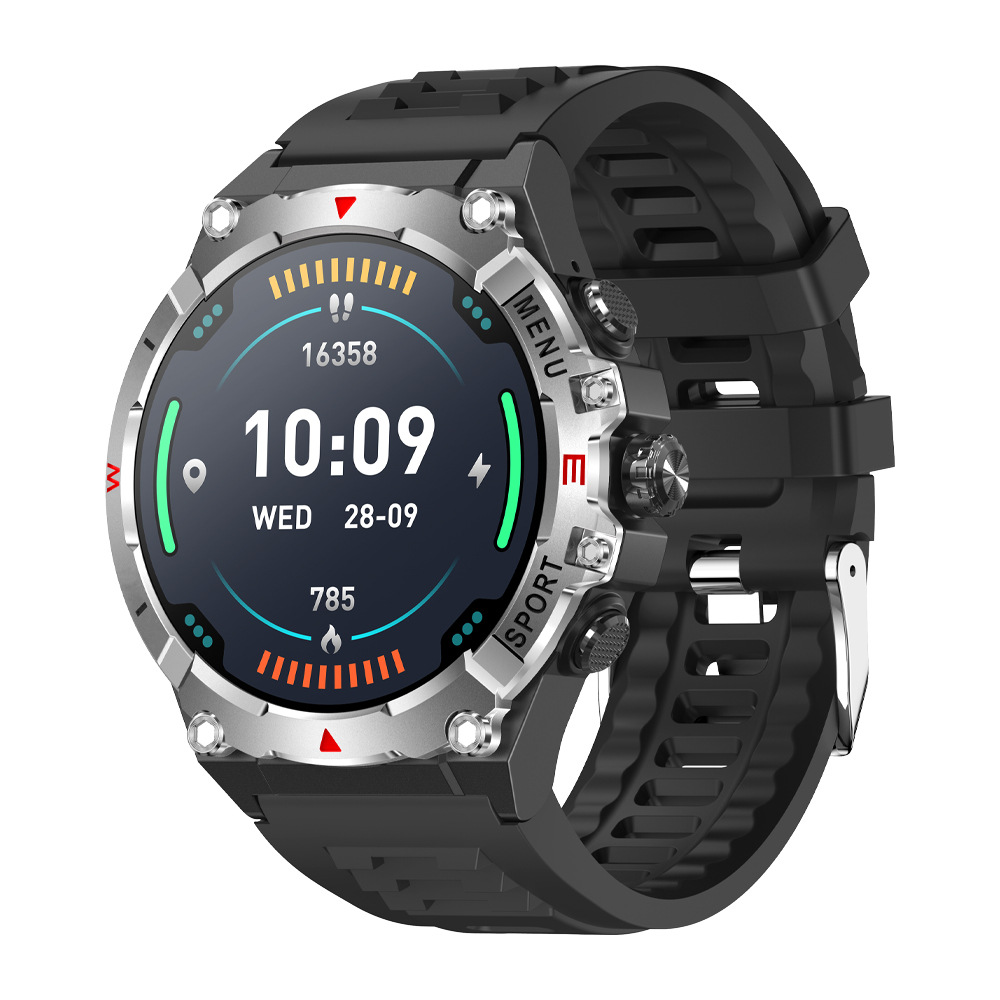
The REXQU Healout ($129.97) is a good example because REXQU states the gap plainly rather than burying it. The watch runs a 500mAh battery rated for 7 to 10 days of typical daily use, on a 1.43-inch AMOLED display at 466×466 resolution, with a 100+ sport-mode GPS tracker built in and IP68 water, dust and drop resistance.
Turn on continuous GPS recording, though, and that 7-to-10-day figure does not apply. REXQU’s own answer to “how long will the battery last with GPS recording on” is blunt: a watch quoted at weeks in ordinary use will typically manage a long day or two of active recording, and cold weather reduces it further. That is a realistic, honest way to plan a multi-day trip: pack a charger, or budget your recording time rather than assuming the box number.
The Trade-Off: EnduroBeam’s 35-Day Battery Without GPS
If GPS smartwatch battery life numbers like that sound impractical for your trips, REXQU also sells a watch built around the opposite priority. The REXQU EnduroBeam ($159.97) skips onboard GPS entirely and instead runs a much larger 1100mAh battery, listed for 25 to 35 days of typical use and up to roughly 200 days on standby. In exchange for no route tracking, you get a focused flashlight with an SOS strobe, Bluetooth calling, and heart-rate, SpO₂, sleep and cuffless blood-pressure trend tracking on a 1.43-inch AMOLED display rated 3ATM.
| REXQU Healout | REXQU EnduroBeam | |
|---|---|---|
| Price | $129.97 | $159.97 |
| Battery | 500mAh | 1100mAh |
| Typical battery life | 7–10 days | 25–35 days |
| With GPS recording on | ~1–2 days | No built-in GPS |
| Water resistance | IP68 | 3ATM |
| Standout extra | 100+ GPS sport modes | Flashlight with SOS strobe |
How to Choose Between GPS Tracking and Long Battery Life
There is no universally right answer here, only the right fit for how you actually use a watch:
- Pick a GPS watch like Healout if you regularly want a recorded route, pace and distance data, and you are comfortable charging every week or planning around a shorter runtime on recording days.
- Pick a long-battery watch like EnduroBeam if you mainly want heart-rate and wellness trends, calls, and a reliable flashlight for camp or dog walks, and you would rather charge monthly than manage GPS battery drain at all.
- Multi-day backcountry trips favor whichever watch you pack a charger for, since even the best GPS smartwatch battery life shortens once satellite recording runs for hours on end.
Frequently Asked Questions
Does turning off GPS recording save meaningful battery?
Yes. Wearing a GPS watch without starting a tracked activity uses the same efficient standby mode as a non-GPS watch, so daily battery life is close to the quoted figure until you actually record a route.
Is a bigger mAh battery always better?
Not necessarily. EnduroBeam’s 1100mAh cell outlasts Healout’s 500mAh cell mainly because it is not running a GPS radio or always logging a track — the battery size and the feature set both matter.
Browse REXQU’s full GPS & hiking smartwatch lineup or the wider rugged smartwatch collection to compare every model’s real battery numbers side by side before you buy.