
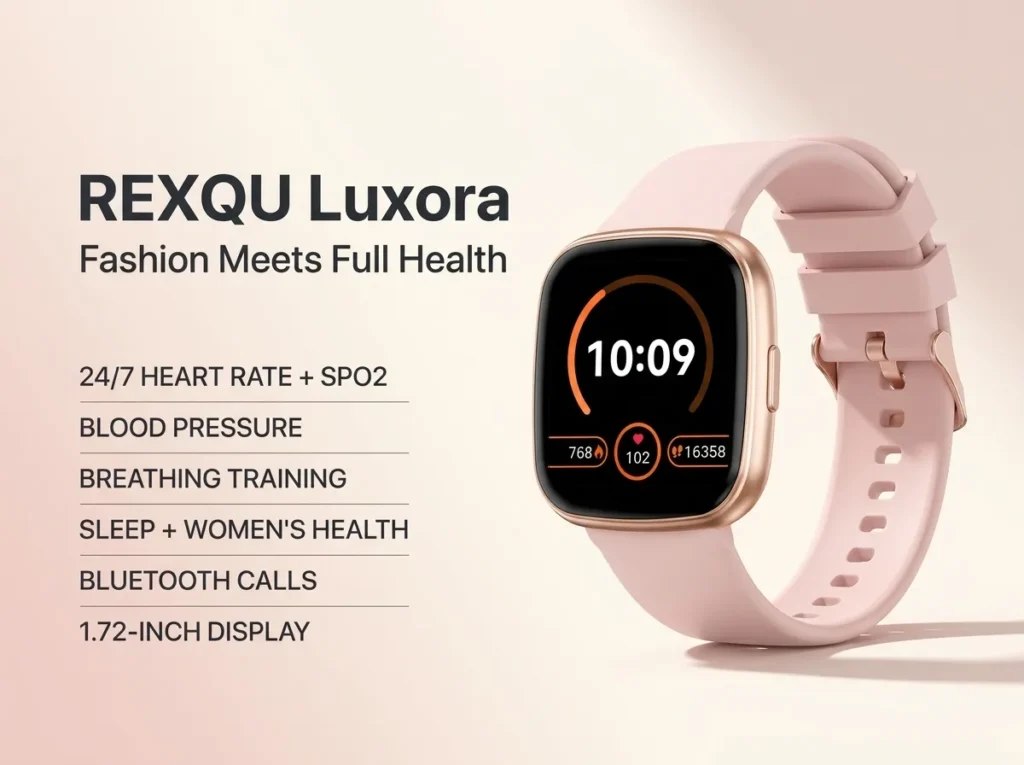
A stylish smartwatch with blood pressure tracking is for buyers who want everyday wellness information without wearing something that looks like a medical gadget. REXQU models such as Luxora and Verve combine fashion-forward designs with wrist-based blood-pressure wellness estimates, heart rate, SpO₂ and everyday smartwatch features.
The key is knowing what you are buying: these watches are convenient trend tools, not replacements for a validated upper-arm cuff. This guide compares the two models, explains how wrist BP estimates work and shows which one fits different everyday styles.
Can a Stylish Smartwatch Really Track Blood Pressure?
Yes, some consumer smartwatches estimate blood-pressure trends from the wrist using optical sensors and algorithms. Unlike an inflatable arm cuff, they do not directly measure pressure by compressing an artery. Instead, they infer a wellness estimate from signals such as pulse-wave information.
That difference matters. Current American Heart Association guidance says cuffless blood-pressure technologies are promising but still need stronger validation before they should be used for diagnosis or treatment decisions. A stylish BP smartwatch is therefore best used to follow trends and encourage awareness, while medically important readings should be confirmed with appropriate validated equipment.
For the evidence in plain language, read Understanding Your Blood Pressure Numbers and Blood Pressure Smartwatch Accuracy: What to Know.
REXQU Luxora vs Verve: Stylish Blood Pressure Smartwatch Comparison
| Feature | REXQU Luxora | REXQU Verve |
|---|---|---|
| Best for | Lifestyle styling plus guided wellness features | Traditional round-watch look with bright AMOLED |
| Blood-pressure wellness tracking | Yes | Yes |
| Heart rate | Yes | Yes |
| SpO₂ | Yes | Yes |
| Sleep tracking | Yes | Yes |
| Guided breathing | Yes | Check current product feature set |
| Display | 1.72-inch touch display | 1.43-inch round AMOLED |
| Water resistance | IP68 | 1ATM |
| Everyday extras | Bluetooth calling, music control, remote camera | Bluetooth calling, music, 100+ sport modes |
REXQU Luxora: Style With a Wellness Focus
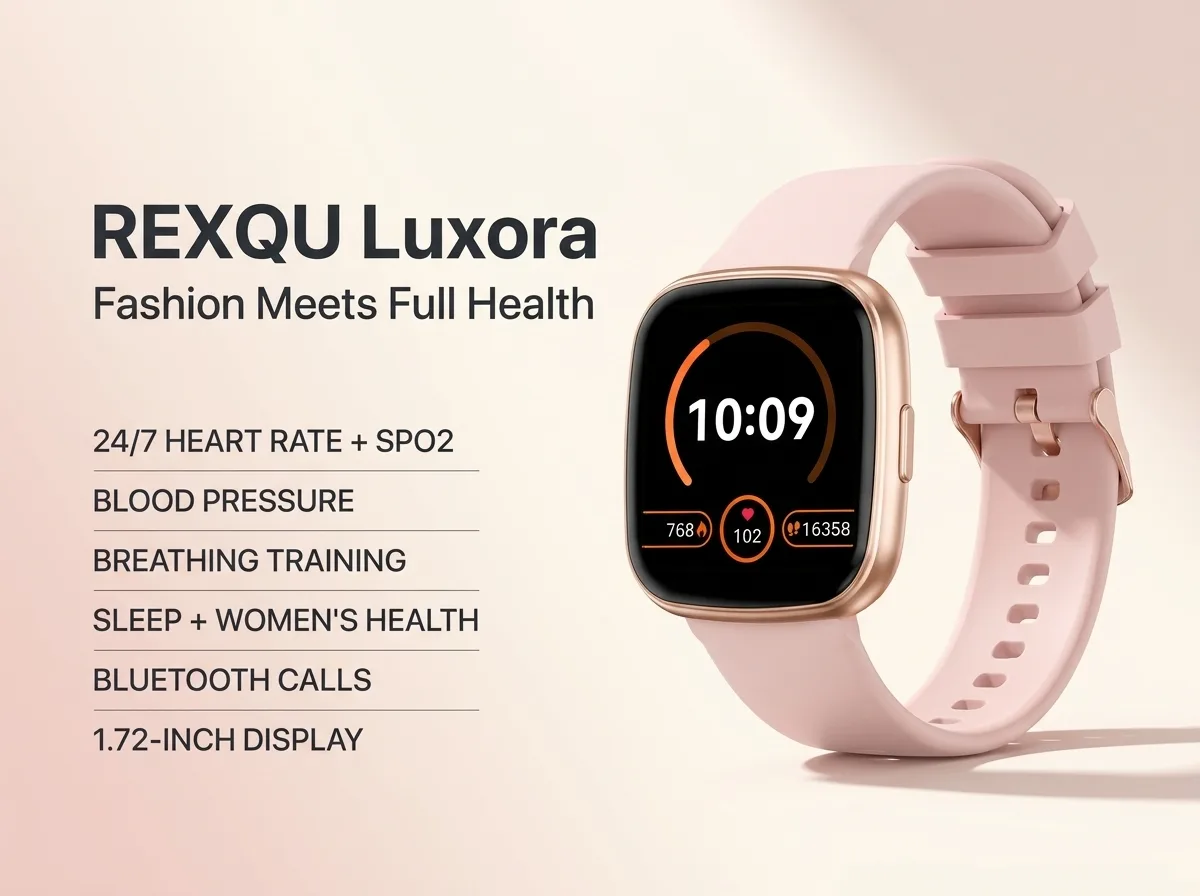
REXQU Luxora is the stronger lifestyle-oriented choice if you want health features to blend into a watch you can wear throughout the day. It combines heart rate, blood-pressure wellness estimates, SpO₂, sleep and guided breathing with Bluetooth calling, music controls and a remote camera function.
The IP68 rating also makes Luxora easier to wear through normal daily exposure to water than a model with a lower resistance rating.
View Luxora specs and current price →
REXQU Verve: Round AMOLED for a Traditional Watch Look
REXQU Verve uses a round 1.43-inch AMOLED display, which gives it a more conventional watch silhouette than many rectangular fitness trackers. It combines the core health trio—heart rate, BP wellness estimates and blood oxygen—with Bluetooth calling, music playback and a large set of sport modes.
If your priority is a smartwatch that looks more like a traditional round watch while still keeping wellness information on your wrist, Verve is the better fit.
View Verve specs and current price →
How Accurate Is Blood Pressure on an Everyday Smartwatch?
Wrist-based cuffless estimates are sensitive to how and when you take the reading. Motion, sensor position, body posture and other factors can influence the result. That is why one number should not be treated as a diagnosis.
The most useful approach is to wear the same watch consistently and compare readings taken under similar conditions. If you are tracking blood pressure for a diagnosed condition or treatment decision, use the validated equipment recommended by your healthcare professional.
The American Heart Association’s blood-pressure guide explains what systolic and diastolic numbers mean, while REXQU’s Health Guide adds wearable-specific context.
How to Take a More Consistent Wrist BP Reading
- Sit quietly first. Avoid measuring immediately after rushing around.
- Keep the watch snug. The optical sensor needs stable skin contact.
- Support your arm. Keep the wrist still and around heart level where practical.
- Do not talk during the check.
- Compare similar times of day. Consistency makes trends easier to interpret.
- Confirm concerning numbers appropriately. A smartwatch estimate should not replace a validated cuff when accuracy matters medically.
Why Style Matters for Health Tracking
The best health sensor is not much use if you stop wearing the watch. Style matters because a device that fits your normal clothing and feels appropriate at work, dinner or a social event is more likely to remain on your wrist consistently.
Consistent wear gives you a better chance of building useful heart-rate, sleep and activity trends. In that sense, choosing a design you genuinely like is not superficial—it can improve adherence to the tracking habit.
Luxora or Verve: Which Should You Buy?
Choose Luxora if you want:
- a lifestyle-oriented design;
- guided breathing alongside BP wellness tracking;
- IP68 water resistance;
- Bluetooth calls and everyday convenience features.
Choose Verve if you want:
- a round AMOLED display;
- a more traditional watch appearance;
- BP, heart-rate and SpO₂ wellness tracking;
- a larger sport-mode selection.
What If Health Features Matter More Than Style?
If blood-pressure tracking is your primary reason for buying, compare dedicated health-focused models rather than limiting yourself to style-first designs. The Best Blood Pressure Smartwatch Buying Guide compares REXQU models by monitoring style, ECG, display and battery.
You can also browse the full REXQU Blood Pressure Smartwatches category or the broader Health Smartwatches collection.
Frequently Asked Questions
Can Luxora or Verve replace my arm cuff?
No. Both are consumer wellness watches. Use wrist BP estimates for awareness and trends, and use appropriate validated equipment for medical decisions.
Which model looks more like a traditional watch?
Verve’s round AMOLED design gives it the more traditional watch silhouette. Luxora has a more contemporary lifestyle-smartwatch appearance.
Which model is better for guided breathing?
Luxora is the clearer choice if a built-in guided breathing routine is one of your priorities.
Do both models track blood oxygen?
Yes. Both include SpO₂ wellness tracking alongside heart-rate and blood-pressure features.
Where can I compare more REXQU BP watches?
Browse REXQU Blood Pressure Smartwatches or read the complete buying guide.
The Bottom Line
A stylish smartwatch with blood pressure tracking lets you keep wellness trends on your wrist without choosing a clinical-looking device. Luxora is the stronger lifestyle-and-guided-breathing pick; Verve is better if you prefer a bright round AMOLED and traditional-watch styling.
For health-first alternatives, compare the full REXQU Blood Pressure Smartwatch range. For style-first alternatives, browse the static Everyday Style collection or see the Best Everyday Smartwatch Buying Guide.
REXQU smartwatches are consumer wellness devices and are not intended to diagnose, treat, cure or prevent disease.