
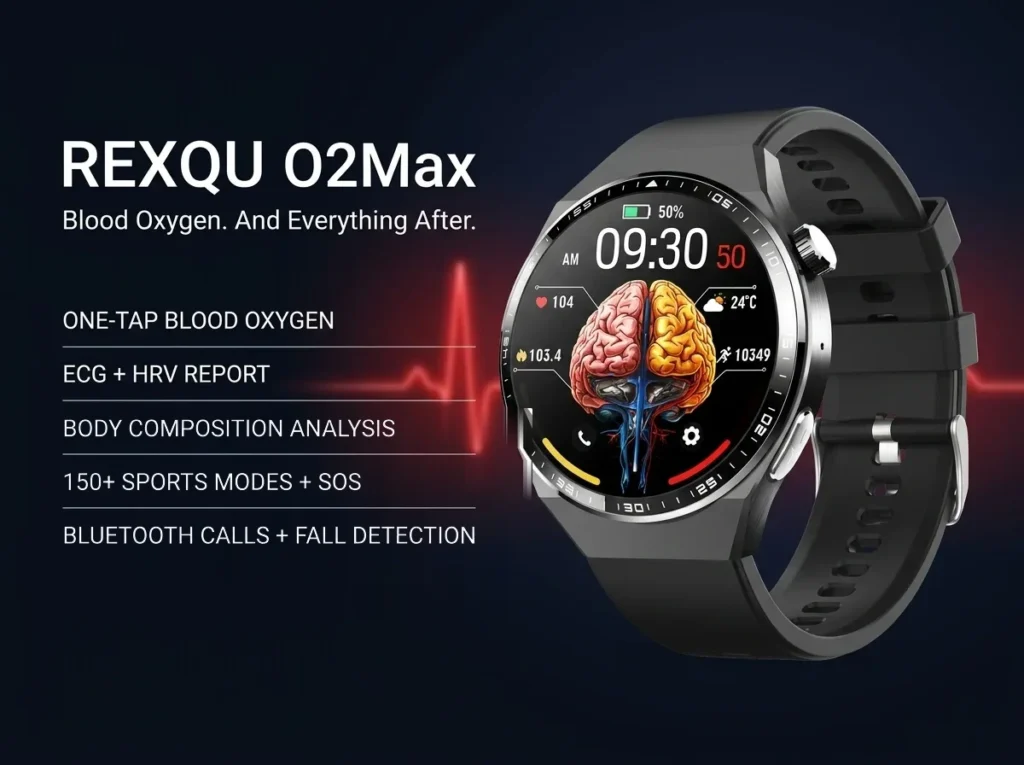
Looking for real daily health monitoring watch battery life numbers instead of the figure printed on the box? Across REXQU’s health-watch lineup, published battery life ranges from about 4 days on the lightest model to 15 days on the biggest-battery option — a wider spread than shoppers often expect from watches that look nearly identical on the shelf.
Here’s what actually drains a daily health monitoring watch’s charge, real published numbers across six REXQU models, and how to choose based on how you actually plan to wear one.
What Actually Drains Daily Health Monitoring Watch Battery Life
- Continuous vitals sampling. A health watch that tracks heart rate, SpO₂, and stress around the clock rather than only on demand draws more power than one that measures just when you tap the screen.
- Always-on AMOLED displays. A screen that stays lit instead of waking on wrist-turn is one of the single biggest drains on any smartwatch, health-focused or not.
- Bluetooth calling and notifications. Keeping a Bluetooth radio active for calls and constant phone alerts pulls noticeably more current than a watch used purely for wellness logging.
For more on how battery capacity ratings actually work and why a larger cell generally means longer runtime, see this overview of amp-hour battery ratings.
Real Daily Health Monitoring Watch Battery Life Numbers, Model by Model
REXQU publishes a battery range for every health watch it sells rather than a single optimistic number, and the spread across the current lineup is bigger than you’d guess from the price tags alone.
| Model | Published battery life | Price | Standout feature |
|---|---|---|---|
| HealthLink | Up to 4 days normal use | $139.97 | On-demand ECG, temperature tracking |
| VitaSync | 5–7 days typical use | $139.97 | Bluetooth calling, SpO₂, sleep |
| OmniTrack | 5–7 days typical, 15–20 days standby | $139.97 | Blood pressure, SpO₂, stress, sleep |
| VitaCore | 5–10 days per charge | $149.97 | 30-second multi-vital check |
| BioVision | 7–10 days typical, up to 15 days low use | $149.97 | Temperature and body composition |
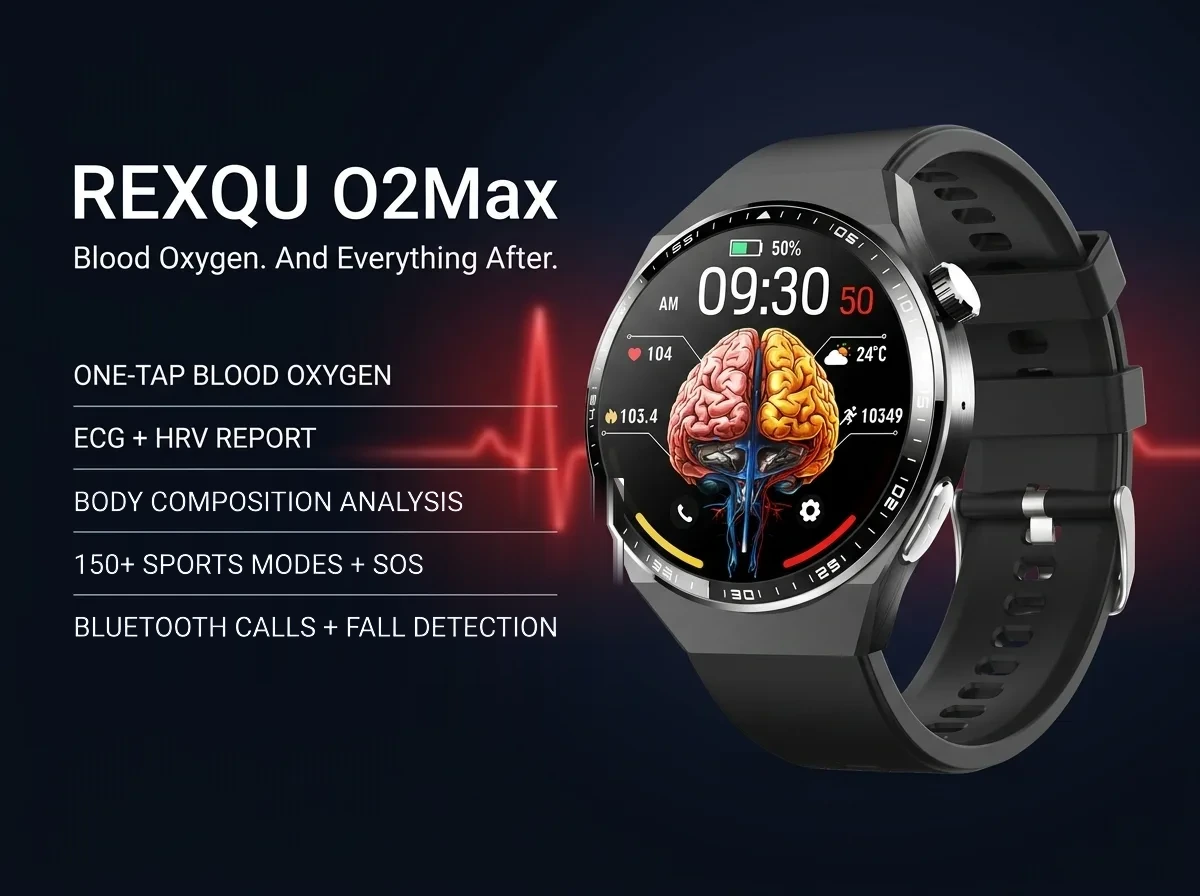
| O2Max | 7–15 days (380mAh cell) | $169.97 | SpO₂ trends, ECG, fall detection |
Why the Daily Health Monitoring Watch Battery Life Range Is So Wide
The gap between HealthLink’s 4-day figure and O2Max’s 7–15 day range isn’t really about battery size alone, though O2Max’s 380mAh cell is larger than most of the lineup. It comes down to what each watch is doing in the background. HealthLink runs continuous SpO₂ and temperature sampling on a display built for readability, which costs more power per day than a watch that checks fewer things less often.
O2Max and VitaCore, on the other hand, are built around periodic and on-demand readings for some of their heavier features — the multi-vital check on VitaCore, for instance, runs a focused 30-second scan rather than sampling everything continuously, which helps stretch the charge further even with more sensors on board.
How to Choose Based on Daily Health Monitoring Watch Battery Life
- Want the longest daily health monitoring watch battery life REXQU offers? O2Max’s 7–15 day range and 380mAh cell make it the pick if you’d rather charge every couple of weeks than every few days.
- Want the most continuous background tracking and don’t mind charging more often? HealthLink’s always-active ECG and temperature sensors trade runtime for data density.
- Want calls on your wrist without sacrificing much battery? VitaSync and OmniTrack both land in the 5–7 day middle ground while keeping Bluetooth calling active.
Frequently Asked Questions
Does turning off the always-on display extend runtime?
Yes. Letting the screen wake on wrist-turn instead of staying lit is the single easiest way to add days back to any of these watches, since the display is typically the largest single power draw after continuous sensor sampling.
Do all REXQU health watches charge the same way?
Yes — every model in this lineup uses a magnetic charging puck that snaps into place, and a full charge from empty typically takes around two hours.
Is a bigger battery always better?
Not necessarily. O2Max’s 380mAh cell outlasts HealthLink’s smaller battery partly because of size, but also because HealthLink is running more continuous background sensing for the same price tier. Battery size and feature set both matter.
Browse REXQU’s full daily health monitoring watch lineup to compare every model’s published battery range, price, and sensor set side by side before you buy.
REXQU’s wellness metrics are designed for everyday tracking and are not intended to diagnose or treat any medical condition. Talk to a healthcare professional about any health concerns.