
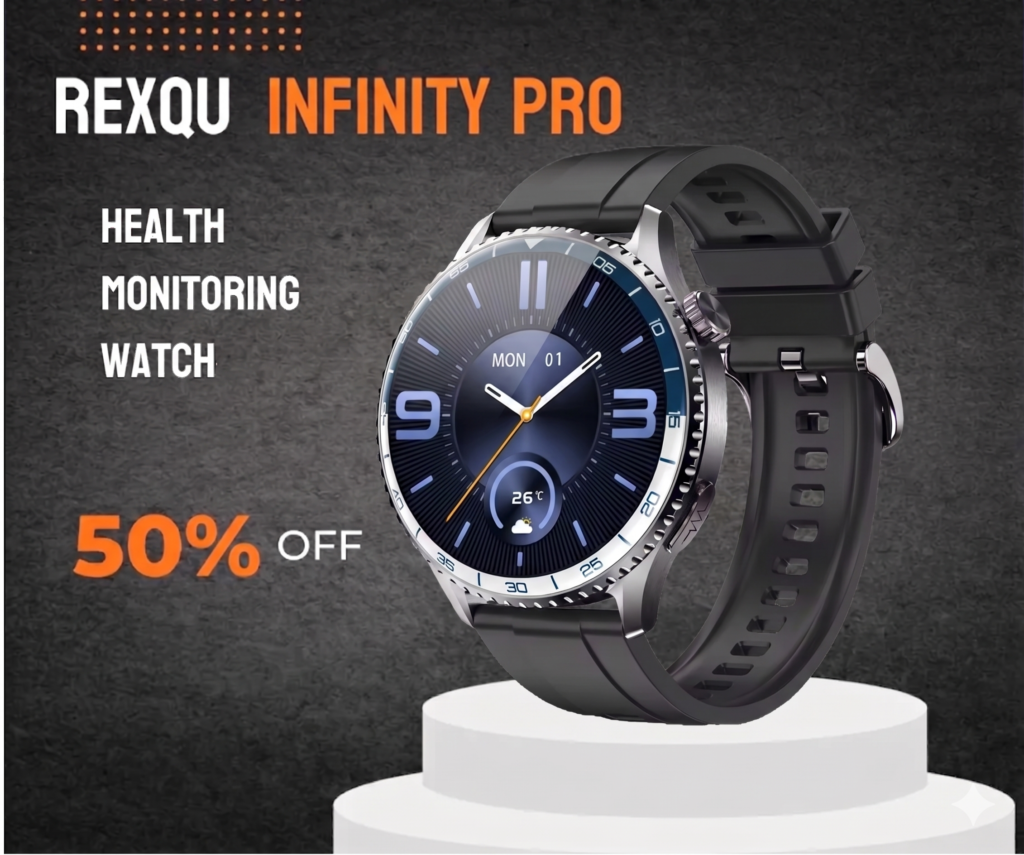
Can a smartwatch detect AFib? ECG-capable wearables can record a single-lead ECG trace and may help users notice an irregular rhythm worth discussing with a healthcare professional. REXQU ECG models are wellness devices rather than diagnostic medical devices, so their role is to help you capture useful rhythm information—not to diagnose atrial fibrillation on their own.
How ECG Smartwatches Actually Work
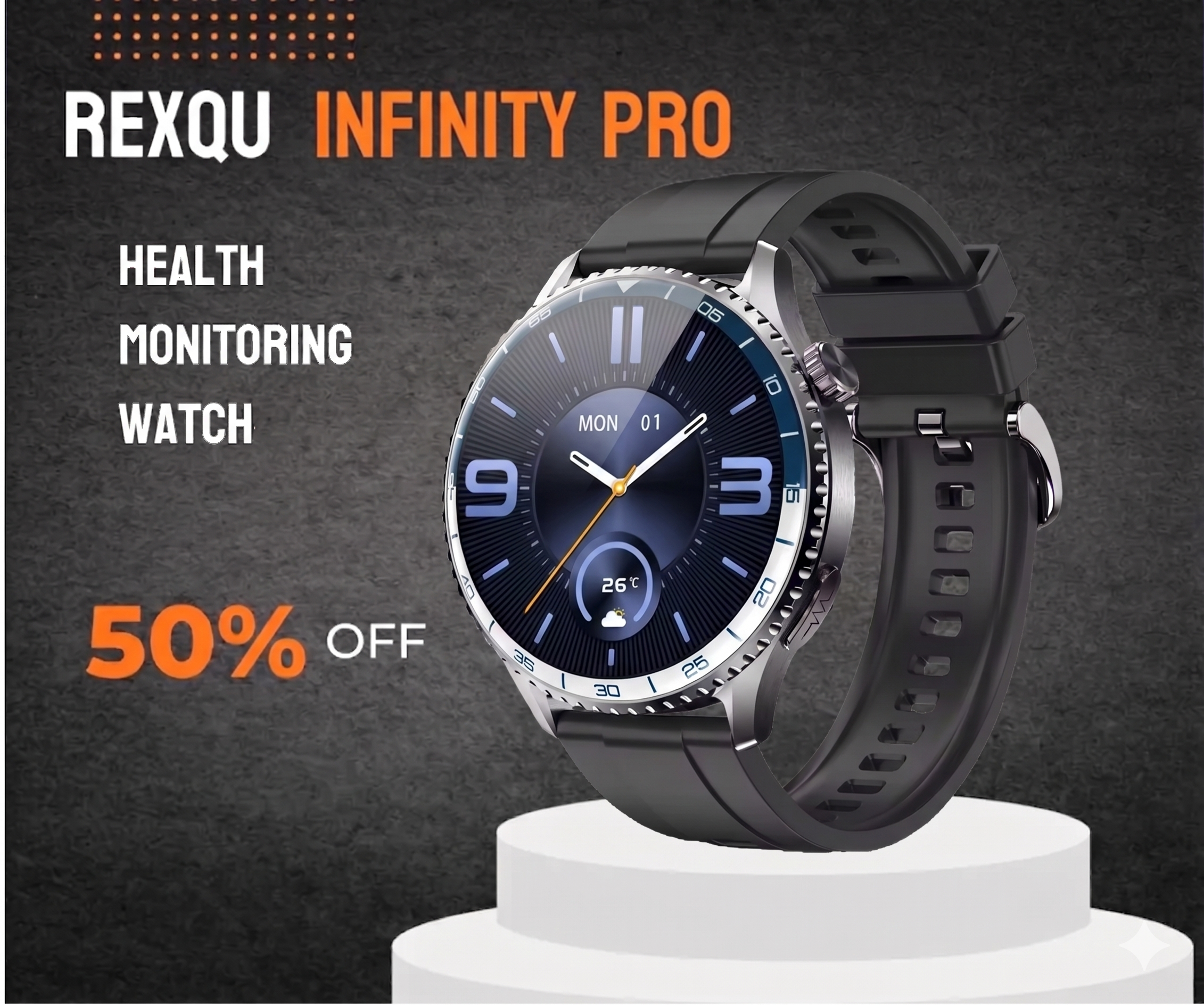
Most fitness bands estimate your heart rate using an optical sensor (PPG) that shines light through your skin and watches blood flow. It’s useful for trends, but it isn’t an electrocardiogram. An ECG-capable watch, like REXQU’s Infinity Pro, adds a real electrode — usually built into the bezel or crown — so that when you rest a finger on it, the watch reads the electrical signal your heart actually produces, the same basic principle behind a hospital electrocardiogram, just condensed into a single lead instead of twelve.
A 30- to 60-second reading is enough for the watch’s software to plot a waveform and flag whether the rhythm looks regular, irregular, or inconclusive. That’s genuinely useful information — it just isn’t a diagnosis.
Can a Smartwatch Detect AFib? What the Research Says
This is where the question gets interesting. Research on consumer single-lead ECG wearables shows that clean wrist ECG recordings can provide useful rhythm information, but performance varies by device, signal quality and the population being tested. Motion, poor contact and unusual waveforms can all make a trace harder to interpret. That is why the most useful way to think about a wrist ECG is as convenient information you can capture and share—not as a stand-alone diagnosis. For the evidence and public-health context, see the REXQU AFib Health Guide.
The practical takeaway: a smartwatch is a reasonable first alert if you notice symptoms like a racing or fluttering heartbeat, but a flagged reading is a reason to call your doctor, not a reason to self-diagnose.
REXQU’s ECG Watches, Compared
REXQU’s ECG & heart health lineup covers a few different approaches to on-wrist heart monitoring, depending on how you want the data:
| Model | ECG Style | Extra Detail | Price |
|---|---|---|---|
| Infinity Pro | On-wrist ECG with rhythm summary | 60-second full health check (BP, SpO2, temperature) | $169.97 |
| CardioSense | 30-second ECG | Extra-large display, one-tap readings | $159.97 |
| PulseBand | On-band ECG, screenless | 25–30 day battery, no subscription | $139.97 |
If you want the most detail in one sitting, Infinity Pro’s rhythm summary paired with its 60-second health check gives you ECG data alongside blood pressure and oxygen in a single tap. If you’d rather keep things simple, CardioSense’s larger display makes the waveform easier to read at a glance.
What an ECG Smartwatch Can’t Do
REXQU ECG watches are wellness products and are not presented as diagnostic medical devices. Regulatory status varies across the wider smartwatch market, so consumers should look at the claims and authorization for the specific device they are considering. REXQU’s ECG feature is best understood as a convenient way to capture a wrist rhythm trace that can add context to a conversation with a healthcare professional.
Getting a Reliable Reading
A few habits improve reading quality. Sit still with your arm resting on a table rather than taking a reading mid-walk — motion is the biggest cause of an inconclusive result. Use a light, steady finger touch rather than pressing hard, and let the reading run the full 30 to 60 seconds. If a reading comes back inconclusive, just try again; a second attempt resolves most of them.
Can a Smartwatch Detect AFib Without Symptoms?
AFib can be intermittent and may occur without obvious symptoms, which is one reason wearable ECG technology has attracted so much interest. An on-demand wrist ECG can capture a short rhythm trace when you choose to take one, but it cannot guarantee that an intermittent episode will occur during that recording window. If you have concerns about AFib risk or symptoms, a healthcare professional can advise on the appropriate type and duration of monitoring.
Bottom Line
So, can a smartwatch help with AFib awareness? A wrist ECG can give you convenient rhythm information that may be useful to save and discuss with a healthcare professional, especially because a smartwatch is already on your wrist when you want to capture a trace. It is not a diagnosis, but it can make heart-rhythm information easier to collect. Browse REXQU’s full ECG smartwatch collection to compare current models by display size, battery, extra wellness sensors and price.
This article is informational and reflects product specifications published by REXQU; it is not medical advice. REXQU smartwatches are wellness devices, not diagnostic medical devices — always consult a qualified healthcare provider about heart rhythm concerns or symptoms.