
The best age for a kids smartwatch isn’t a fixed number on a birthday card — it’s the point where your child starts going places without you, but isn’t quite ready for a full smartphone. That stretch usually falls somewhere between about 5 and 12, and which REXQU model fits best changes as your child moves through it.
Here’s how to think about the best age for a kids smartwatch in practical terms, using the real feature differences between REXQU’s three models: KidTrack, KidView and KidGuard Pro.
So What Is the Best Age for a Kids Smartwatch, Really?
Rather than a number, think about two milestones. The first is independence — walking to a bus stop, a friend’s house, or a school gate alone for the first time. The second is smartphone readiness, which comes later for most families and brings internet access, social apps and an open app store along with it. A kids smartwatch is built to sit in the gap between those two moments: calls, live location and an SOS button, with none of the internet or apps that make a phone a bigger decision.
Younger Kids (Roughly 5–8): Lightest Watch, Simplest Routine
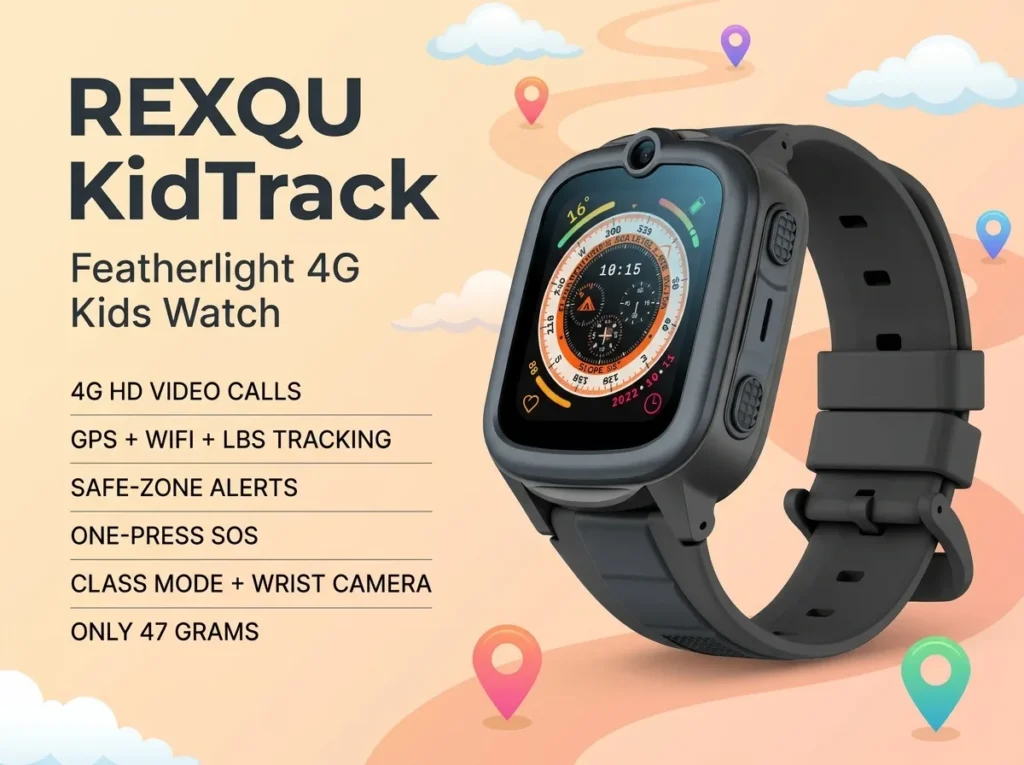
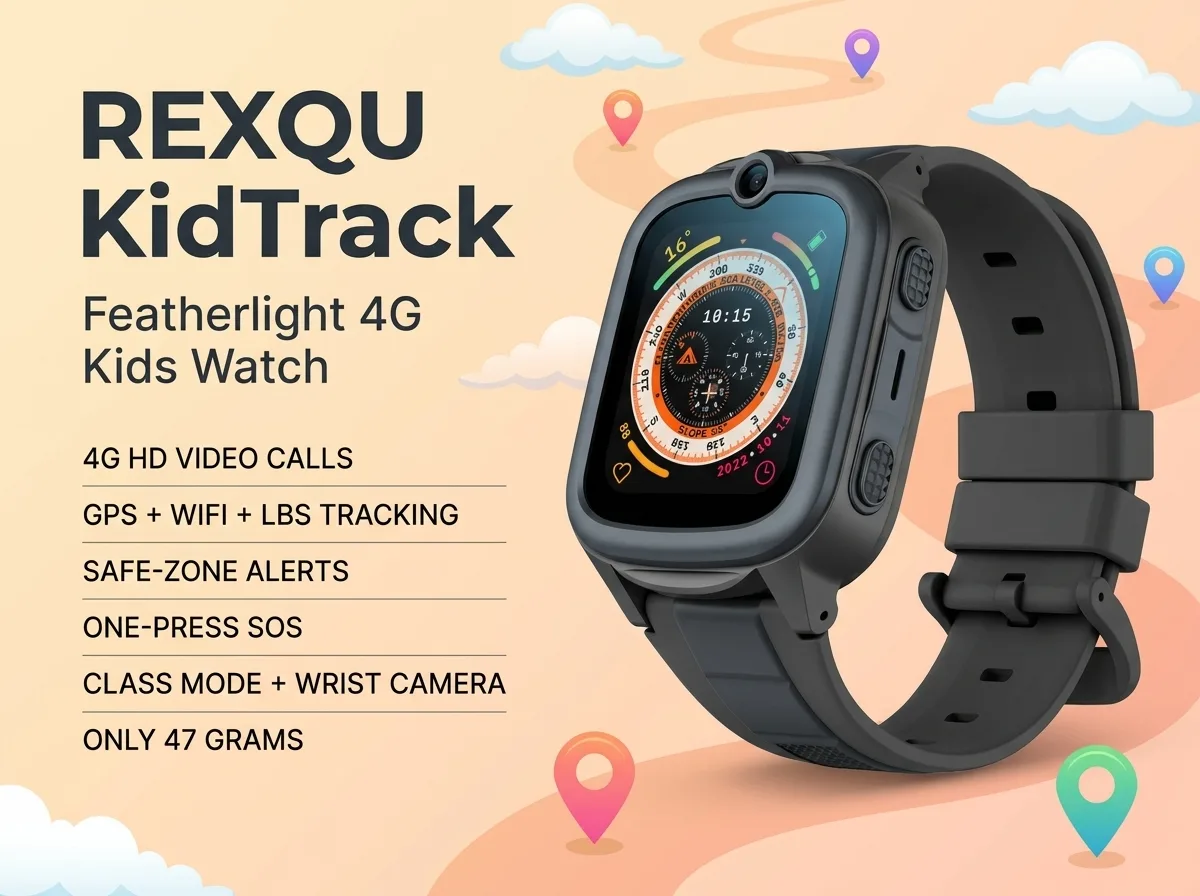
For a first watch on a younger wrist, weight and simplicity usually matter more than extra features. KidTrack is REXQU’s lightest kids smartwatch at just 47 grams with the strap, built around a 1.52-inch screen and a whitelist that only lets approved numbers call in or out. There’s no messaging app, no app store and no browser — just GPS tracking, safe zones and a one-press SOS button a younger child can actually use under stress.
If your child struggles to see small icons or tap accurately, KidView’s larger 1.83-inch display can be the better fit at this age even though it’s a little heavier. REXQU’s own guidance on the model is blunt about the trade-off: a bigger screen is easier to use in a moment of stress, but it draws more battery and sits taller on a small wrist.
Middle Years (Roughly 8–10): Balancing Independence and Battery
As kids start walking further on their own — to a friend’s house, sports practice, or home from school — video calling and location accuracy start to matter more than they did at five or six. KidView’s multi-satellite positioning and 4G HD video calls fit this stretch well, and its roughly week-long standby battery (5–6 hours of continuous calling) tolerates a child who forgets to mention a low-battery warning until the last minute.
Older Kids (Roughly 10–12): More Contacts, More Battery, More Range
At the upper end of the kids-smartwatch age range, REXQU’s own product guidance frames this directly: it’s the stretch between going places without a parent and being ready for a smartphone. KidGuard Pro is built for that stage — the largest battery in the kids lineup at 750mAh, route-history tracking so you can review where your child has actually been (not just where they are now), and room for up to 15 trusted numbers plus 3 SOS contacts instead of a short whitelist. IP67 protection also matters more once a child is out and about unsupervised in the rain.
A Quick Comparison by Age and Need
| Model | Best-fit age range | Why it fits |
|---|---|---|
| KidTrack | ~5–8 | Lightest (47g), simplest whitelist calling, lowest price |
| KidView | ~7–10 | Bigger 1.83″ screen, easier buttons, multi-satellite GPS |
| KidGuard Pro | ~9–12 | Biggest battery, route history, 15+3 contacts, IP67 |
It’s Not Only About the Calendar
Two eight-year-olds can need completely different watches. A cautious child who stays close to home may do fine on KidTrack’s basics for years, while a child who bikes to practice alone or needs frequent check-ins might outgrow it by seven. Rather than chasing an exact age, match the model to how far your child actually goes without you and how often you both need to check in. Public health guidance on children’s device and screen habits, like the background covered in Wikipedia’s overview of screen time, also points the same way: usage patterns and context matter more than a single cutoff age.
Frequently Asked Questions
Is there one correct best age for a kids smartwatch?
No. REXQU’s own guidance treats it as a stretch — roughly from the first solo errands to smartphone readiness — rather than a single birthday, and the right model inside that stretch depends on your child’s size, routine and how far they roam.
Should I just buy the model with the most features?
Not necessarily. A younger or smaller child may do better with KidTrack’s light weight than with KidGuard Pro’s bigger feature set, which is built for a child who already roams further and needs more battery and more approved contacts.
Can I switch models as my child gets older?
Yes — there’s no subscription tying a family to one model, so many parents start with KidTrack or KidView and move up to KidGuard Pro once their child needs longer battery life or more trusted contacts.
This guide is written for parents making the purchase decision, not for children. It is general guidance, not a child-development or safety assessment for your specific family.
Compare all three side by side in the complete kids smartwatch buying guide, or browse the full lineup on REXQU’s kids smartwatches page.