
Looking for a smartwatch that you can actually read at high noon, on a bare trail with no shade? Smartwatch sunlight readability comes down to one spec more than any other: whether the display is AMOLED or LCD, and how the watch is set up to use it.
REXQU’s rugged and GPS watches all ship with AMOLED screens, and that choice is not cosmetic. It is the main reason a watch stays legible when an older fitness band fades into a grey smear the moment you step out from under a tree.
Why AMOLED Wins for Smartwatch Sunlight Readability
An AMOLED panel lights each pixel on its own, so black areas of the screen are genuinely off rather than dimly backlit the way an LCD’s are. That makes contrast against a bright sky much stronger, which is the single biggest factor in smartwatch sunlight readability outdoors. It also means a mostly-dark watch face uses less battery than a bright one, which is part of why always-on AMOLED displays are practical on a hiking watch in the first place.
The trade-off is cost: an AMOLED-equipped watch runs more than a basic LCD tracker, and a screen left fully bright with GPS running will drain a battery far faster than the same watch sitting in standby. Satellite positioning, not the display, is usually the hungriest thing a GPS watch does, but a bright always-on screen adds to that load.
REXQU’s AMOLED Lineup, Side by Side
Screen size is the other variable shoppers ask about alongside brightness. Here’s how three REXQU trail watches compare:
| Watch | Display | Price | Best for |
|---|---|---|---|
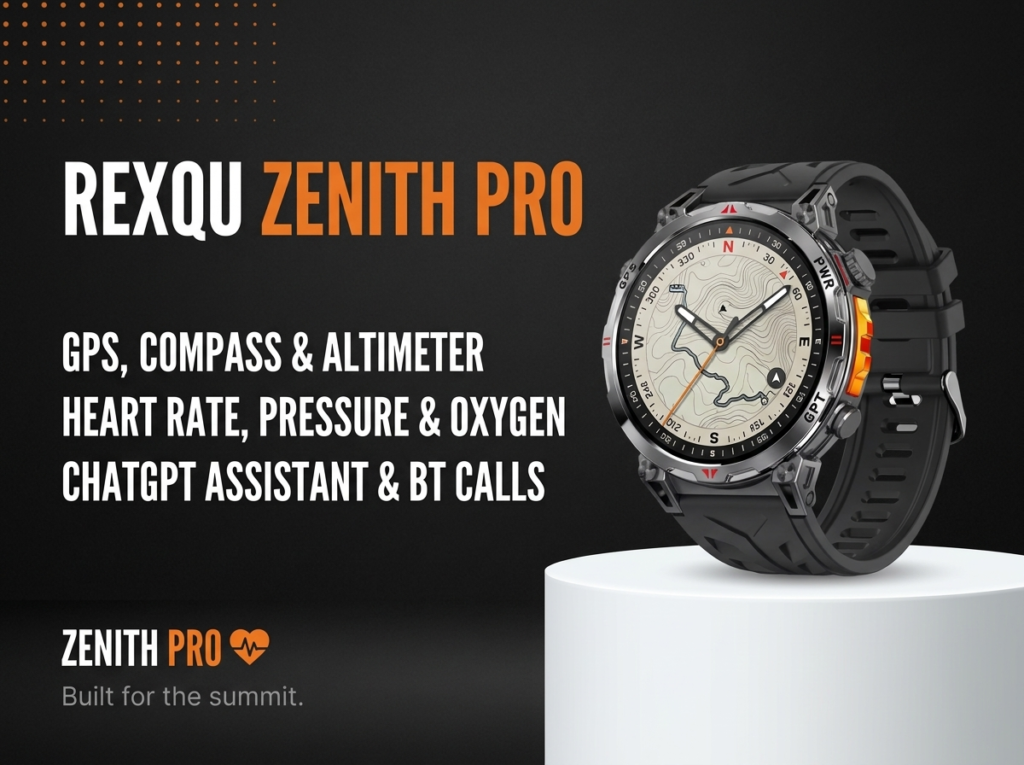
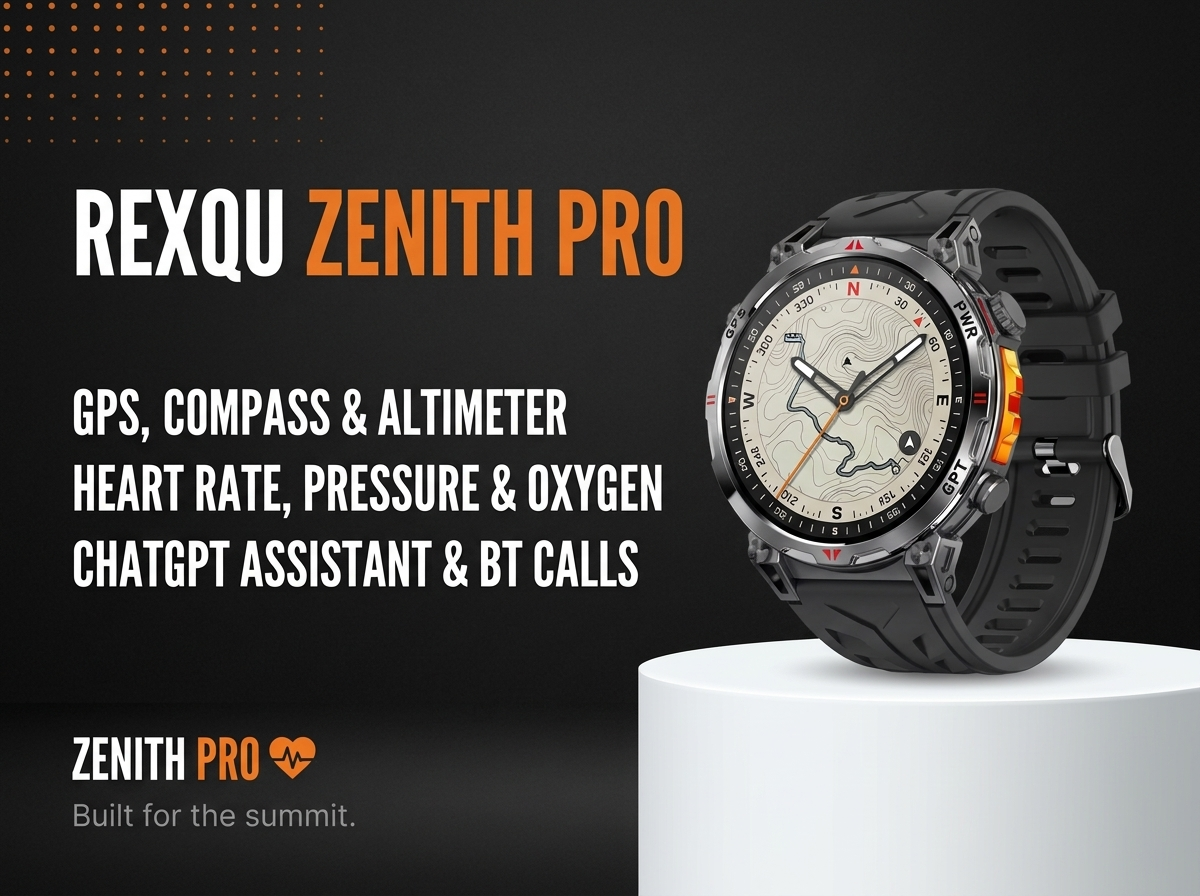
| REXQU Zenith Pro | 1.56″ AMOLED | $159.97 | Multi-satellite GPS, compass, altimeter, biggest canvas for maps |
| REXQU TrailGuard | 1.43″ AMOLED | $149.97 | Gorilla Glass front, IP68 body, everyday trail use |
| REXQU ApexTrail | 1.43″ AMOLED | $149.97 | Night trail running, built-in flashlight for dawn and dusk |
A larger 1.56-inch panel like the one on Zenith Pro gives you more room for a topo map or a full data screen without squinting, which matters as much for sunlight readability as the panel technology itself. A smaller 1.43-inch AMOLED is still bright and high-contrast; it is simply a tighter window to read it through.
Getting the Most Sunlight Readability Out of Your Settings
A few practical adjustments make a real difference once you own the watch:
- Raise the manual brightness level for midday use, then let it drop back down for indoor or evening wear to save battery.
- Choose a watch face with a dark background. Because AMOLED only lights the pixels it needs, a dark face with light text is both easier to read in glare and lighter on the battery than an all-white face.
- Reserve always-on display for days you actually need glance-ability mid-hike, and switch it off on multi-day trips where battery stretch matters more.
Why This Matters More for Hikers and Trail Runners
Indoors, almost any screen is legible. The real test of smartwatch sunlight readability happens above the treeline, on snow, or on open water where reflected glare is constant. That is exactly the environment REXQU’s rugged smartwatch and GPS smartwatch lines are built around, which is why every current model in both categories uses AMOLED rather than the cheaper reflective LCD panels found on some budget trackers.
If you are comparing options outside REXQU’s own lineup, the underlying display technology is worth checking directly rather than taking a brightness claim at face value — Wikipedia’s overview of AMOLED technology is a useful, vendor-neutral starting point for how the panel actually works.
The Short Version
Smartwatch sunlight readability is mostly a function of display type, screen size, and how you configure brightness and always-on settings. AMOLED beats LCD outdoors, a larger panel beats a smaller one for map-heavy use, and the settings you choose day to day matter almost as much as the hardware itself. Among REXQU’s own watches, Zenith Pro offers the largest display for anyone prioritizing it, while TrailGuard and ApexTrail deliver the same AMOLED contrast in a smaller, lighter case.