
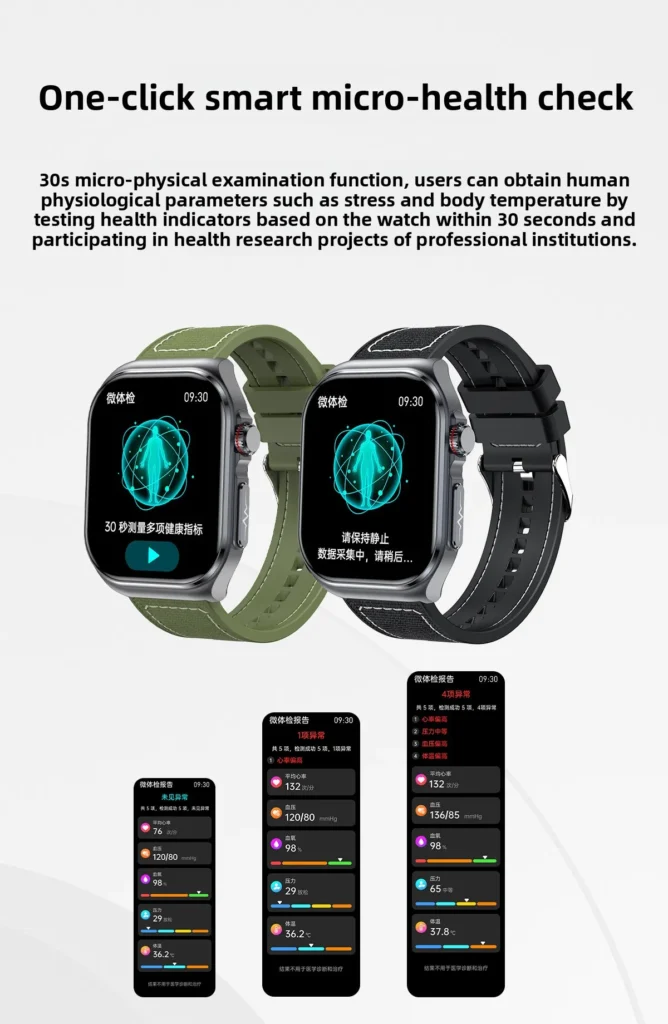
Looking for a health monitoring watch multi-vital check that gives you several readings in one sitting, instead of switching between separate tools throughout the day? REXQU’s VitaCore is built around exactly that idea: a single 30-second check that pulls together heart rate, a blood-pressure wellness trend, SpO₂, temperature and stress into one screen.
This guide explains what that check actually measures, how it compares with tracking each metric separately on other REXQU health watches, and who genuinely benefits from a one-tap multi-vital snapshot instead of several individual readings.
What a Health Monitoring Watch Multi-Vital Check Actually Measures
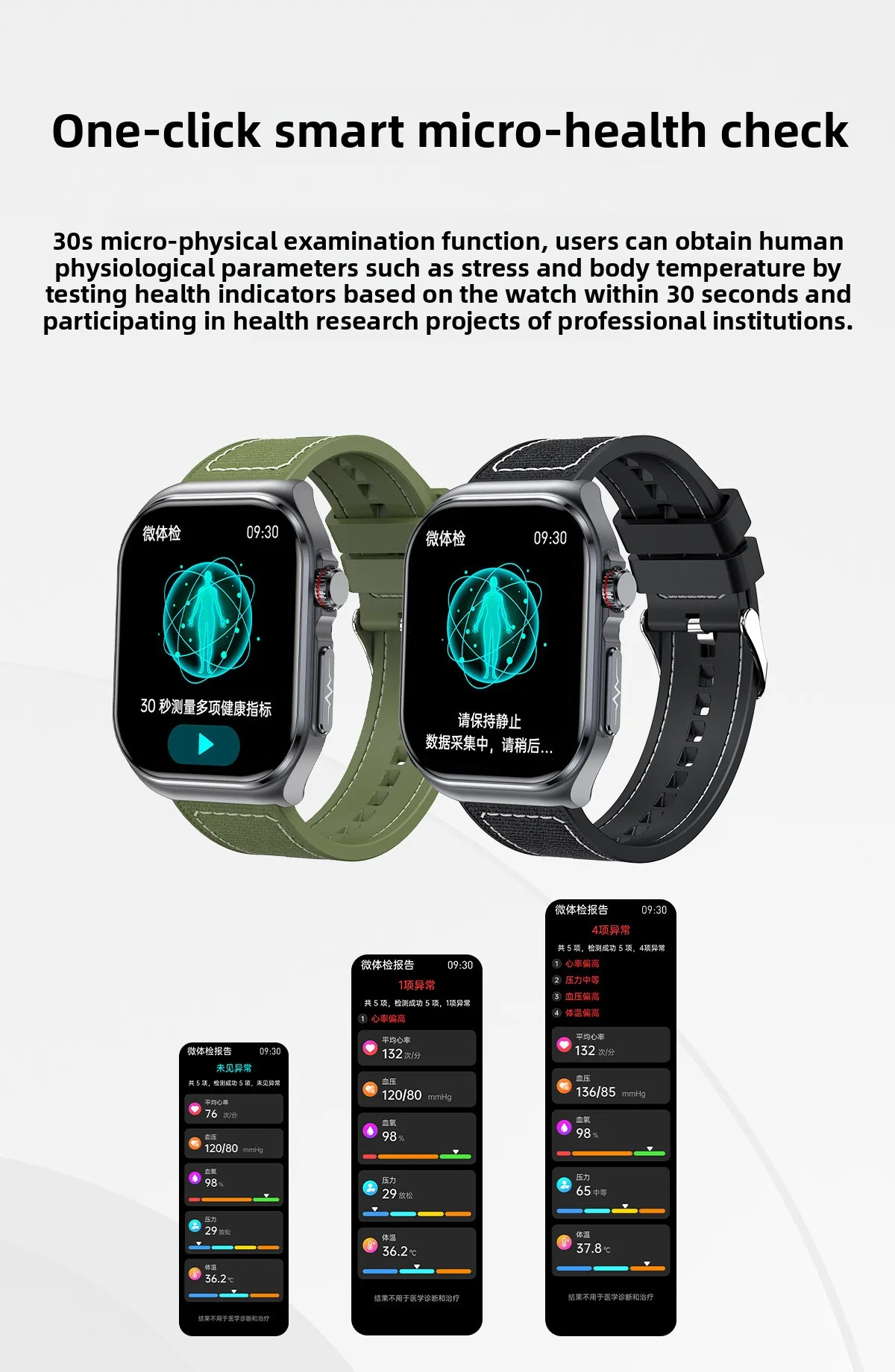
Most REXQU health watches track metrics individually — heart rate updates continuously in the background, while SpO₂, temperature or an ECG are usually pulled up as their own separate readings. A health monitoring watch multi-vital check is different: instead of tapping through several screens, VitaCore runs one combined 30-second session and returns four data points at once:
- Heart rate — an optical pulse reading taken during the same session.
- Blood-pressure wellness trend — a cuffless systolic/diastolic estimate, intended for everyday trend tracking rather than clinical diagnosis.
- Blood oxygen (SpO₂) — an optical oxygen-saturation estimate.
- Skin temperature and a stress indicator — derived from temperature sensing and heart-rate-variability patterns.
The result is a single wellness snapshot rather than four separate errands.
How the REXQU VitaCore 30-Second Check Works
VitaCore ($149.97) displays results on a 2.04-inch AMOLED screen, which is large enough to show more than one metric without constant scrolling. You start the check, hold your wrist still for about 30 seconds while the sensors take their readings, and the watch presents heart rate, blood-pressure wellness trend, SpO₂, temperature and a stress score together in the companion app.
That “hold still” step matters. Like any optical wrist sensor, motion and a loose band position can affect accuracy, so the multi-vital check works best when you’re seated or standing still rather than mid-workout.
Multi-Vital Check vs. Tracking Metrics Separately
Not every REXQU health watch works this way, and that’s a genuine tradeoff rather than a simple upgrade. Here’s how VitaCore’s combined check compares with two other models in the lineup:
| Model | Approach | What You Get in One Session | Price |
|---|---|---|---|
| REXQU VitaCore | One 30-second multi-vital check | Heart rate, BP wellness trend, SpO₂, temperature, stress | $149.97 |
| REXQU HealthLink | Continuous background tracking + separate on-demand ECG | Heart rate (continuous), SpO₂, sleep, temperature, ECG (separate reading) | $139.97 |
| REXQU OmniTrack | Continuous background tracking, metrics viewed individually | Heart rate, blood pressure, SpO₂, stress, sleep (each its own screen) | $139.97 |
If you want passive, all-day background data that quietly builds a trend line, HealthLink or OmniTrack fit better. If you’d rather get a rounded snapshot in one deliberate 30-second session — useful first thing in the morning, or before a call with family about how you’re doing — VitaCore’s multi-vital check is the more direct fit.
Who Actually Benefits From a Multi-Vital Check
A combined check tends to suit a few specific habits better than continuous background tracking alone:
- Morning routine trackers who want one number-filled snapshot at the same time each day, rather than piecing together separate readings.
- People sharing wellness updates with family, where one screen with four metrics is quicker to read off than four separate app pages.
- Anyone who forgets to check individual metrics — a single guided 30-second habit is easier to stick to than remembering to open four different tracking screens.
Health Monitoring Watch Multi-Vital Check: Quick FAQ
Does the check replace a blood pressure cuff or pulse oximeter? No. It’s designed for everyday wellness trends, not clinical measurement or diagnosis.
Do I need to stay still for the full 30 seconds? Yes — motion during the session is the most common cause of an inconsistent reading, the same limitation any optical wrist sensor has.
Can I still track heart rate continuously with VitaCore, or only during the check? The multi-vital session is the deliberate all-in-one reading; for pure background heart-rate tracking without the combined check, HealthLink or OmniTrack are worth comparing.
If a single 30-second multi-vital check is what you’re after, REXQU VitaCore is the clearest fit in the lineup. For the full range of REXQU’s daily health monitoring watches, browse the Health Smartwatch collection, or see the complete buying guide if you’re still comparing models.