
Looking for a GPS smartwatch bluetooth calling feature so you can leave your phone in the car on a trail run? It exists on at least one REXQU model, and it works differently than the 4G calling on our kids’ watches. Here’s exactly how it works, what it can’t do, and whether it’s the right feature for the way you actually hike or run.
The short version: GPS smartwatch bluetooth calling lets you answer and dial calls from your wrist using your paired phone’s signal and number, not a SIM card in the watch itself. That means your phone still needs to be nearby — typically within about 30 feet — even though you’re not holding it.
How GPS Smartwatch Bluetooth Calling Works on the REXQU Healout
The REXQU Healout ($129.97) is REXQU’s clearest example of the feature done well. Alongside its GPS route and sports tracking, the Healout lets you answer and make calls straight from the wrist, with your phone’s address book synced over so you’re tapping a saved contact, not dialing digits on a tiny screen.
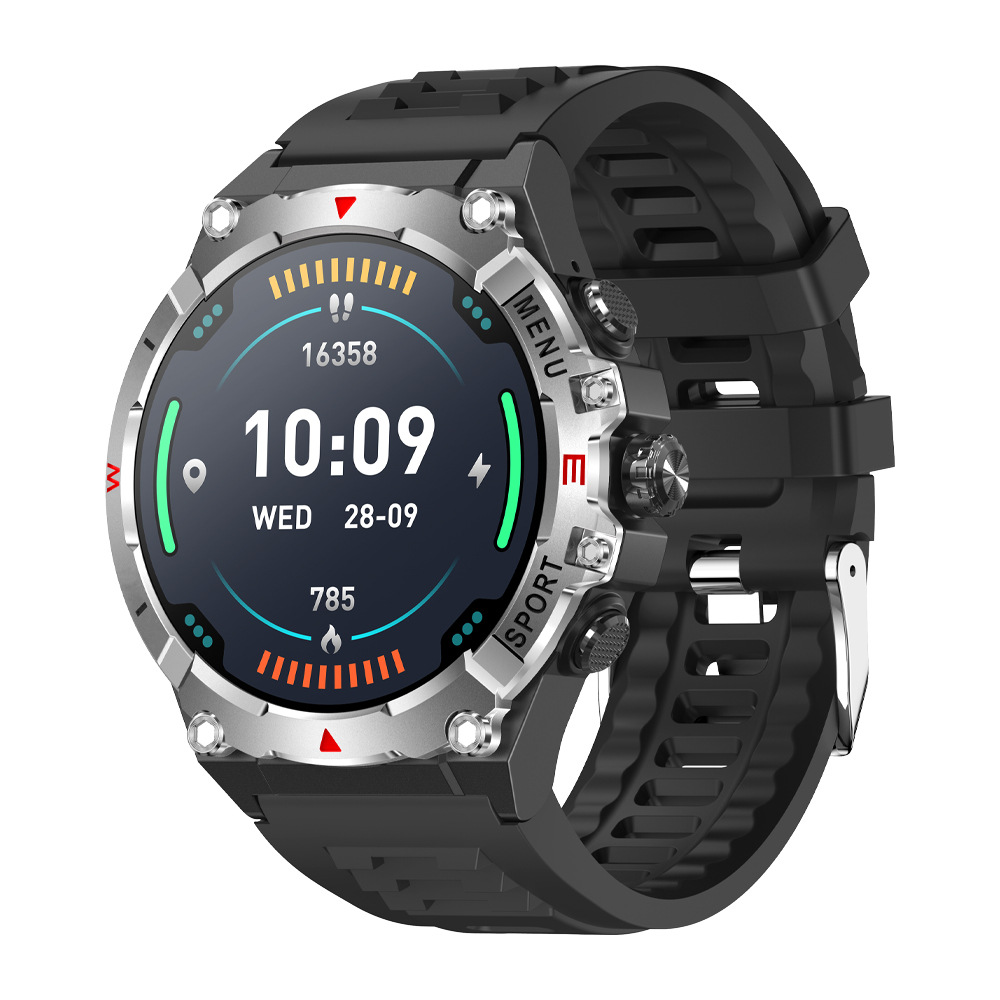
That pairing runs over the same short-range radio your headphones use. Bluetooth is a low-power wireless standard built for exactly this kind of nearby device-to-device link, which is why it’s efficient enough to run alongside GPS tracking without draining the Healout’s 500mAh battery in an afternoon.
What Bluetooth Calling Can’t Do on a GPS Watch
The trade-off is range. Because the watch is relaying calls through your phone rather than connecting to the cell network on its own, your phone has to stay within Bluetooth distance — roughly the length of a football field’s end zone, and often less through a backpack or a jacket. Walk out of range mid-hike with your phone still in the trailhead parking lot, and the watch has nothing to relay.
That’s a real difference from a standalone-4G device: REXQU’s kids’ watches like the KidTrack use their own nano-SIM, so the watch itself connects to the cell network with no paired phone required at all. A GPS smartwatch with bluetooth calling is built for a different scenario — keeping your phone in your pack instead of your hand, not leaving it behind entirely.
Healout Specs at a Glance
| REXQU Healout | |
|---|---|
| Price | $129.97 |
| Display | 1.43″ AMOLED, 466×466 |
| Battery | 500mAh, 7–10 days typical use |
| Water resistance | IP68 |
| Sport modes | 100+ with GPS route tracking |
| Calling | Bluetooth calls, synced address book |
Is GPS Smartwatch Bluetooth Calling Worth It?
It’s worth it if your typical outing already keeps your phone somewhere on you — an armband, a hydration vest pocket, a bike bag — and you just don’t want to dig it out for every call or text alert. Runners doing loop routes near home, or hikers who keep their phone in a pack for photos and maps anyway, get the most out of it.
It’s less useful if your goal is genuinely leaving the phone at home. For that, a watch with its own GPS and no calling dependency, or a standalone-cellular device, fits better than a Bluetooth-calling GPS watch setup like this one.
Frequently Asked Questions
How far can my phone be from the watch for calls to work?
Bluetooth’s practical range is roughly 30 feet in open conditions, less indoors or through obstructions like a backpack. Once you’re out of range, the Healout can’t relay calls until you’re back in range.
Does GPS smartwatch bluetooth calling drain the battery faster?
Taking calls uses more power than standby, but it’s a smaller drain than continuous GPS route recording. Expect the biggest hit to the Healout’s 7–10 day battery estimate from active GPS tracking, not from occasional calls.
Can I text as well as call?
The Healout’s calling feature is built around voice calls relayed from your paired phone; check the current app documentation for messaging support, since companion-app features can change.
Browse the full REXQU GPS & hiking smartwatch lineup or the wider rugged smartwatch collection to compare every model’s calling, battery and water-resistance specs before you buy.