
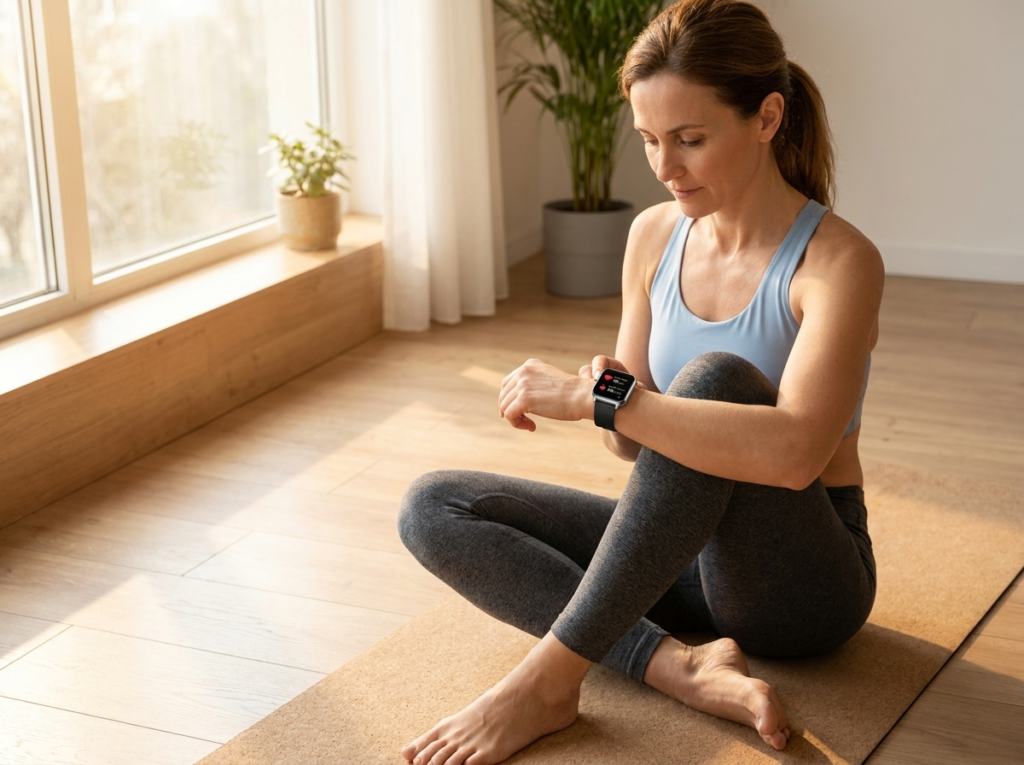
Checking everyday smartwatch blood oxygen readings has become one of the most common reasons people glance at their wrist mid-flight, after a workout, or at the end of a long day — and all four REXQU everyday-style models now include it standard, no premium tier required.
Here’s what the everyday smartwatch blood oxygen feature actually measures, how REXQU’s four models differ, and when the reading is genuinely useful versus just a nice-to-have number.

What an Everyday Smartwatch Blood Oxygen Reading Actually Shows
Blood oxygen, or SpO₂, estimates what percentage of the hemoglobin in your blood is carrying oxygen, using light sensors pressed against your wrist. It’s a wellness estimate, not a diagnostic reading — REXQU is explicit that every one of these watches is a wellness tracker, not a medical device. The number is most useful as a trend over weeks (is it consistently lower than usual?) rather than a single data point you check once and act on.
How the Four REXQU Models Compare
The REXQU Equilibrium ($129.97) gives continuous heart-rate trends alongside on-demand SpO₂ estimates, on a 1.96-inch AMOLED display in a 7.5mm slim case — a natural fit if you want the reading without a bulky watch.
The REXQU Spectrum ($129.97) includes blood oxygen, blood pressure and 24/7 heart-rate tracking, all permanently included rather than gated behind an app subscription, wrapped in a 51mm chronograph-styled case just 12mm thin.
The REXQU Verve ($129.97) pairs on-wrist blood oxygen readings with blood pressure wellness trends and over 100 sport modes on an 800-nit AMOLED display — useful if you want the SpO₂ check right after a workout when visibility in daylight matters.
The REXQU Meridian ($139.97) frames its SpO₂ spot-checks around specific moments — post-workout, a long flight, or a late night — rather than constant background monitoring, which keeps battery use down between checks.
A Side-by-Side Look
| Model | Price | SpO₂ style | Paired with |
|---|---|---|---|
| Equilibrium | $129.97 | On-demand, continuous HR | Slim 7.5mm case |
| Spectrum | $129.97 | Included permanently | Chronograph styling |
| Verve | $129.97 | On-wrist, post-workout focus | 100+ sport modes |
| Meridian | $139.97 | Spot-check moments | Travel & late-night use |
When the Reading Actually Matters
An everyday smartwatch blood oxygen estimate is most worth checking in three situations: after a flight (cabin pressure can genuinely lower SpO₂ briefly), right after intense exercise, or when you’re simply curious how a rough night’s sleep tracked against your usual baseline. The science behind the underlying measurement technique is well documented — Wikipedia’s overview of pulse oximetry covers how the optical method works and its known accuracy limits, which apply to wrist-worn sensors just as they do to clinical fingertip devices.
What it shouldn’t replace is an actual pulse oximeter or a doctor’s assessment if you have a real respiratory concern — treat a single low reading as a prompt to retake it with your wrist still and warm, not as a diagnosis.
Getting a Reliable Reading
A few habits make any on-wrist SpO₂ check more consistent, whichever of the four models you’re wearing. Keep the watch snug enough that it doesn’t shift while reading — a loose band is the single most common cause of an inconsistent number. Stay still for the few seconds the sensor needs, since movement scatters the optical signal the same way it does on a fingertip pulse oximeter. And take the reading on skin that’s warm rather than cold, since reduced blood flow to a cold wrist can quietly understate the real figure.
If you want a baseline worth comparing against later, take a handful of readings at rest over your first week with the watch, at roughly the same time of day. That gives you a personal range to judge future readings against, which matters more for spotting a real change than any single number does on its own.
Frequently Asked Questions
Do all four everyday-style REXQU models include blood oxygen tracking?
Yes — Equilibrium, Spectrum, Verve and Meridian all include SpO₂ readings as a standard feature, not a paid add-on.
How accurate is an everyday smartwatch blood oxygen reading compared to a medical device?
It’s an estimate from optical sensors, generally reasonable for trend-spotting but not a substitute for a clinical pulse oximeter, especially for anyone managing a real respiratory condition.
Does checking SpO₂ drain the battery?
On-demand checks use minimal power; it’s continuous, always-on monitoring of any sensor that has the bigger battery impact, which is why models like the Meridian favor spot-checks over constant tracking.
This article is general wellness information, not medical advice. Speak with a doctor about any ongoing respiratory or oxygenation concern.
See the full lineup compared on REXQU’s everyday style smartwatch page.