
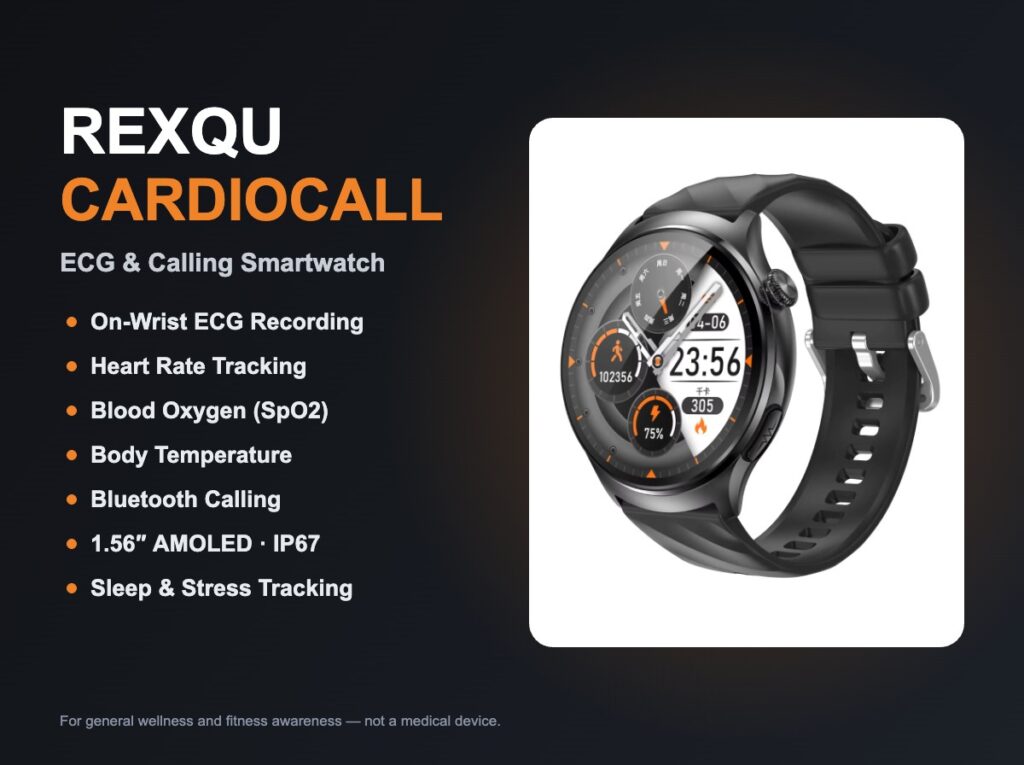
An ECG smartwatch with Bluetooth calling combines two separate jobs: an on-demand wrist ECG for personal rhythm tracking and a speaker/microphone connection for handling phone calls from the watch. The REXQU CardioCall is built specifically around that crossover.
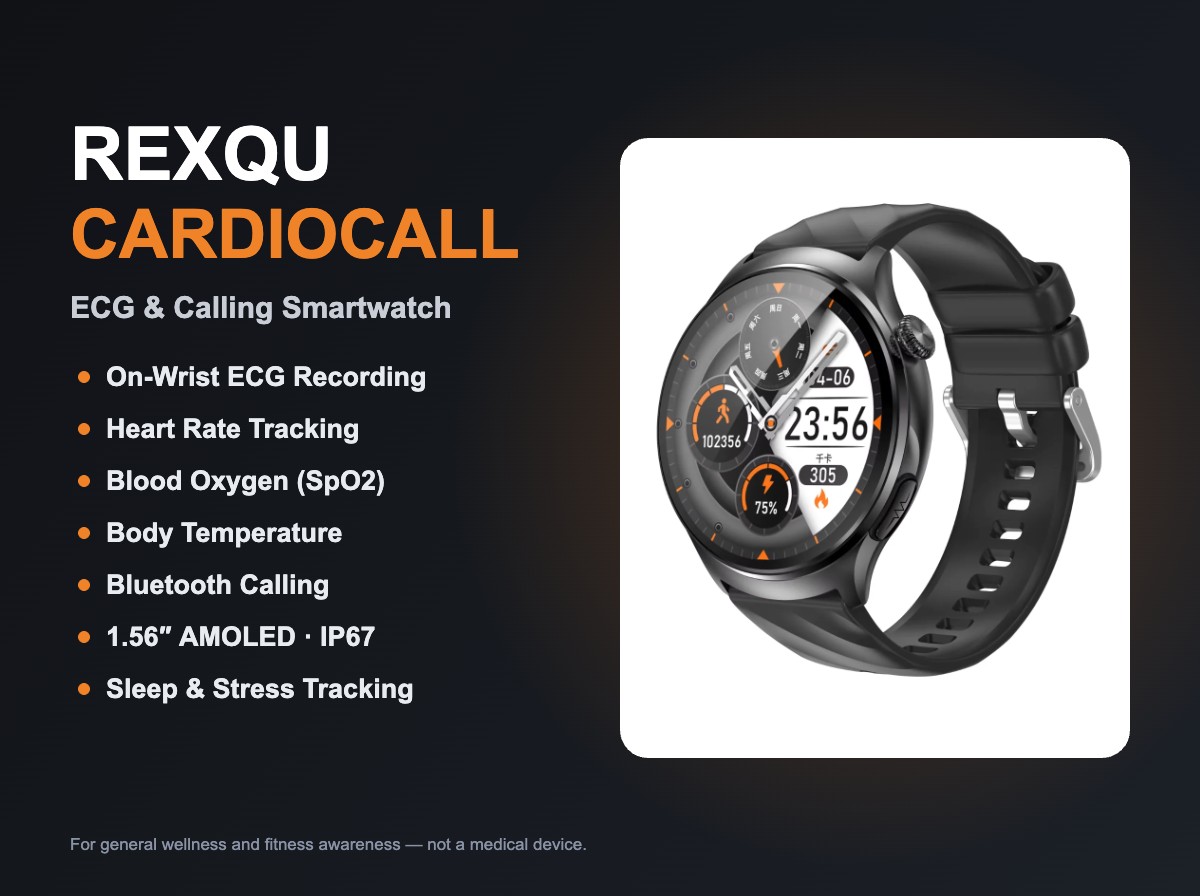
View CardioCall specs and current price →
How Does an ECG Smartwatch With Bluetooth Calling Work?
The two headline features work independently. For ECG, you deliberately start a short recording, stay still and maintain contact with the watch sensor; the resulting single-lead-style trace is then reviewed in the companion app. For calls, the watch uses Bluetooth to connect to a compatible phone and routes audio through the watch speaker and microphone.
That means Bluetooth calling is not cellular calling: CardioCall does not replace the phone connection or mobile service. The paired phone needs to remain within usable Bluetooth range.
CardioCall also includes heart-rate tracking, SpO₂, blood-pressure wellness checks, temperature, sleep and stress features. These are consumer-wellness tools rather than medical measurements.
Why Combine ECG and Bluetooth Calling on One Watch?
The appeal is convenience, not that the two features improve each other. Bluetooth calling reduces the need to pull out a phone for routine calls, while ECG gives you an on-demand rhythm recording when you deliberately choose to take one.
If ECG is the health feature that interests you, remember that a wrist recording is far simpler than a clinical ECG. The American Heart Association explains how clinical ECG records the heart’s electrical activity, while REXQU’s single-lead ECG guide explains the wearable-specific limitations.
For users who save occasional traces, the guide to sharing ECG smartwatch readings with your doctor covers what context can make a recording more useful in an appointment.
Full Spec Rundown
- On-wrist ECG recording, reviewed in-app
- Bluetooth 5.3 calling — answer and dial from the wrist
- Blood oxygen (SpO2) on demand
- Continuous heart rate and one-click blood pressure
- Body temperature readings
- Sleep and stress tracking
- Women’s health tracking and SOS
- 1.56″ 480×480 AMOLED, IP67 water resistant
Pricing, shipping windows and promotional discounts can change, so use the CardioCall product page for the current offer. The watch is positioned as an iPhone/Android-compatible Bluetooth companion with no subscription required for its core tracking history.
CardioCall vs AetherX vs PulseBand
| Model | ECG | Communication / outdoor difference | Best for | Product |
|---|---|---|---|---|
| CardioCall | On-wrist ECG | Bluetooth calling | ECG + calls from the wrist | View CardioCall |
| AetherX | On-wrist ECG | Built-in GPS + Bluetooth calling | ECG + outdoor route tracking | View AetherX |
| PulseBand | Touch-sensor ECG | Screenless design | ECG + long battery without a display | View PulseBand |
For the wider commercial comparison, see the Best ECG Smartwatch buying guide or browse the static ECG smartwatch category.
Who Should Consider an ECG Smartwatch With Bluetooth Calling?
CardioCall is a good fit if you want:
- an on-demand ECG available on the same watch you wear every day;
- Bluetooth calling while your paired phone stays nearby in a pocket or bag;
- a full AMOLED display rather than a screenless band;
- heart-rate, SpO₂, sleep and other wellness features in the same companion app;
- one general-purpose smartwatch rather than a specialist ECG-only wearable.
If GPS is more important than calling, compare AetherX. If the longest charging interval matters more than having a display, compare PulseBand. If a larger ECG-focused display matters most, CardioSense is another useful alternative.
ECG Smartwatch With Bluetooth Calling FAQs
Does CardioCall make calls without a phone?
No. Bluetooth calling uses the paired phone’s connection. The phone can stay in a pocket or bag, but it needs to remain connected and within usable Bluetooth range.
Can CardioCall ECG diagnose AFib?
No. It records a consumer single-lead-style rhythm trace for wellness awareness. For AFib-specific evidence, read the REXQU AFib Health Guide.
Should I take the ECG during exercise?
No. Stop moving, sit or stand still, keep the watch snug and complete the recording without changing finger pressure.
Does Bluetooth calling reduce battery life?
Yes. Speaker, microphone and Bluetooth audio use more power than passive tracking, so frequent calls can shorten the time between charges.
Can I swim with CardioCall?
CardioCall is listed as IP67. Treat that as rain, sweat and everyday splash protection and follow the current product instructions before showering or swimming; IP67 by itself is not a dedicated swim rating.
Bottom Line
If your priority is specifically ECG plus Bluetooth calling, REXQU CardioCall has a clear role without competing with the GPS-focused AetherX or the screenless PulseBand. Compare the current CardioCall specifications, then use the REXQU ECG Smartwatch category if you want more alternatives.
See the REXQU CardioCall →
REXQU smartwatches are consumer wellness devices, not medical devices. ECG and other health readings should not be used as a substitute for professional medical advice, diagnosis or treatment.