
Smartwatch sleep tracking for athletes is quietly becoming one of the more useful recovery tools built into GPS and rugged outdoor watches, sitting right alongside heart rate, elevation and route data. If you train hard outdoors several times a week, the question isn’t whether your watch tracks sleep at all — most do, in some form — it’s whether what it shows you is detailed enough to actually change how you train tomorrow.
REXQU’s two outdoor-focused watches answer that question differently, and the gap between them is a good illustration of what “sleep tracking” can mean on a wrist-worn device.
What Smartwatch Sleep Tracking for Athletes Looks Like in Practice
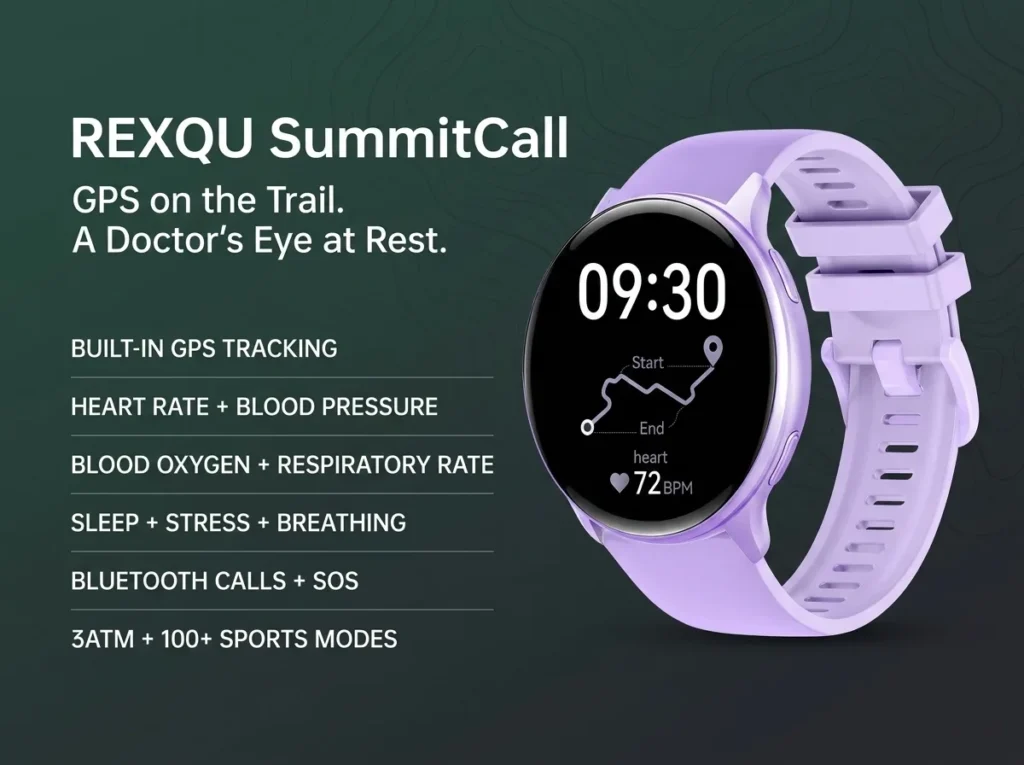
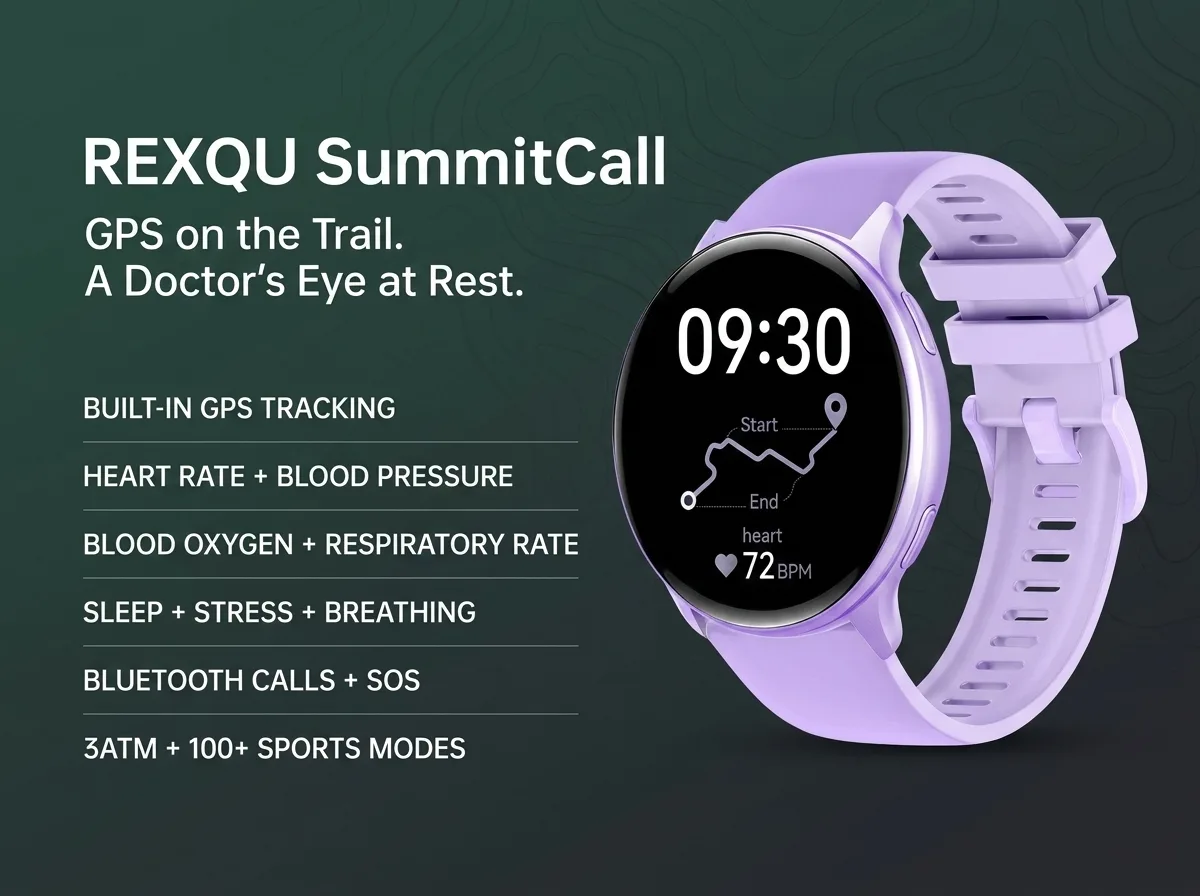
The REXQU SummitCall, built for GPS training and route navigation, tracks full sleep stages overnight — not just total hours asleep, but how that time splits across the night. Paired with its all-day stress and respiratory-rate readings, the watch is explicitly designed to show “how recovery and pressure track together,” in REXQU’s own words, rather than reporting sleep as a single isolated number.
The REXQU ApexTrail, built more for night trail running and rugged use, takes a lighter approach: wrist-based heart-rate trends and sleep estimates, reported through the FitCloudPro app as general wellness trends rather than a staged breakdown. REXQU is clear on both product pages that these are wellness features, not a clinical assessment of sleep health.
Why the Difference Matters for Training Load
If you’re following a structured outdoor training plan — stacking long runs, hikes or rides across a week — a staged sleep breakdown is more useful than a single “you slept 7 hours” summary. Seeing how a hard trail session the night before shifted your sleep pattern gives you an early, practical signal to dial back intensity before soreness or fatigue forces the issue. That’s the idea behind pairing sleep data with stress and respiratory trends on SummitCall rather than showing sleep in isolation.
A simpler sleep estimate, like ApexTrail’s, still has real value. It won’t break down sleep stages, but a consistent nightly trend — noticing you’re sleeping noticeably less after back-to-back trail days — is often enough of a flag on its own, especially for someone who just wants a general wellness signal rather than a training-load dashboard.
Choosing Between a Staged Breakdown and a Simple Estimate
In practice, the right pick depends on how closely you track training load elsewhere. If you already log workouts, pace and perceived effort and want your watch to add a recovery layer on top, SummitCall’s sleep-stage-plus-stress approach fits that habit well. If you mainly want a trail-ready, rugged watch with night-running features like its onboard flashlight and compass, and sleep tracking is a nice-to-have rather than the main draw, ApexTrail’s simpler estimate is enough without paying for complexity you won’t use.
Either way, treat the numbers as a trend to watch over weeks, not a verdict on any single night. Both watches describe their health data as wellness information rather than medical measurement, and that’s the right way to read it: useful context for adjusting a training week, not a diagnosis.
Getting the Most Out of It
A few habits make smartwatch sleep tracking for athletes more useful in practice. Keep the watch on overnight consistently — gaps in wear time break up the trend lines that make this data useful in the first place. Check the trend weekly rather than nightly; a single rough night after a long trail session is normal and not worth overreacting to. And cross-reference sleep trends against how your training actually felt — data confirms what your body is already telling you, it doesn’t override it.
Athletes who recover well tend to treat sleep the same way they treat any other training metric: tracked consistently, reviewed over time, and acted on gradually. The science backing that approach is well established — overtraining research consistently points to inadequate recovery, including poor sleep, as one of the leading contributors to performance plateaus and injury, which is exactly the kind of pattern a week-over-week sleep trend is built to catch early.
The Bottom Line
Smartwatch sleep tracking for athletes isn’t a single standardized feature — it ranges from a basic nightly estimate to a full staged breakdown paired with stress and respiratory data. Browse REXQU’s GPS smartwatches and rugged smartwatches categories to compare SummitCall, ApexTrail and other outdoor models side by side, and pick the depth of recovery data that actually matches how you train.