
If you’ve ever compared two wrist readings during a workout and gotten two different numbers, you’ve run into the real-world limits of smartwatch heart rate accuracy for women. The technology is genuinely useful for everyday tracking, but a handful of physical factors change how reliable any single reading is.
What Affects Smartwatch Heart Rate Accuracy for Women?
Most smartwatches, including REXQU’s, measure heart rate with a photoplethysmography (PPG) sensor: a cluster of LEDs that shines light into the skin and measures how much bounces back as blood volume changes with each pulse. That method works well at rest, but three variables can throw it off: skin tone, wrist fit, and movement.
Skin Tone and Optical Sensors
A growing body of research has looked at whether PPG sensors perform consistently across skin tones. A systematic review in the Journal of Racial and Ethnic Health Disparities found that four of ten studies reviewed showed measurably reduced heart rate accuracy on darker skin tones, likely because melanin absorbs more of the LED light the sensor relies on. The review’s authors called the evidence “inconclusive” rather than settled, but it’s a real factor worth knowing about rather than assuming any wearable performs identically for everyone.
Wrist Fit and Movement Matter Just as Much
Skin tone isn’t the only variable affecting smartwatch heart rate accuracy for women — arguably a bigger one is how snugly the watch sits. A band worn too loose lets light leak around the sensor and lets the watch shift during movement, both of which degrade the signal. During high-intensity intervals or activities with a lot of wrist rotation (tennis, weightlifting, some yoga poses), even a well-fitted sensor can lose the plot for a few seconds. This is a known limitation across the wearable category, not a REXQU-specific one, and it’s why treating any single spot reading as exact — rather than the daily trend — is the more realistic way to use the feature.
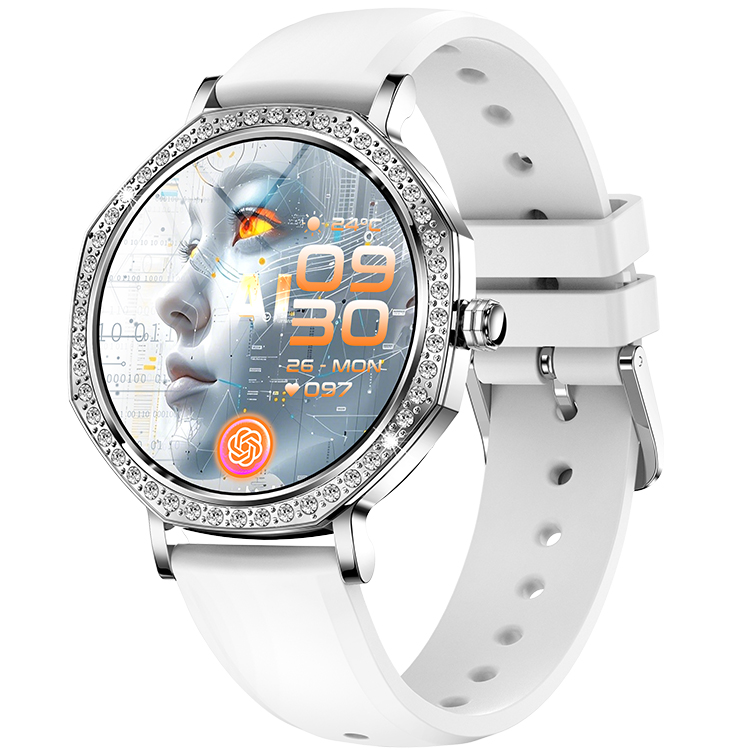
REXQU Models Built for All-Day Heart Rate Tracking
Within those real-world limits, REXQU builds several women’s watches specifically to keep heart rate tracking as steady as possible throughout the day. The REXQU AuraSense ($139.97) tracks all-day heart rate with warning alerts for unusual spikes, alongside blood pressure and blood oxygen monitoring, a 1.32-inch AMOLED display, and 107 sport modes for more accurate mode-specific calibration during exercise. The REXQU SereneIQ ($139.97) pairs the same 1.32-inch AMOLED panel with an always-on display and a lightweight 23.5g body, which helps keep the sensor snug against the wrist without the watch feeling bulky.
Getting the Most Accurate Reading
A few habits improve smartwatch heart rate accuracy for women regardless of which model you wear: position the sensor about a finger’s width above the wrist bone, tighten the band enough that it doesn’t slide during movement, and avoid taking a “spot check” reading in the first few seconds after starting a fast-paced activity. Both the AuraSense and SereneIQ are part of the REXQU women’s smartwatch lineup, so you can compare sport-mode counts and battery life side by side before choosing.
The Bottom Line
No consumer wearable — REXQU included — is a substitute for a clinical heart rate monitor or an ECG. But smartwatch heart rate accuracy for women is generally strong enough for tracking trends over time, spotting unusual resting-rate changes, and getting a reasonable in-workout estimate, as long as the band fits snugly and you read single spikes with a little skepticism.
Frequently Asked Questions
Does nail polish or a wrist tattoo affect the reading?
Nail polish doesn’t matter since the sensor sits on the underside of the wrist, but a dark tattoo directly over the sensor can interfere with the LED light in the same way darker skin tone can, since both reduce how much light reflects back to the sensor.
Is a chest strap more accurate than a smartwatch?
For serious athletes tracking precise heart-rate zones, yes — chest straps use electrical signals rather than optical light, which makes them less sensitive to skin tone, tattoos, or wrist fit. For everyday tracking and trend-spotting, though, smartwatch heart rate accuracy for women is generally close enough that most people don’t need to add a chest strap.
Does REXQU sync heart rate data to a phone app?
Yes — both the AuraSense and SereneIQ pair with the REXQU companion app over Bluetooth, so daily and workout heart rate data, along with blood pressure and blood oxygen readings, stay viewable and logged over time rather than just shown on the watch face.