
Screenless fitness tracker step counting works off the same core technology as a full smartwatch — a built-in accelerometer that senses the rhythm of your wrist moving — but without a screen showing you a live number, it’s reasonable to wonder how much you can trust it. The short answer: wrist-based step counting is reliable for everyday walking, but it has a few well-documented blind spots worth knowing before you lean on the number at the end of the day.
How Screenless Fitness Tracker Step Counting Actually Works
There’s no camera, no GPS pinging your location, and no manual tally involved. A tiny accelerometer inside the band measures acceleration along three axes, and an algorithm looks for the repeating up-down-forward pattern that a human arm makes while walking or running. When that pattern repeats consistently for long enough, it gets logged as a step. REXQU’s screenless trackers, including the AeroBand, use this same accelerometer-based approach alongside heart rate and sleep sensors, all without a display to drain the battery.
Where Wrist-Based Counting Falls Short
Wrist placement is convenient, but it isn’t the most accurate spot on the body for counting steps. A 2024 study published in Scientific Reports compared accelerometer-based pedometers worn on the wrist, the waist, and embedded in a shoe midsole during walking, running, and stair climbing, using video footage as the ground truth. The wrist-worn devices showed meaningfully more error than either the waist or midsole positions across all three activities, and stair climbing was the hardest activity for any wrist-worn pedometer to get right. None of this means wrist trackers are unreliable for daily use — it means short, irregular movement (stairs, pushing a cart, folding laundry) is where any wrist-based tracker, screenless or not, is more likely to over- or under-count.
What the REXQU AeroBand Tracks
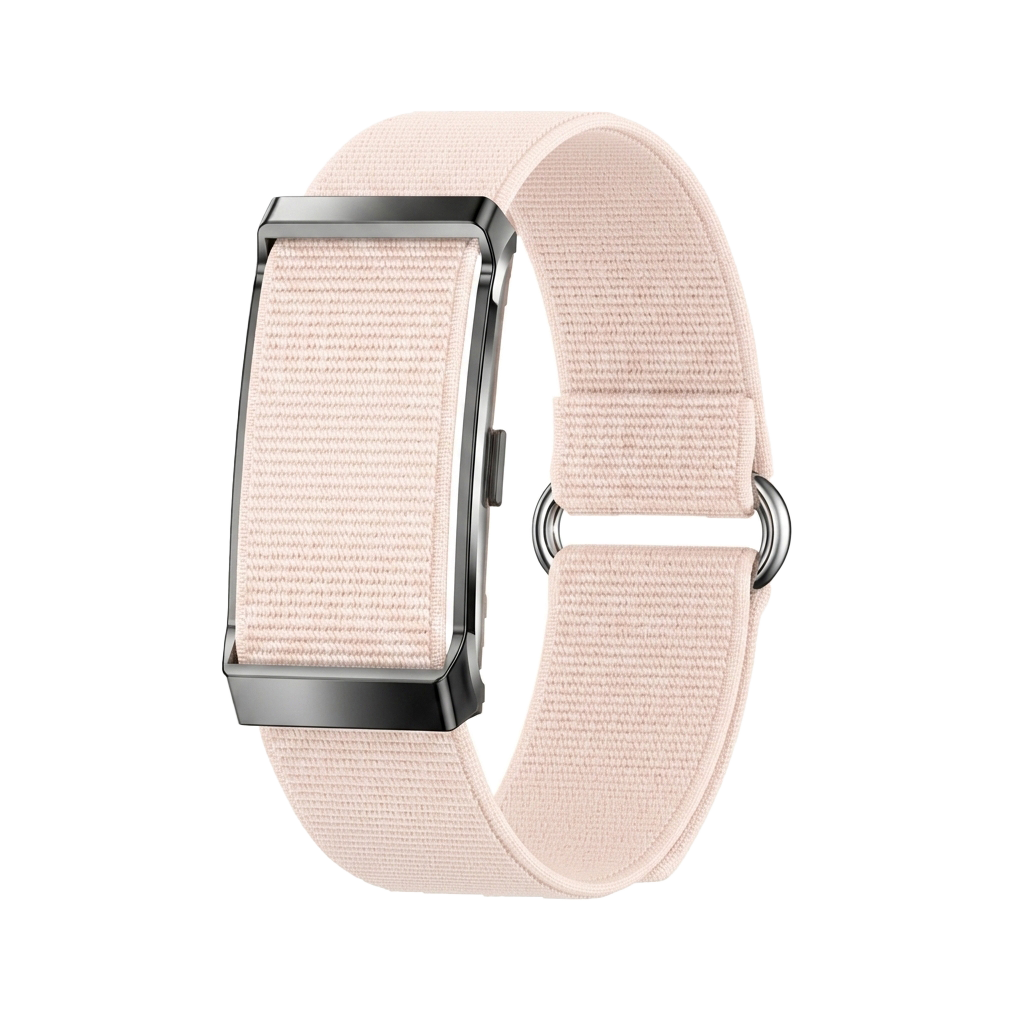
The AeroBand logs steps, calories, and workouts across multiple sport modes, alongside 24-hour heart rate, blood pressure, blood oxygen, and sleep — all relayed quietly through vibration alerts rather than a screen. It’s rated for 1ATM water resistance, handling rain, sweat, and hand-washing, and runs 11 to 30 days per charge depending on how it’s used. The zinc-alloy double-bar design is built to wear like a simple band rather than a visible gadget, which is part of the appeal for anyone who wants activity data without a screen demanding attention throughout the day.
Tips for a More Accurate Daily Count
- Wear it snug, not loose. A band that slides around adds extra micro-movements the algorithm can misread as steps.
- Expect undercounts while pushing a cart or stroller. Arm swing is muted, so the accelerometer has less signal to work with.
- Expect overcounts during repetitive hand motion like washing dishes, chopping vegetables, or clapping — all can briefly mimic a stepping rhythm.
- Use the weekly trend, not the single-day number, as your real measure of progress. Day-to-day noise mostly averages out over a week.
Screenless Fitness Tracker Step Counting vs. a Phone
Phones are generally considered more consistent step counters than wrist wearables because they sit still in a pocket rather than swinging with your arm — but a phone left on a desk or in a bag counts nothing. A screenless wrist tracker trades a small amount of peak accuracy for something a phone can’t offer: it’s with you the entire day, so the numbers reflect your actual movement rather than only the hours your phone happened to be in your pocket.
If precise, lab-grade step verification matters more to you than all-day comfort and a multi-day battery, a dedicated clip-on pedometer or a shoe-based sensor will outperform any wrist device. For the everyday goal of seeing whether you’re generally more or less active than last week, screenless fitness tracker step counting on something like the AeroBand is accurate enough to be genuinely useful.
Browse REXQU’s full lineup on the screenless fitness tracker page, or see full specs on the AeroBand product page.
FAQ
Does a screenless fitness tracker count steps as well as a smartwatch with a screen?
Yes — the screen has no bearing on step-counting accuracy. Both rely on the same type of accelerometer; the screen only affects how (and whether) you see the number in real time.
Why does my step count look different from my phone’s?
Different devices use different algorithms and different placements on the body, so some disagreement between a wrist tracker and a phone is normal and expected, not a sign either one is broken.