
Smartwatch charging time is one of those specs that barely gets a line in most product listings, yet it shapes your daily routine more than almost any other number on the sheet. A watch that takes three-plus hours to top up forces you to plan around it; one that charges fast fits into a morning routine without a second thought.
What actually affects smartwatch charging time
It comes down to two things: how much energy the battery holds (measured in mAh) and how much current the charger can push into it. A smaller battery paired with a magnetic charging dock — which makes solid contact through metal pins rather than looser wireless induction — tends to charge noticeably faster than a larger battery on a slower charger.
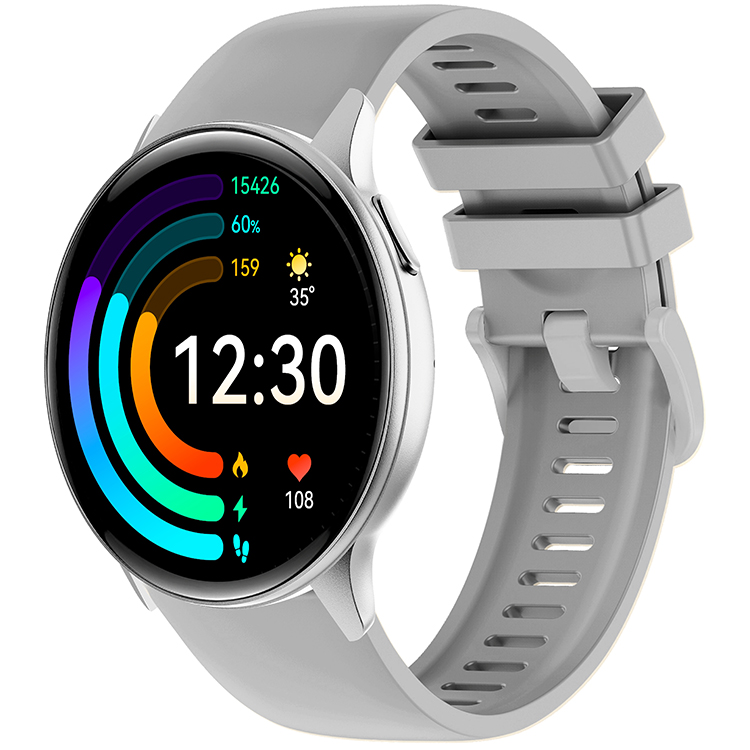
The REXQU Verve is a good example of this working well in practice. It packs a 1.43″ AMOLED display running at 800 nits, full heart rate, blood pressure and blood oxygen monitoring, and 100+ sport modes — but its magnetic charging dock brings it from empty to full in under 2.5 hours. For an everyday-style watch you’re likely wearing most of the day, that’s a short enough window to top up over breakfast rather than needing to remember an overnight charge. It’s $129.97 on the REXQU Verve product page.
Charging time isn’t the same spec as battery life
It’s easy to conflate smartwatch charging time with battery life, but they answer different questions. Charging time tells you how long you’re tethered to a cable; battery life tells you how often you’ll need to do that in the first place. REXQU’s Meridian, for example, is rated for 5-10 days of battery life on a single charge with its large 1.75″ AMOLED display and NFC payment support. REXQU doesn’t publish a charging-time figure for every model, so where one is stated — like Verve’s sub-2.5-hour spec — it’s worth weighing separately from the day-count on the box. See the REXQU Meridian page for its full spec sheet.
Why a short charge matters more for everyday wear
For fitness-focused watches, a slow charge is a minor inconvenience — you can charge overnight and not think about it. For an everyday-style watch that also tracks sleep, a long charging window creates a real conflict: charge it while you sleep and you lose a night of sleep data; charge it during the day and you’re without it for hours. A sub-3-hour charge, like Verve’s, sidesteps that trade-off — you can top it up during a shower or breakfast and still have it on your wrist overnight for sleep tracking.
As Android Authority has pointed out, most smartwatch owners end up charging their watch every single day regardless of the model, which makes the actual time spent tethered to a cable — not just the battery percentage on the box — a real part of daily convenience.
Quick questions before you buy
Does a bigger battery always mean a longer charge? Not necessarily — charging speed depends more on the charger’s current output than on raw battery size, which is why two watches with similar mAh ratings can still charge at different speeds.
Can I use a different charger to speed things up? Stick with the charging dock or cable that shipped with the watch. Magnetic pin chargers are matched to the watch’s contacts and charging circuitry, and a mismatched charger risks a poor connection or slower, less reliable charging.
Does fast charging shorten battery lifespan? REXQU’s magnetic charging is standard-current, not the aggressive fast-charging found in some phones, so it isn’t expected to add meaningfully to long-term battery wear under normal daily use.
What to check before you buy
- Look for a stated charging figure, not just battery life. Not every listing includes one, but when it does, it’s a better predictor of daily friction than the day-count alone.
- Magnetic dock vs. cable-clip chargers: both are common across REXQU’s everyday-style lineup; a snug magnetic connection generally charges faster and more reliably than a loose clip.
- Match it to your routine: if you track sleep every night, a shorter smartwatch charging time gives you more flexibility about when to plug in without losing tracking data.
Bottom line
Smartwatch charging time doesn’t show up on most spec sheets, but it’s worth asking about before you buy — especially for an everyday-style watch you’ll wear most of your waking (and sleeping) hours. REXQU Verve’s sub-2.5-hour magnetic charge is one of the shorter times in the lineup and pairs well with its all-day sensor set. Browse the rest of the collection on REXQU’s Everyday Style shop page.