
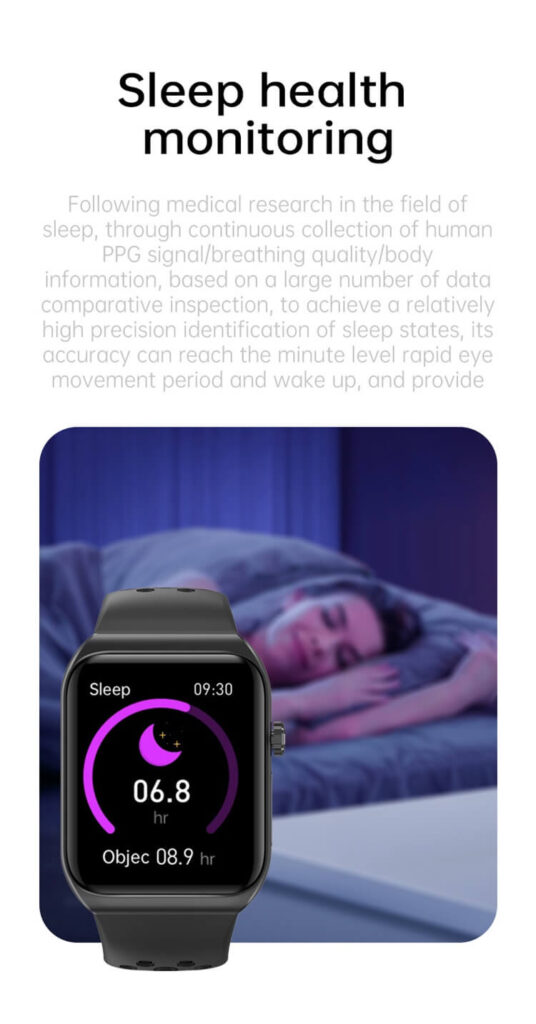
Blood pressure smartwatch sleep tracking shows you more than just how many hours you slept — on REXQU’s BioVision and CardioSense, it estimates your sleep stages and lines them up next to your overnight heart-rate trends, so a restless night and a deep one look visibly different in the morning.

What Blood Pressure Smartwatch Sleep Tracking Actually Shows
On the REXQU BioVision, wearing the watch overnight produces an estimated breakdown of deep, light and REM sleep patterns, reviewed as a morning summary in the companion app. REXQU is upfront that “consumer wrist tracking may not identify every sleep stage or waking period” — it’s built for general wellness awareness, not a clinical sleep study.
The REXQU CardioSense takes a similar approach: wear it overnight and it compares estimated sleep duration and stages alongside wrist-based heart-rate trends, with REXQU again framing the output as something to “observe routine patterns,” not diagnose a sleep or medical condition. The REXQU Chronex, a lower-priced option in the same category, also tracks estimated sleep duration and stages, though without BioVision’s full deep/light/REM breakdown.
BioVision vs. CardioSense: Real Specs
| Spec | BioVision | CardioSense |
|---|---|---|
| Sleep tracking | Estimated deep, light & REM stages | Estimated duration & stages |
| Display | 1.81″ | 2.01″ |
| Weight | Not listed | 40g |
| Battery | 7–10 days typical, up to 15 low use | 5–7 days typical |
| Water resistance | IP65 (not for swimming) | Not for swimming or showering |
| Extra features | On-demand ECG, Bluetooth calls, SOS | On-demand ECG, guided breathing, Bluetooth calls |
| Price | $149.97 | $159.97 |
Why Overnight Blood Pressure and Sleep Data Are Tracked Together
REXQU pairs sleep tracking with cuffless blood-pressure trends on both watches because the two numbers move together. According to Wikipedia’s overview of the sleep cycle, the body naturally shifts through distinct stages each night, each with its own effect on heart rate and circulation — which is part of why a rough night can show up as an unusual overnight reading even without anything being medically wrong.
CardioSense is light enough at 40 grams that most wearers don’t notice it overnight, which matters for sleep tracking specifically: a watch you take off because it’s bulky or warm is a watch that can’t record anything while you sleep. BioVision’s more detailed stage breakdown is the trade-off worth knowing about if you want a finer-grained morning report rather than just a duration estimate.
What the Data Doesn’t Tell You
Blood pressure smartwatch sleep tracking is a wellness tool, not a diagnostic one. Both REXQU watches generate estimates — not clinical measurements — and results can shift with fit, movement and skin contact. If you notice a persistent pattern that concerns you, that’s a reason to bring the trend to a doctor, not to self-diagnose from the watch face.
FAQ
Does blood pressure smartwatch sleep tracking need to be set up each night?
No — on both BioVision and CardioSense, sleep and overnight blood-pressure tracking run automatically once the watch is worn to bed; there’s no mode to switch on beforehand.
Which watch gives a more detailed sleep report?
BioVision’s app shows a deep/light/REM breakdown, while CardioSense and Chronex report estimated duration and stages without that same level of detail.
Is the overnight blood pressure reading as accurate as daytime readings?
It’s subject to the same fit- and movement-related limits as any wrist-based reading — REXQU frames both as trend data for general awareness, not a replacement for a cuff-based monitor.
The Bottom Line
If you want a clearer picture of your night alongside your blood pressure trends, both the REXQU BioVision and CardioSense track it automatically — compare them on the blood pressure smartwatches page, or see full specs on the REXQU BioVision and REXQU CardioSense product pages.